The Manipur government calls out the “exorbitant” increase in airfare, and ACS meets with AAI officials and airlines at a high level.

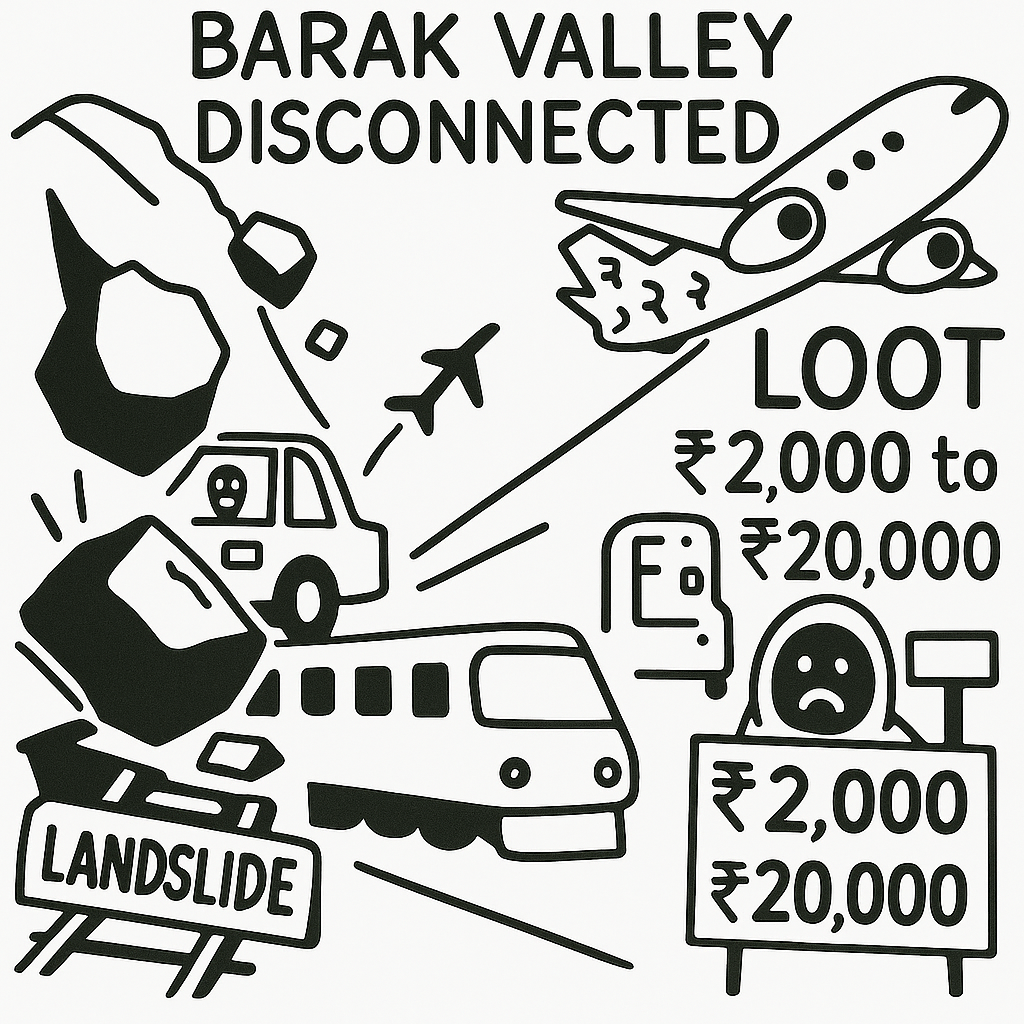
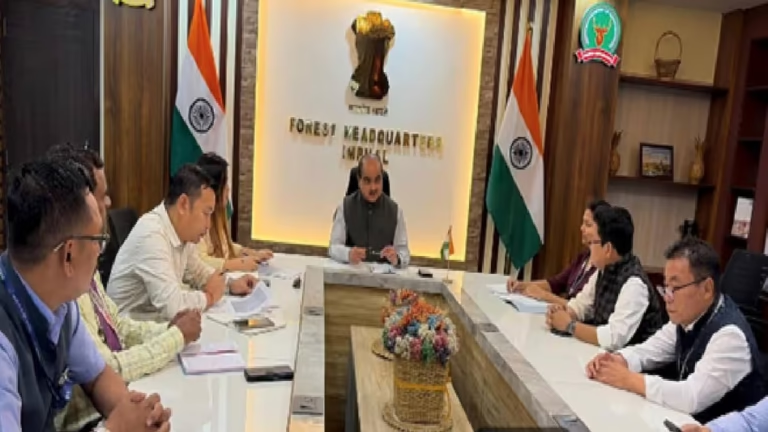
“Additional Chief Secretary Anurag Bajpai convened a meeting with representatives from the Airports Authority of India, Air India Express, IndiGo, and Alliance Air on November 4 to address the abnormal surge in airfares and restricted flight connectivity in Manipur’s Imphal sector. Airfares for the short Imphal–Guwahati route have soared from Rs 2,000–3,000 to Rs 10,000–15,000, up to seven times higher than fares for similar distances in other northeastern states. With road connectivity frequently disrupted and rail services yet to be operational, air travel is the only reliable mode of transport. The Governor of Manipur has urged the Union Civil Aviation Minister to intervene and regulate airfares to alleviate the financial burden on local travelers. Bajpai emphasized ensuring airfare parity with other northeastern states, maintaining summer-level flight frequencies during winter, and requested reinstatement of suspended regional routes along with exploring new international services. The government remains committed to preserving physical and economic connectivity with socially equitable air travel pricing in the state.”

In the Arunachal adolescent suicide case, an IAS officer was given bail.

“The District and Sessions Court in Itanagar on Tuesday granted bail to senior IAS officer Talo Potom in connection with the alleged abetment of suicide of a 19-year-old youth. The case stems from the death of Gomchu Yekar, who was found dead in his rented accommodation on October 24. In a suicide note recovered from the scene, Yekar reportedly accused former Itanagar Capital Region Deputy Commissioner Potom and Rural Works Department Executive Engineer Likwang Lowang of sexual exploitation, harassment, coercion, and threats. Following the incident, police registered a case under Sections 108, 271, 272, and 3(5) of the Bharatiya Nyaya Sanhita at Nirjuli Police Station. Potom surrendered before the police on October 27 and had been in judicial custody for 14 days.

In his order, District and Sessions Judge Dr Hirendra Kashyap observed that the evidence on record did not prima facie establish the charge of abetment of suicide and that further detention of the accused was unnecessary for the ongoing investigation. The court granted bail on a personal bond of Rs. 1 lakh with one surety of a similar amount. Potom has been directed to cooperate with the investigation, appear before the investigating officer as required, and refrain from influencing witnesses or tampering with evidence in any manner.”​

TAYPA renews its call for ST recognition and independent governance at a large torch march in Moran in Assam.

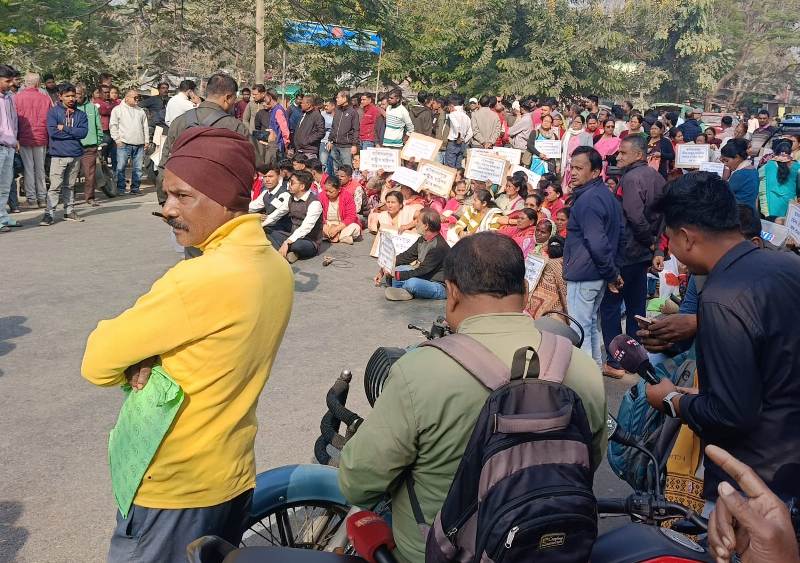
Thousands of Tai Ahom community members staged a massive torch rally in Moran town, Dibrugarh district, demanding Scheduled Tribe (ST) status for their community. The rally, organized by influential Tai Ahom groups including the Tai Ahom Yuba Parishad Assam (TAYPA) and the All Tai Ahom Students Union (ATASU), saw protesters marching with burning torches and chanting slogans like “No ST, No Rest.” The demonstration highlighted growing frustration over the ruling BJP government’s failure to fulfill a promise made over a decade ago during the 2014 Lok Sabha elections to grant ST status to the Tai Ahoms and other communities.

TAYPA president Diganta Tamuly warned the government ahead of the 2026 Assam Assembly elections that if the demand for ST status remained unmet, the Tai Ahom community would boycott the BJP and that the party would face severe political backlash. The Tai Ahoms, descendants of the historic Ahom dynasty that ruled Assam for six centuries, have significant electoral influence in upper Assam districts. Despite repeated assurances over the years, the community, along with five other groups, continue to be excluded from the Scheduled Tribe list, fueling political tensions and protests like the Moran torch rally.

Airlines are rapped by Biren Singh as 45-minute A flight from Imphal to Guwahati costs more than a three-hour travel from Delhi.

Former Manipur Chief Minister N. Biren Singh condemned the exorbitant airfares on flights to and from Imphal, describing the situation as “daylight robbery.” He highlighted that for over two and a half years, the people of Manipur have been forced to rely solely on air travel due to ongoing road blockades and unrest. Singh pointed out that a 45-minute flight from Imphal to Guwahati costs more than a three-hour flight to Delhi, calling such pricing “unfair and unacceptable.” He urged Union Civil Aviation Minister Ram Mohan Naidu Kinjarapu to take immediate action to rationalize fares and stop airlines from exploiting passengers who have no alternative travel options.

This airfare surge was partly attributed to the withdrawal of certain flights, which increased demand on the remaining routes. Manipur had earlier launched subsidized flights with fares capped at Rs 5,000 under a state scheme, but prices remain high on several routes as the highway blockade continues, severely disrupting connectivity. Local travel agencies confirmed the sharp price hikes concurrent with the surge in travel demand, intensifying the burden on residents dependent on air travel.​

Logistics constraints hamper growth of rubber-based industries in Tripura: Official

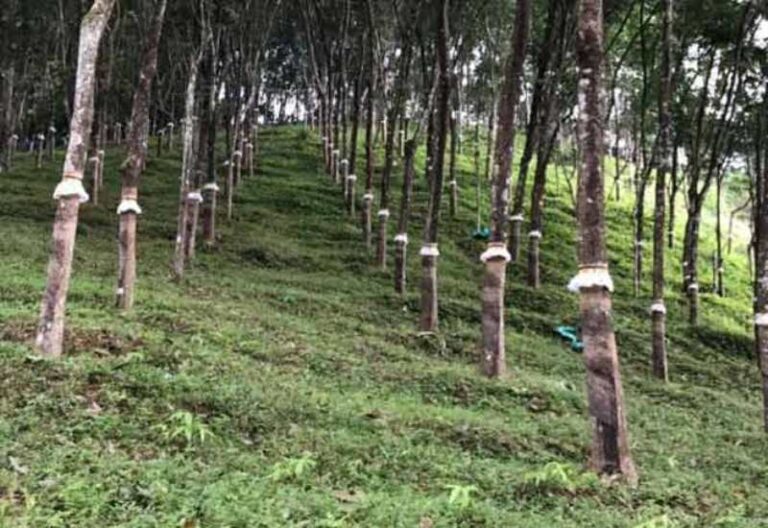
Tripura is India’s second-largest natural rubber producer, with an annual production of over 70,000 tonnes and expansive plantations covering more than 85,000 hectares. Despite abundant raw material supply, logistics constraints—such as high transportation costs and inadequate infrastructure—limit the growth of rubber-based industries in the state. Currently, only one rubber thread production unit operates in Bodhjungnagar Industrial Area.

The state government is actively working to attract investments by improving connectivity, offering incentives, and partnering with entities like the Tripura Industrial Development Corporation (TIDC) and Rubber Board. Key upcoming projects, including the Agartala-Akhaura railway link and enhanced access to Chittagong Port in Bangladesh, are expected to reduce logistics costs and boost export potential. Once these transport links become fully operational, Tripura could emerge as a major hub for rubber-based industries in Northeast India.

Most of Tripura’s rubber is exported outside the state for value addition due to limited local processing facilities, though initiatives like setting up smoke houses aim to enhance local processing quality and economic benefits for growers. The industry supports thousands of small growers, making it vital to the region’s economy. Addressing logistics and infrastructure challenges remains critical to fully unlocking Tripura’s industrial potential in natural rubber.​

Mizoram discovered drugs valued at Rs 45 crore; four people were detained, including two from Myanmar.

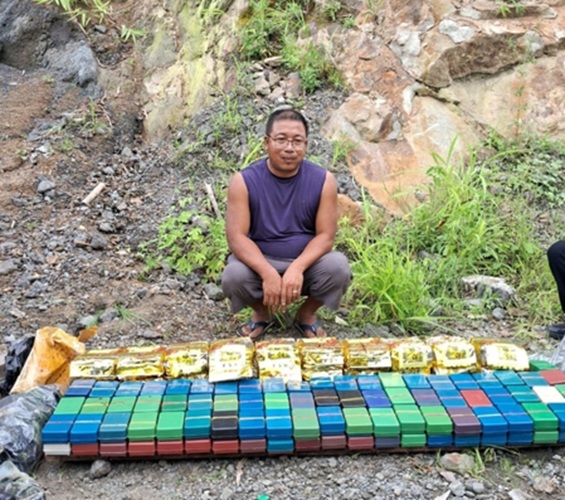
“In a major operation by the Mizoram Excise and Narcotics Department, over 15 kg of methamphetamine tablets worth more than Rs. 45 crore were seized, and four persons were arrested, including two Myanmar nationals. The bust included two operations in Champhai district, a key transit point near the India-Myanmar border. Authorities intercepted traffickers and recovered 10.1 kg of methamphetamine tablets from two Myanmar nationals and an additional 5.11 kg from two Indian nationals from Assam and Tripura. The vehicle used for smuggling, registered in Assam, was also seized. The accused have been booked under the Narcotic Drugs and Psychotropic Substances (NDPS) Act, 1985. Champhai and neighboring districts have emerged as critical corridors for the illicit trade of synthetic drugs, which are banned in India due to their high addictive potential. Mizoram shares a 1,643-km unfenced border with Myanmar, making it vulnerable to such trafficking networks.”

This operation is part of an intensified crackdown on drug smuggling through Mizoram, reflecting the state’s strategic location near the Golden Triangle drug trade route and its role as a major transit corridor for narcotics from Myanmar to other Indian states.​

IIM Calcutta Innovation Park and Assam collaborate to support Northeastern startups.

The IIM Calcutta Innovation Park (IIMCIP) has signed a Memorandum of Understanding with the Assam Innovation and Startup Foundation (AISF) to accelerate entrepreneurship and startup development in Assam and the broader Northeast. The agreement was signed by Jeevan Basavaraj, Secretary of Assam’s Department of Innovation, Incubation and Startups (DIIS), and Ajay Jain, Chairman of IIMCIP, in the presence of senior officials from both organizations.

Under this collaboration, IIMCIP will share its expertise in mentoring, funding, and ecosystem development to strengthen AISF’s mission of nurturing a vibrant startup culture in the state. The initiative supports the Assam Startup Policy 2025, which aims to position Assam as an innovation-driven hub promoting job creation and inclusive growth.

IIMCIP, a not-for-profit body under IIM Calcutta, has already mentored over 2,000 startups and provided seed funding to more than 130 ventures, collectively helping them raise about Rs. 2,000 crore in funding with a combined valuation of Rs. 8,000 crore.

AISF, operating under the Assam government’s DIIS, functions as a key platform for incubation, market access, and investor engagement. Together, the two institutions aim to introduce structured mentorship programs, enhance startup capacity-building, promote women-led enterprises, and create greater opportunities for innovators across the Northeast.

Two are detained by Assam police in Sribhumi, and they confiscate a pistol and counterfeit money.

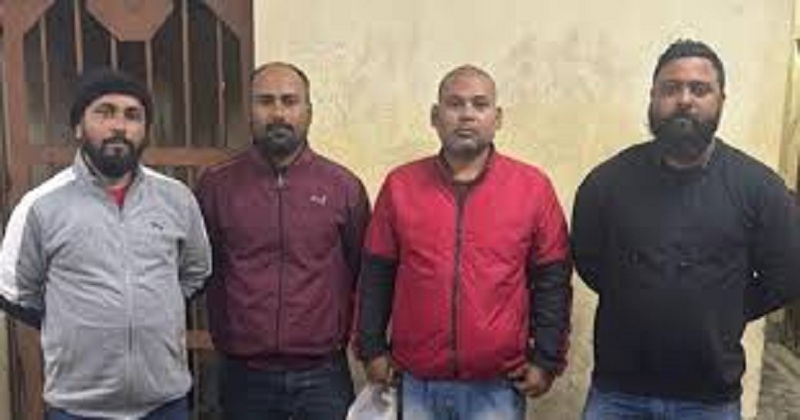
Assam Police arrested two men, Abidur Rahman (28) and Anowar Hussain (29), from Ratabari in Sribhumi district on Saturday after a raid in the Jalalabad market area. Authorities recovered a country-made 9mm pistol, one live round of ammunition, and counterfeit currency worth Rs 48,000 concealed under the suspects’ motorcycle seat. Preliminary investigations indicate these individuals may be part of a network dealing in fake currency and illegal arms across border regions. Police are interrogating the suspects to trace the larger racket and identify other involved persons.

“Sweet Revolution”: India rises to become the second-largest honey exporter in the world.

India has risen to become the world’s second-largest exporter of natural honey, with shipments reaching 1.07 lakh metric tonnes valued at $177.55 million in 2023–24, a leap from ninth place in 2020. This success stems from the National Beekeeping and Honey Mission (NBHM) under the Atmanirbhar Bharat initiative, which promotes scientific beekeeping and quality honey production while generating rural livelihoods. The NBHM, implemented via the National Bee Board, started with a Rs. 500 crore budget for three years and extended to 2025–26 with Rs. 370 crore remaining. The Madhukranti portal facilitates online registration and traceability of bee products, boosting transparency and export quality standards. India’s varied agro-climatic regions provide ideal conditions for honey production, which supports agricultural sustainability through pollination and provides additional products like beeswax, royal jelly, and bee venom. The NBHM emphasizes improving crop productivity, post-harvest management, and technology research tailored to different regions, propelling India’s emergence as a major global honey market player and symbolizing rural economic empowerment and growing self-reliance.

The United States is the largest market for Indian honey, accounting for about 78% of exports, followed by the UAE, Saudi Arabia, and other nations. Recent changes in US tariffs pose challenges, but new markets like Thailand and South Korea show promise for future growth.

Blood-stained history obliterated by politics: The conflict over Bhasha Shahid Station.

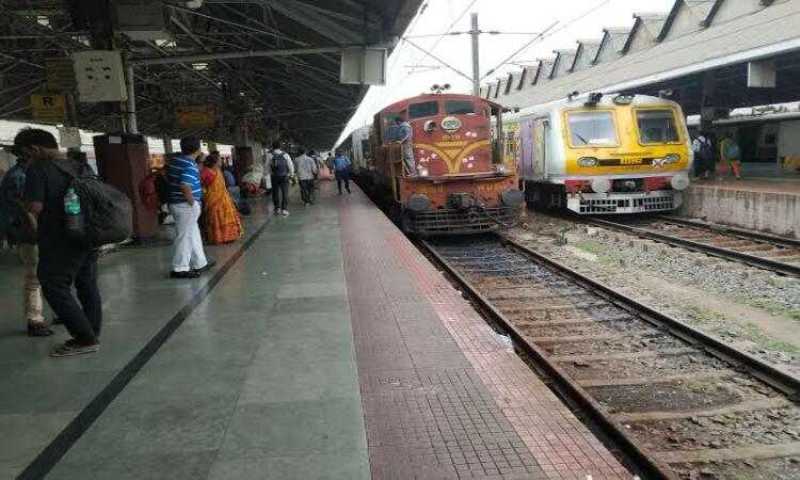
The demand to rename Silchar Railway Station as “Bhasha Shahid Station” (Language Martyrs’ Station) to honor the eleven martyrs of the 1961 Bengali language movement in Barak Valley has long been stalled due to reluctance by the Assam state government. Despite approvals from the Union Home Ministry and Railway Ministry and public support—including from the Asam Sahitya Sabha— the renaming process remains blocked at the state level.

The state government’s refusal to issue a formal no-objection certificate (NOC) and failure to respond to a 2015 central letter confirming spelling have drawn criticism and suspicion about political motives. The movement to rename symbolizes justice and linguistic rights, commemorating unarmed civilians who died defending linguistic identity under Article 29 of the Constitution.

Controversy intensified with some remarks by “Dimasa Writers’ Forum” leadership seeming to downplay the 1961 activists as “Bangladeshis,” which the Dimasa Sahitya Parishad disavowed, emphasizing the diverse participation in the movement—including Bengalis, Manipuris, Dimasas, and tea garden communities. Activists assert renaming is not about linguistic dominance but recognizing sacrifice for democratic and cultural rights.

Calls from cultural bodies and public organizations for official recognition and timely renaming have been mounting, but the state government continues to delay, a stance criticized for ignoring Barak Valley’s emotional and historical sentiments. The neglect includes disparaging comments by government ministers labeling martyrs as “miscreants,” further alienating local communities.

The renaming is seen not only as a tribute but a crucial step to uphold the democratic spirit of India’s linguistic diversity and honor a peaceful, inclusive movement that transcends political and communal divides.

This summary reflects widespread public sentiment, administrative hurdles, and cultural-political dynamics surrounding the longstanding call to rename Silchar Railway Station after the language martyrs of 1961.​