According to Toshihiro Suzuki, Suzuki Motor intends to invest Rs 70,000 crore in India.

Suzuki Motor Corporation will invest ₹70,000 crore in India over the next 5–6 years, announced at the launch of Maruti Suzuki’s first electric SUV, the e-Vitara, in Gujarat. Prime Minister Narendra Modi flagged off the first export batch, marking a major step toward India’s green mobility push. The e-Vitara will be produced at the Suzuki Motor Gujarat plant and exported to over 100 countries. Suzuki also began local production of lithium-ion batteries in line with the Atmanirbhar Bharat initiative, reinforcing its long-term commitment to India’s sustainable mobility vision.

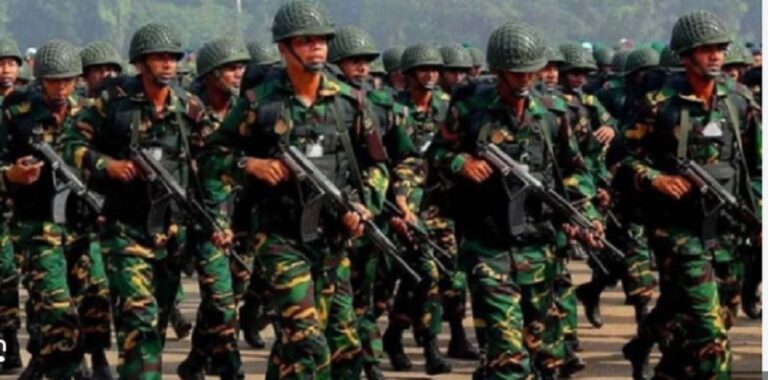
Just a small portion of the 70 files pertaining to the promotions of Bangladesh Army commanders that Chief Adviser Yunus’ office approved.

Of the 70 promotion files involving senior Bangladesh Army officers, only a handful were cleared last week by Chief Adviser Mohammad Yunus’s office, sources confirmed. Among the most significant outcomes was the abrupt retirement of Maj Gen Moin Khan, the influential Savar-based GOC of the 9th Infantry Division and a close confidant of Army chief Gen Waker-uz-Zaman. His removal, effective August 21, coincided with Zaman’s week-long visit to China.

At the same time, Brig Gens Nazim Ud Daula and Sajjad were elevated to the rank of Major General, with Nazim tipped to take over as GOC 11th Infantry Division in Bogura. Maj Gen S M Asadul Haque has been shifted from Bogura to Savar, replacing Moin Khan as GOC of the crucial 9th Infantry Division. Meanwhile, the proposed transfer of Maj Gen Abu Mohammad Sarwar Farid, current DG of NSI, to Ghatail’s 19th Infantry Division remains pending.

Sources noted that Maj Gen Nazim Ud Daula, now rising rapidly within the force, played a key operational role during the student-led uprising that toppled Sheikh Hasina’s government and earlier was involved in pressuring ex-Chief Justice S K Sinha to leave the country.

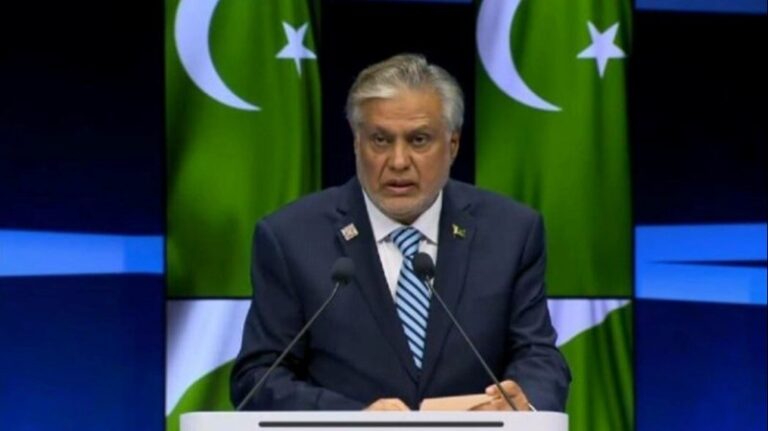
When the Deputy PM visits Dhaka in the near future, Bangladesh must make sure Pakistan apologises for the genocide.

The upcoming visit of Pakistan’s Deputy Prime Minister and Foreign Minister Ishaq Dar to Dhaka on August 23, 2025, is historically significant—the first such bilateral visit in three decades. It comes as the Bangladeshi interim government seeks closer ties with Pakistan, despite unresolved issues stemming from the 1971 genocide in which millions of Bengalis lost their lives at the hands of the Pakistani army. While diplomatic and military exchanges between the two countries have increased since the ouster of Sheikh Hasina in August 2024, Pakistan has not apologized for its actions during the Liberation War. Recent provocations in Pakistani media and rhetoric from military officials about “reclaiming” Bangladesh and using its territory against India have sparked alarm. Amidst growing cooperation—including joint military training and talk of visa-free access—many Bangladeshis fear for their country’s sovereignty and view the government’s silence on past atrocities as deeply troubling. Public demand for a formal apology from Pakistan remains unfulfilled, keeping the wounds of 1971 open and driving concerns about the true intentions behind the renewed bilateral engagement.

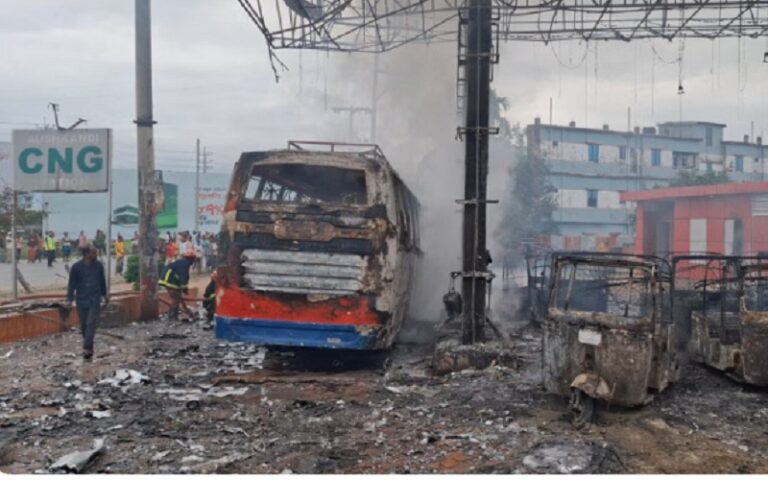
Bangladesh: A fire at the Habiganj CNG filling station destroyed 12 cars.

A massive fire broke out at a CNG filling station in Aushkandi, Nabiganj upazila of Habiganj on Thursday morning after a bus cylinder exploded during refuelling. The blaze gutted nine auto-rickshaws, a bus, and two motorcycles before firefighters brought it under control in over two hours. Authorities estimate damages of around Tk 1.5 crore, though no casualties have been reported.

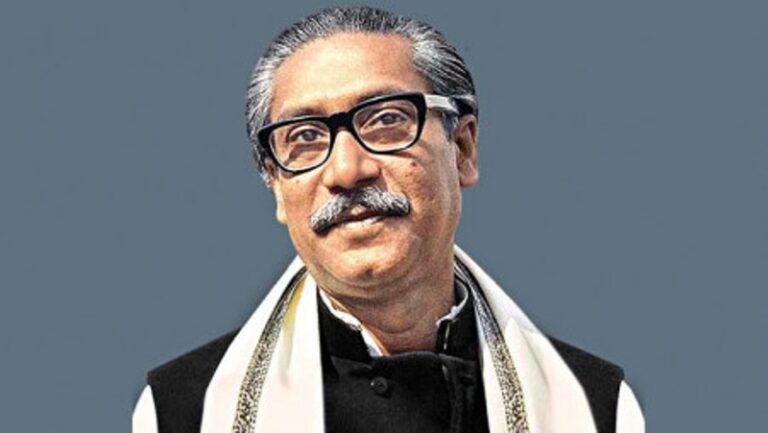
Fifty years after August 15, there are still concerns about Bangabandhu’s safety.

The assassination of Bangabandhu Sheikh Mujibur Rahman on 15 August 1975 stands as a national tragedy borne of both conspiracy and profound security failures. Despite warnings from close political allies and foreign leaders, Bangabandhu continued to reside at his easily accessible home on 32 Dhanmondi Road, rather than at the more secure Ganobhaban. Intelligence agencies and the military command failed to detect or respond to the looming threat, while key officers and ministers showed complicity or remained silent. On the fateful night, the security detail was swiftly overpowered and no rescue attempt was made. The ease with which the plotters isolated and attacked the presidential residence revealed a complete institutional breakdown. This watershed event not only marked the brutal loss of Bangladesh’s founding father and much of his family but also exposed enduring vulnerabilities within the nation’s security apparatus—a legacy that continues to be examined half a century later.

To resolve a “rift” inside the NCP, US Chargé d’Affaires in Dhaka, Tracey Jacobson, steps in.

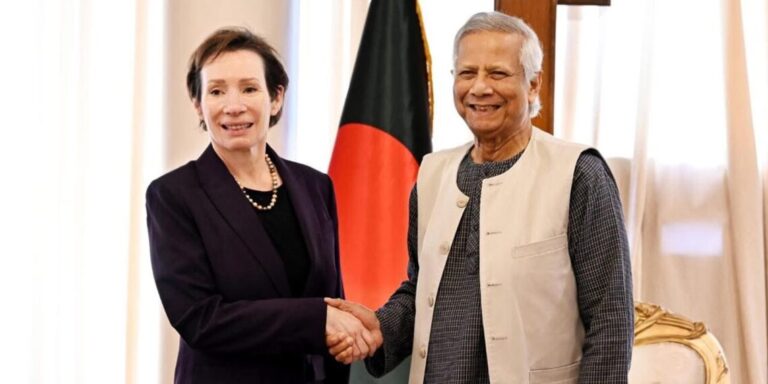
On August 11, 2025, US Chargé d’Affaires in Dhaka, Tracey Ann Jacobson, hosted a meeting at her Gulshan residence with three senior National Citizens Party (NCP) leaders — convenor Nahid Islam, Member Secretary Akhtar Hossain, and Senior Joint Secretary Tasmin Zara — along with US Embassy official Eric Geelan. The meeting followed a clear rift within the NCP, marked by the absence of five leaders, including Zara, from an August 5 event in Dhaka; instead, they stayed in Cox’s Bazar, where they reportedly held a virtual meeting with former US Ambassador Peter D. Haas. Bangladeshi intelligence monitored their activities closely. The presence of Hossain and Islam, who had issued show-cause notices to the five dissidents, suggests the US Embassy may be involved in mediating the party’s internal dispute.

Political juncture in Bangladesh: Reform drive postpones elections as BNP takes the lead.

Bangladesh’s interim government, led by Nobel laureate Muhammad Yunus, has postponed the country’s next general election to February 2026 to allow sweeping constitutional, judicial, media, and electoral reforms. The move follows the August 2024 ousting of Sheikh Hasina’s Awami League after a deadly, student-led uprising and a UN-confirmed crackdown involving alleged crimes against humanity.

The opposition Bangladesh Nationalist Party (BNP) is now in a commanding position and, along with allies Jamaat-e-Islami and the National Citizen Party, supports barring the Awami League from contesting. Critics warn that excluding the Awami League — still popular in rural and minority communities — could fuel instability. India and the UN stress the need for a credible democratic process, but ongoing unrest and deep political divisions make Bangladesh’s path to the 2026 polls uncertain.

Bangladesh: An anti-Awami League tract in the form of a “declaration”

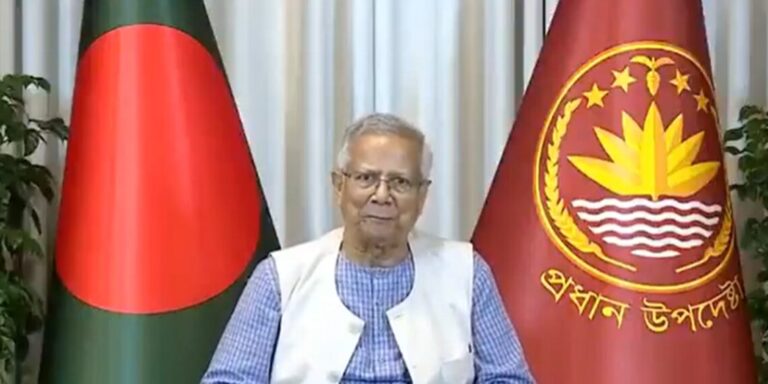
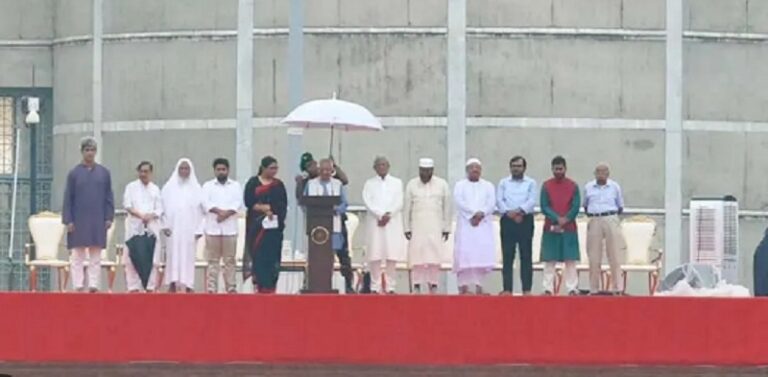
The July Declaration, announced by Chief Adviser Muhammad Yunus on August 5, 2025, is a contentious 28-point document that criticizes the Awami League government and its historical legacy, accusing it of authoritarianism and fascism. The declaration controversially omits major aspects of Bangladesh’s liberation history and instead praises opposition figures and certain past regimes while condemning others. Its politically charged narrative has been widely criticized for attempting to rewrite history and ignoring ongoing repression under Yunus’ interim government. Public resistance, including student protests at Dhaka University, reflects widespread dissatisfaction with the declaration and the current political climate in Bangladesh.

The High Commissioner of Bangladesh begins a three-day visit to Tripura.

Bangladesh High Commissioner to India, M. Riaz Hamidullah, arrived in Tripura on a three-day official visit, where he is scheduled to meet Governor N Indrasena Reddy and Chief Minister Manik Saha. During his visit, Hamidullah will inspect major border infrastructure projects, including the Agartala Integrated Check Post, the Akhaura Land Port, and the under-construction Akhaura-Agartala Rail Link. A key highlight of his visit is an inspection of Maitri Setu, the 1.9-kilometre bridge connecting Sabroom in India to Ramgarh in Bangladesh. Although Maitri Setu was inaugurated in March 2021 by Prime Minister Narendra Modi and then Bangladesh Prime Minister Sheikh Hasina, it remains non-operational due to political changes in Dhaka. The High Commissioner’s visit underscores renewed bilateral efforts to operationalize the bridge and boost cross-border connectivity between India’s Northeast and Bangladesh’s Chittagong port.

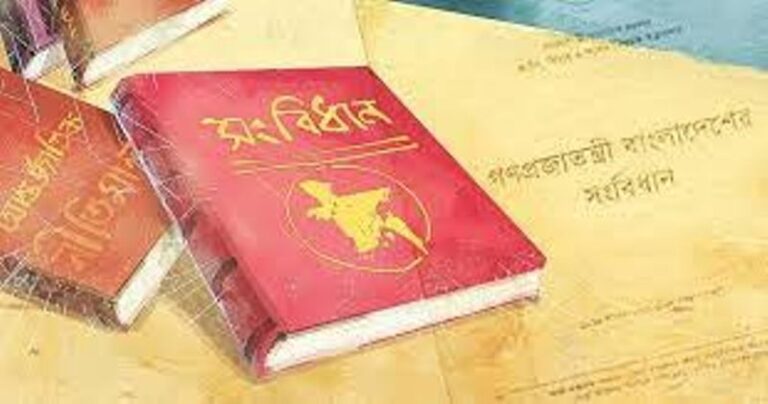
The 1972 Constitution of Bangladesh must not be altered.

Since the forced exile of Sheikh Hasina in August 2024 and the subsequent collapse of Bangladesh’s constitutional government, the country has entered a period marked by instability, mob rule, and pronounced attempts to reshape its fundamental national identity. The interim government, led by Muhammad Yunus, has set in motion efforts that many observers see as a deliberate move toward erasing the historical and secular legacy established by the War of Liberation in 1971.

The Bangladesh Constitution of 1972 stands as a testament to the ideals that defined the nation’s struggle for independence—nationalism, democracy, secularism, and socialism. While these founding ideals have been undermined periodically by constitutional amendments, recent developments—including proposals to amend or abandon the 1972 Constitution without parliamentary debate—have raised grave concerns. The absence of representative oversight, alongside the rise of communal political forces, poses a direct threat to the secular, democratic foundations of the country.

Restoring the 1972 Constitution, with its emphasis on pluralism and egalitarianism, is seen by many as essential for the country’s future. Bangladesh today stands at a crossroads: whether to safeguard its inclusive and secular legacy or to succumb further to authoritarian and communal pressures.