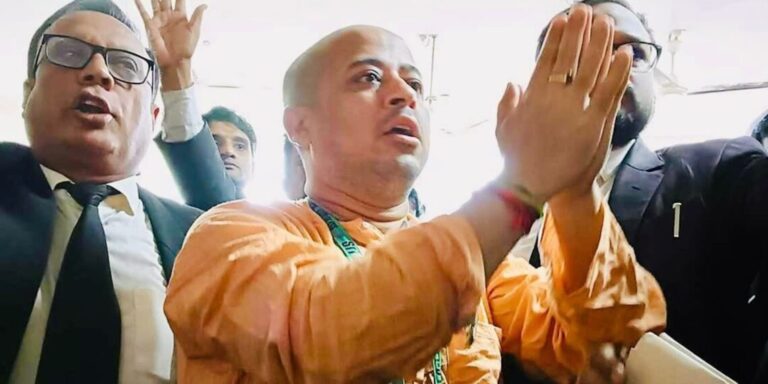
Hindu leader Chinmoy Krishna Das is once again denied bail by a Bangladeshi court.

A Bangladesh court on Thursday denied bail to Hindu leader Chinmoy Krishna Das in connection with multiple criminal cases, including the high-profile murder of Chattogram lawyer Saiful Islam Alif. Das, spokesperson of the Bangladesh Sammilito Sanatani Jagaran Jot, remains in jail as the court rejected his plea, despite health concerns raised by his legal team. His arrest and continued detention have sparked protests amid rising communal tensions under the interim administration, following the ouster of former Prime Minister Sheikh Hasina. India has condemned the developments, citing persecution of Hindu minorities.
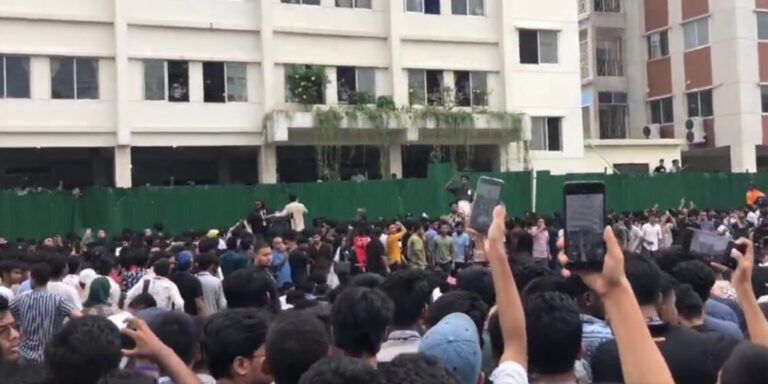
As the number of fatalities from the Bangladesh Air Force plane disaster grows to 31, protests break out in Dhaka.

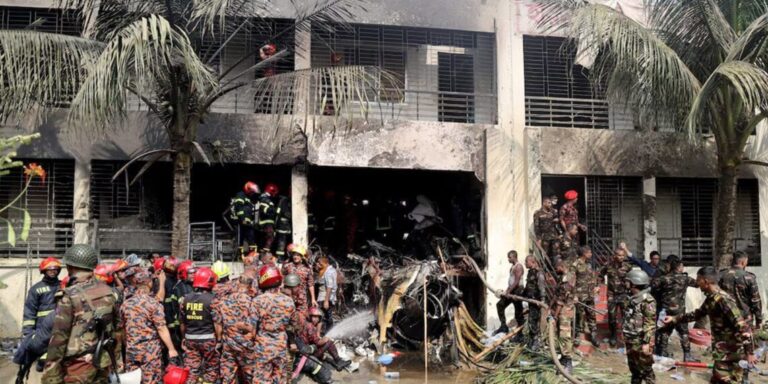
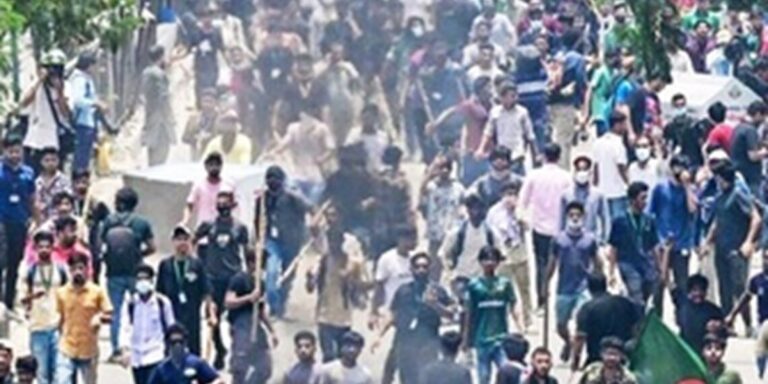
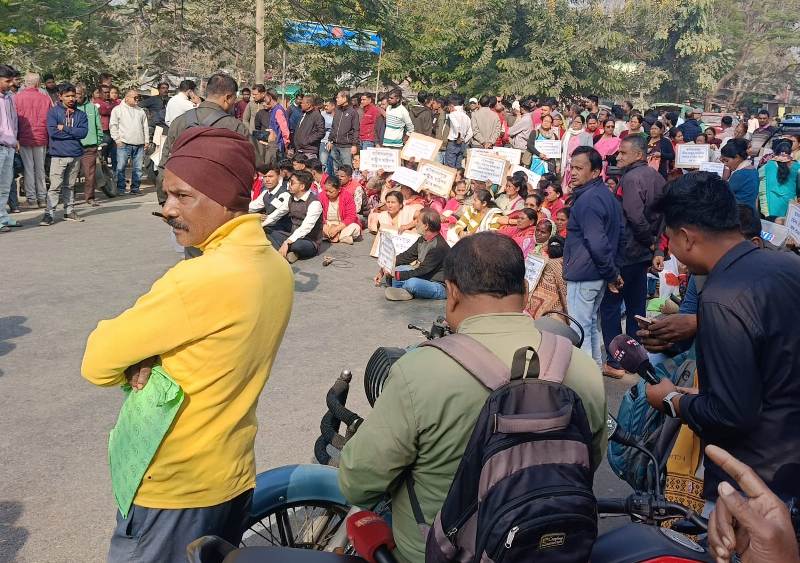
Widespread student-led protests erupted across Dhaka on Tuesday after a Bangladesh Air Force training jet crashed into Milestone School and College in Uttara, killing at least 31 people and injuring over 160—most of them students. Grief quickly turned to anger as protesters accused the government of withholding information about the victims and demanded accountability for allowing outdated aircraft to operate near schools. Demonstrators called for the resignation of top education officials and pressed for immediate release of the victims’ identities, compensation for families, and a halt to unsafe training flights. Tensions flared during a visit by government advisors, who were forced to shelter inside the school when surrounded by demonstrators. In response, Chief Advisor Muhammad Yunus pledged that all demands would be considered, an information centre established, and allegations of assault by military personnel investigated. The incident has triggered mounting public scrutiny of Bangladesh Air Force safety practices and government transparency.

19 people have died and nearly 50 have been injured in the Bangladesh Air Force plane crash.

Nineteen people were confirmed dead and over fifty injured—many with severe burns—after a devastating crash at a local school in Uttara, Dhaka. Victims were rushed to multiple hospitals across the city, including Crescent Hospital, Uttara Adhunik Hospital, Mansur Ali Medical College, Kurmitola General Hospital, and the National Institute of Burn and Plastic Surgery, with the most critical cases transferred to specialized burn units. “Most of those brought in are students, and many are in critical condition,” reported Dr. Shawon Bin Rahman at the National Institute of Burn and Plastic Surgery. While some patients with minor injuries were stabilized, others required advanced care. Rescue operations continued as authorities investigated the cause of the tragedy. The school has been temporarily closed as the community mourns the loss and grapples with the aftermath.

All roads now lead to Turkey for Bangladesh’s military troops.

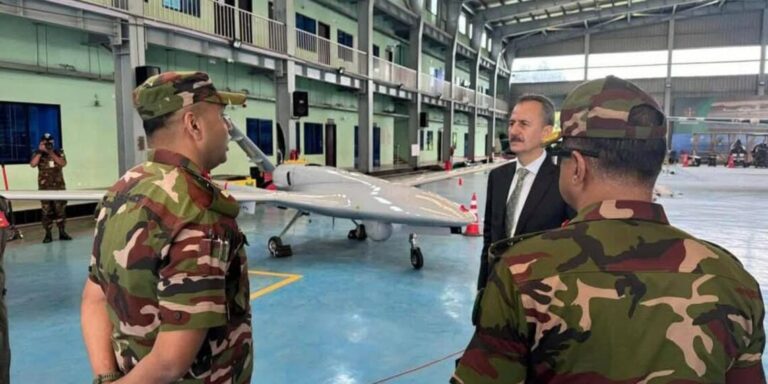
Bangladesh’s defence ties with Turkey are undergoing a marked deepening, signaled by a series of high-level visits and expanding military cooperation. Just days after Navy Chief Admiral Mohammad Nazmul Hassan departed for official engagements in Turkey and Russia, Air Chief Marshal Hasan Mahmood Khan has left for Istanbul to meet his Turkish counterpart and attend the International Defence Industry Fair. These visits follow the July trip of Turkish Defence Industry Secretary Haluk Gorgun to Dhaka, during which he met key Bangladeshi military leaders and discussed joint ventures, including the possible establishment of defence production complexes in Chittagong and Narayanganj.

Since 2018, Bangladesh has ramped up acquisition of Turkish military hardware, procuring howitzers, rocket systems, and drones, and is considering a further expansion of its arsenal. The growing partnership comes as Dhaka appears to recalibrate away from reliance on Chinese defence supplies, underlined by the recent cancellation of the Army Chief’s planned visit to Beijing. This evolving dynamic is expected to culminate in a formal agreement and an institutional framework to coordinate collaborative defence projects between the two countries.

One person is killed when a Bangladesh Air Force fighter plane crashes into a school in Dhaka, Uttara.

A Bangladesh Air Force F-7 fighter jet crashed onto the campus of Milestone School and College in Dhaka’s Uttara area on July 21, killing one person and injuring at least four others while classes were underway. The crash caused significant panic, with thick smoke seen rising from the site as emergency services, teachers, and Army personnel scrambled to rescue students and staff. Over 30 people required treatment for burns and injuries at local hospitals. The government has announced a full investigation into the cause of the accident, which is the second crash involving a Chinese-made F-7 aircraft in the region this year.

The deadline for the Bangladeshi tribunal’s investigation into the murders from the previous year is October 15.

Bangladesh’s International Crimes Tribunal (ICT) has ordered investigators to complete probes into seven major cases linked to last year’s deadly anti-discrimination protests by October 15. The cases, arising from violent clashes during the July–August 2024 student movement, name 45 individuals as accused, including several senior figures from the former Sheikh Hasina administration: ex-law minister Anisul Huq, ex-education minister Dipu Moni, former industry adviser Salman F Rahman, and former state minister Zunaid Ahmed Palak. The directive was issued during a recent hearing led by ICT Chairman Justice Md Golam Mortuza Majumder, following a request from Chief Prosecutor Mohammad Tajul Islam for additional time. According to the Dhaka Tribune, 39 of the accused were produced in court on the day of the hearing. The tribunal initially began with two cases in December last year, naming 46 individuals—including former Prime Minister Sheikh Hasina—but has now expanded its investigation to seven cases, all tied to the violent unrest sparked by demands to reform the government job quota system. Over 200 people were reportedly killed during the confrontations between law enforcement and predominantly student protesters.

After two decades in a coma, Saudi Arabia’s “Sleeping Prince” dies at the age of 36.

Prince Al-Waleed bin Khalid bin Talal Al Saud, known throughout Saudi Arabia as the ‘Sleeping Prince,’ has passed away at the age of 36 after spending nearly twenty years in a coma caused by a tragic car accident in 2005. Despite the odds, his father, Prince Khaled, never gave up hope, steadfastly remaining by his son’s side and sharing updates with the nation. Prince Al-Waleed’s journey—marked by unwavering family devotion and enduring faith—touched countless hearts across the kingdom and serves as a powerful reminder of hope even amidst unimaginable adversity.

Bangladesh Army officers force the Gopalganj corpses to be buried and cremated quickly without an examination in an attempt to hide the truth.

A day after at least four people were killed in army firing in Gopalganj, south-central Bangladesh, the military hastily buried the bodies without conducting mandatory autopsies, despite the presence of mortuary facilities at Gopalganj General Hospital. Unofficial reports suggest the death toll may be as high as 19, with at least nine others injured and hospitalized. Video evidence and eyewitness accounts point to the use of excessive force by the 55th Infantry Division, whose commanding officers were identified as having authorized the firing on unarmed civilians and Awami League party cadres. Despite mounting evidence, the Army’s public relations wing claimed the firing was in “self-defence.” The incident has sparked public outcry, particularly over the lack of medico-legal procedures and transparency in handling the aftermath.

Five officers from the 55th Infantry Division of the Bangladesh Army are reported to be directly involved in the Gopalganj shooting.

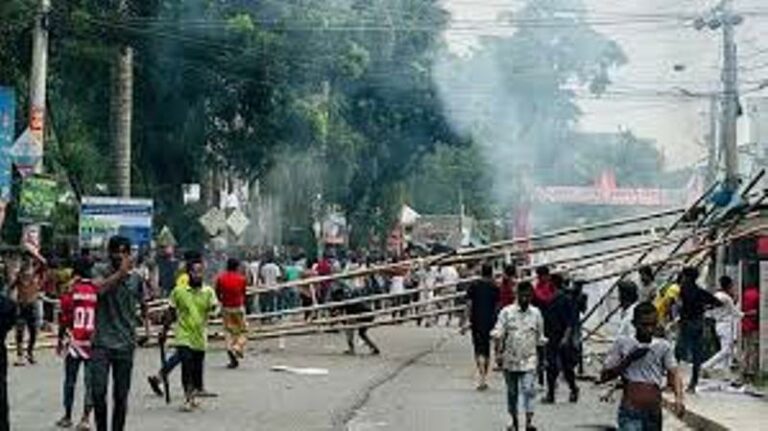
On July 16, clashes in Gopalganj between Bangladeshi Army troops and Awami League supporters turned deadly, resulting in at least four confirmed deaths and multiple injuries. The Army’s 55th Infantry Brigade, led by Major General J M Imdadul Islam, reportedly authorized the use of live fire to disperse protesters blocking roads in the Awami League stronghold. Videos surfaced showing soldiers firing directly into crowds following verbal orders from officers. The incident exposed deep political tensions, with allegations of coordination between the Army and opposition groups, while neither the Army chief nor the interim government expressed regret over the violence. A curfew was imposed as authorities sought to regain control amid widespread unrest.

Bangladesh: The rise of People Power in Gopalganj.

On Tuesday, Gopalganj witnessed a tragic loss as twenty brave sons fell victim to organised violence when the army acted against them. This was not just a clash but an expression of People Power rising against an unconstitutional regime that, over the past year, has waged a calculated assault on Bangladesh’s hard-won history and heritage. Since the overthrow of Prime Minister Sheikh Hasina’s government, the nation has endured political repression, imprisonments, assassinations of activists, and systematic attempts to erase the legacy of the 1971 War of Liberation.

Amid demolitions of historic sites, bans on nationalist slogans like Joi Bangla, and the legitimization of collaborationist factions, the people of Gopalganj stood firm. Their resistance was a decisive rebuke to fascism and a powerful assertion that the nation’s dignity and history will not be desecrated. Despite curfews and crackdowns, this spirit echoes the vibrant People Power that once fueled the liberation struggle — a reminder that no repression can silence the quest for justice and freedom in Bangladesh.