India offers assistance in rebuilding and implores Bangladesh to reevaluate demolishing Satyajit Ray’s family home.

India has expressed deep regret over the demolition of the ancestral home of iconic filmmaker and writer Satyajit Ray in Mymensingh, Bangladesh. The century-old property, once home to Ray’s grandfather and renowned 19th-century writer Upendrakishore Ray Chowdhury, is being razed to make way for a semi-concrete structure to house a Shishu Academy. Calling the house a symbol of the Bangla cultural renaissance, India’s Ministry of External Affairs has offered support for its restoration and proposed converting it into a museum of literature to honor shared cultural heritage. West Bengal Chief Minister Mamata Banerjee also appealed to the Bangladeshi government to preserve the historic site, emphasizing its deep cultural significance.

A rights group is suing over claims that minorities in Bangladesh are being harassed.

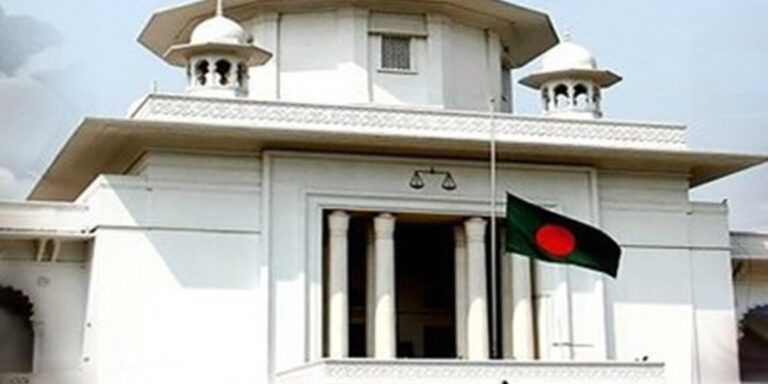
The Human Rights Congress for Bangladesh Minorities (HRCBM) has filed a Public Interest Litigation (PIL) in the Bangladesh Supreme Court, seeking urgent intervention against what it describes as a pattern of legal harassment and false criminal cases targeting religious minorities. The petition highlights the misuse of First Information Reports (FIRs) to intimidate and dispossess minority communities, with a focus on the ongoing detention of monk and social reformer Chinmoy Krishna Brahmachari on allegedly fabricated charges. The HRCBM calls for judicial reforms, including mandatory preliminary investigations before filing FIRs in sensitive cases and disciplinary action against officials involved in malicious prosecutions. The PIL warns that the weaponisation of false cases represents a dangerous evolution of anti-minority violence in Bangladesh. The High Court is yet to schedule a hearing on the matter.

The Bangladesh Case: Investigative Journalism’s Crisis, Media Ethics, and Disinformation. (Part 2)

In 2024, Bangladesh found itself drawn into a new kind of war—not of weapons, but of words. Where previous generations fought for independence and secularism, today’s struggle is against the insidious spread of disinformation and narrative manipulation. The recent BBC Eye report, centered on an 18-second audio clip allegedly implicating former Prime Minister Sheikh Hasina, exemplifies the dangers of selective storytelling and omission. Released without full context or transparent forensic authentication, the clip has been used to fuel unsubstantiated claims and undermine democratic institutions.

This episode is part of a broader pattern: inflated death tolls, decontextualized data, and weaponized narratives have been wielded by political and extremist groups to erode trust, delegitimize governance, and rewrite history. When international media amplifies such claims without rigorous verification, it risks legitimizing those who seek to destabilize Bangladesh’s secular and democratic foundations.

In this war of narratives, truth demands more than good intentions—it requires precision, accountability, and unwavering commitment to context. Anything less threatens not only the integrity of journalism, but the very soul of Bangladesh’s democracy.

A Context-Free Headline: The BBC’s Bangladesh Report Leaves More Unanswered Questions.

On July 9, 2025, the BBC published an investigative report alleging that Bangladeshi Prime Minister Sheikh Hasina authorized the use of lethal force, based on an 18-second leaked audio clip. While the BBC claims the audio was forensically verified and unedited, the report’s reliance on a single, context-free excerpt raises questions about its journalistic rigor. The article provides no details about the conversation’s participants, circumstances, or the broader context of the Prime Minister’s remarks. Despite the audio’s verification, the absence of a full recording and the lack of clear sourcing undermine transparency. The timing of the report—amid economic turmoil and rising unrest in Bangladesh—further suggests possible strategic motivations behind its release. Ultimately, the report reiterates longstanding allegations without offering new or comprehensive evidence, highlighting the need for responsible journalism that prioritizes context, accuracy, and accountability over sensationalism.

The Awami League claims that Islamists are planning to make Bangladesh the “Next Afghanistan.”

Bangladesh’s ruling Awami League has warned of a radical Islamist agenda to transform the country along the lines of Taliban-ruled Afghanistan. In a statement Thursday, the party accused the Jamaat–Char Monai alliance of plotting to dismantle democratic norms, curtail women’s rights, enforce a strict religious code, and impose nationwide jihadi training if brought to power. Citing a recent interview, the Awami League highlighted Islami Andolan Bangladesh leader Muhammad Faizul Karim’s pledge to introduce Sharia law and restructure governance after the models of Afghanistan and Iran. Karim’s assurance that Hindus would be given “rights” under Sharia drew sharp criticism from secular and minority groups. The Awami League questioned the silence of the Muhammad Yunus-led interim government and raised concerns about rising attacks on minorities and women, citing disturbing statistics on violence and a collapse of secular values under the current regime.

Bangladesh’s continuous suppression of press freedom is denounced by foreign journalists and scholars.

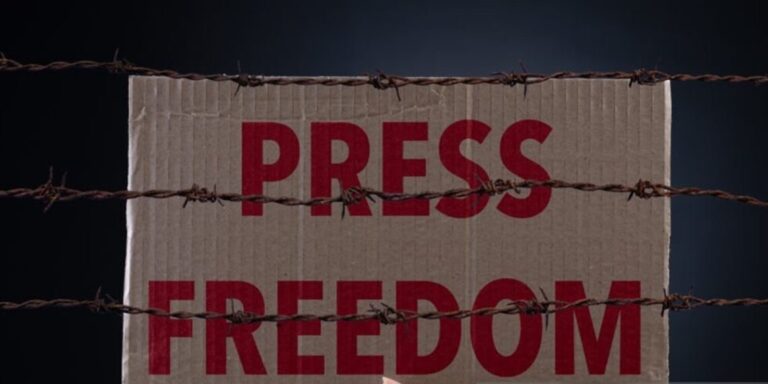
A joint statement by 88 expatriate Bangladeshi journalists, writers, researchers, and rights activists has strongly condemned what they describe as a systematic and escalating persecution of journalists under the current interim government led by Nobel laureate Muhammad Yunus. The group expressed deep concern over the deterioration of press freedom since August 2024, citing the arrest of 39 journalists, travel bans on over 300, frozen bank accounts for more than 100, and the loss of jobs for 1,000 media professionals. The statement also highlighted the revocation of press accreditation for 168 journalists, cancellation of press club memberships, and the killing of 10 journalists during last year’s protests. Calling the crackdown “unprecedented in the country’s democratic history,” the signatories demanded an immediate end to harassment of the media and restoration of press freedom in Bangladesh.

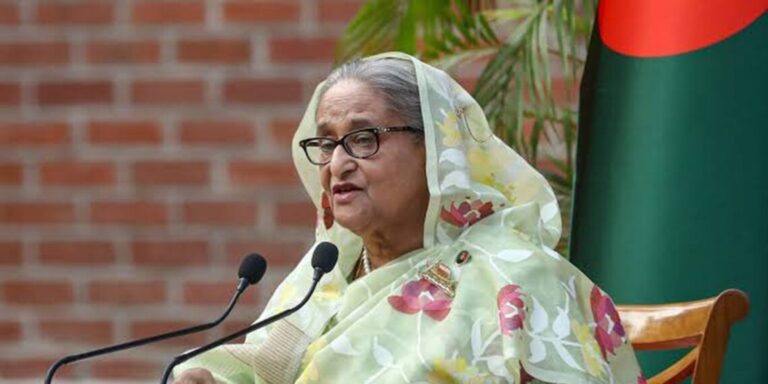
Sheikh Hasina, the former prime minister of Bangladesh, received a six-month term for contempt.

Former Bangladesh Prime Minister Sheikh Hasina was sentenced to six months in prison on Wednesday by the International Crimes Tribunal (ICT) in a contempt of court case. The verdict was delivered by a three-member bench headed by Chairman Justice Md Golam Mortuza Mozumder, according to reports by The Dhaka Tribune. This marks the first time Hasina, ousted from office and living in exile, has been convicted since fleeing Bangladesh nearly a year ago. Alongside Hasina, Shakil Akand Bulbul of Gobindaganj in Gaibandha was also sentenced to two months in prison in the same case, highlighting the tribunal’s ongoing efforts to address charges linked to recent unrest.

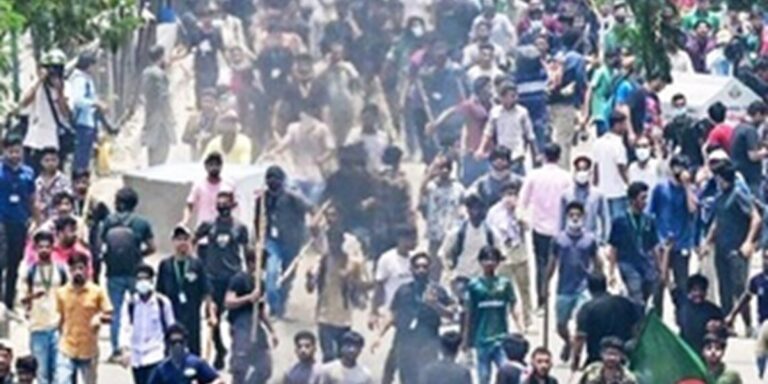
Earlier in June, the ICT formally charged Sheikh Hasina with crimes against humanity related to her alleged role in orchestrating a brutal crackdown on nationwide protests during July and August 2024. Chief Prosecutor Mohammad Tajul Islam and his team accused Hasina of being the chief instigator behind the systemic attack on mass protests against her government. The protests, which erupted into widespread violence, saw curfews imposed and an intense government response. According to a UN rights office report, approximately 1,400 people were killed between July 15 and August 15, 2024, during retaliatory violence that extended even after the regime’s collapse.

Mob depredation and anti-Hindu violence are being encouraged by the Bangladesh Army.

Since the ouster of Sheikh Hasina on August 5, 2024, Bangladesh has descended into a period of widespread violence and lawlessness, with minorities—particularly Hindus—bearing the brunt of targeted attacks. Despite Army chief General Waker-uz-Zaman’s public pledge to protect the nation, the months that followed saw over 2,000 incidents of violence against minorities, including brutal assaults, rapes, and murders, as documented by the Bangladesh Hindu Buddhist Christian Unity Council. The interim government, led by Chief Adviser Muhammad Yunus, has been criticized for its silence and inaction, while the military has largely failed to intervene, allowing mobs to operate with impunity. The rise in radical Islamist sentiment and the conflation of anti-Hindu and anti-India rhetoric have further marginalized secular voices, leaving Bangladesh’s minority communities increasingly vulnerable and the rule of law in tatters.

India prohibits importing jute and other goods from Bangladesh via land routes.

Amid escalating diplomatic tensions, India has imposed a ban on the import of specific jute products and woven fabrics from Bangladesh through all land routes, restricting their entry to the Nhava Sheva seaport in Maharashtra. The Directorate General of Foreign Trade clarified that these restrictions do not affect Bangladeshi goods transiting to Nepal or Bhutan, though re-exports to India via these countries are prohibited. This move marks the third instance of trade curtailment with Bangladesh in recent months, following earlier restrictions on ready-made garments, processed food items, and the withdrawal of export transshipment facilities. The latest trade curbs come in the wake of controversial remarks by Bangladesh’s interim leader and growing Indian concerns over Bangladesh’s diplomatic closeness with China and Pakistan. With bilateral trade valued at $12.9 billion in 2023-24, these measures underscore the impact of political and economic challenges on India-Bangladesh relations, particularly in the vital textile sector.