A serious betrayal: The BDR mutineers’ release is a disrespect to the fallen soldiers of the Bangladesh Army.

On May 15, 27 former Bangladesh Rifles (BDR) members walked free from Kashimpur jails in Gazipur, securing bail in a case linked to the 2009 Pilkhana mutiny. The revolt, which left 74 people dead, including 57 army officers, remains one of Bangladesh’s darkest chapters.
The judiciary’s decision to grant bail has sparked concerns over justice and institutional integrity, with critics calling it a betrayal of the Bangladesh Army’s fallen officers. The release raises questions about political expediency and historical accountability, as families of the victims continue to seek closure.
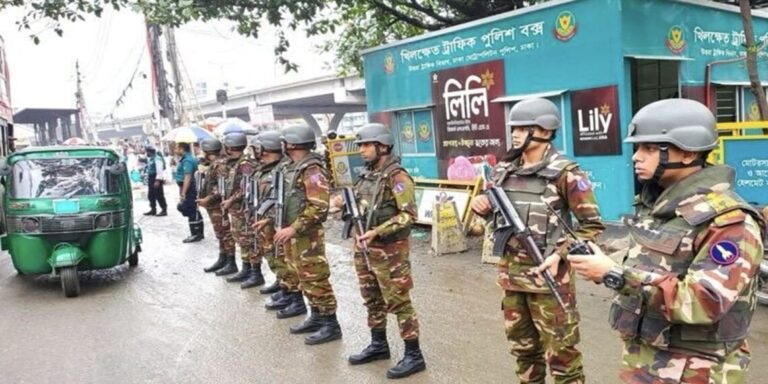
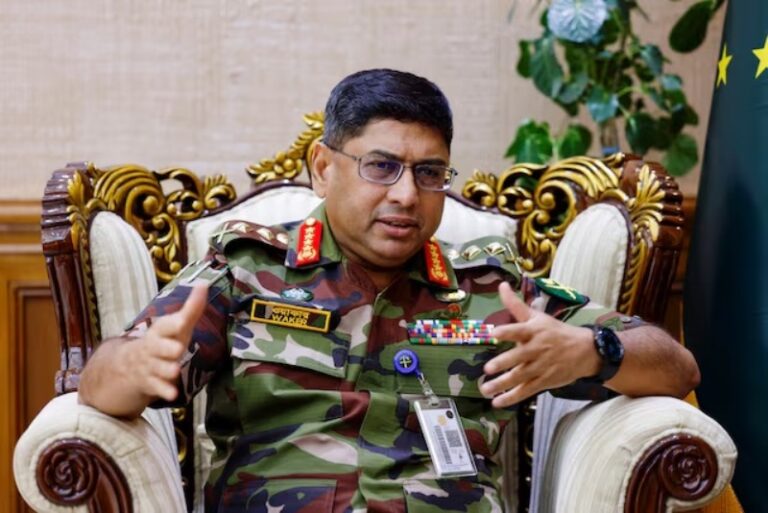
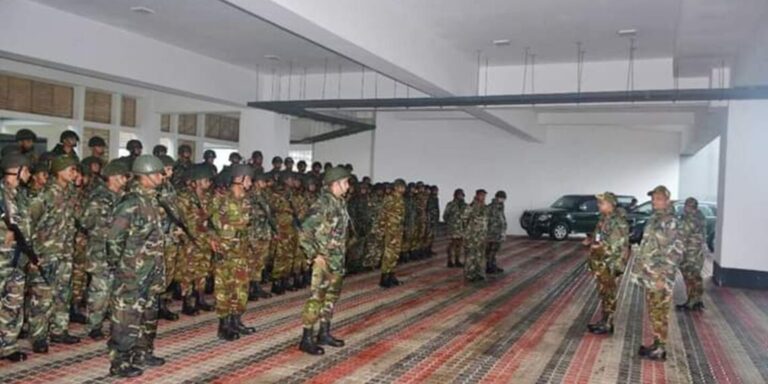
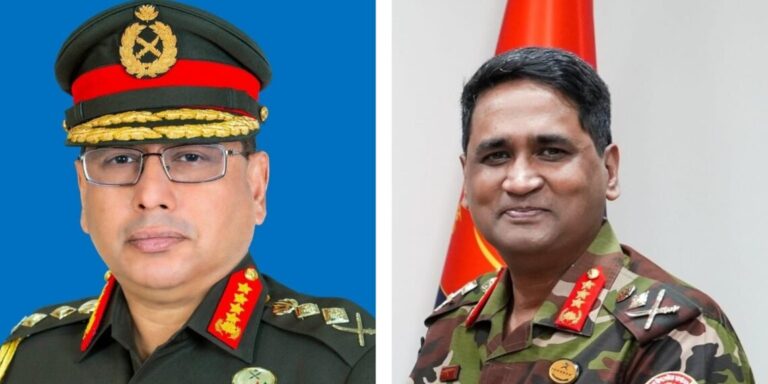
No bloodied hallway, Gen. Waker-uz-Zaman, the head of the Bangladesh Army, warns the Yunus-led interim government.

Bangladesh Army Chief General Waker-uz-Zaman firmly rejected the proposal for a humanitarian corridor on the Bangladesh-Myanmar border, citing sovereignty concerns. Addressing officers in Dhaka, he criticized the Mohammad Yunus-led interim government for keeping the armed forces uninformed on key decisions.
National Security Adviser Khalilur Rahman denied discussing the corridor, despite previous statements linking it to Rohingya repatriation and aid to Myanmar’s Rakhine State. Gen Zaman also stressed that elections must be held by December, and warned against mob violence and lawlessness.
The officer corps largely backed Gen Zaman, signaling strong military opposition to the interim government’s handling of the issue.

A webpage supported by the DGFI in Bangladesh suggests “encircling India’s northeast.”

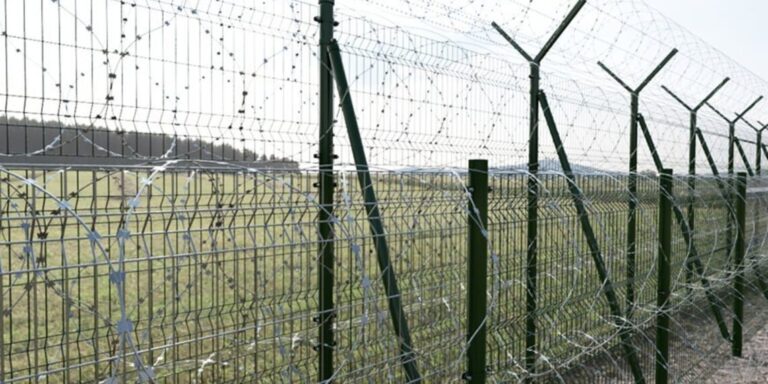
A recent analysis on bdmilitary.com, reportedly backed by Bangladesh’s Directorate General of Forces Intelligence (DGFI), suggests that establishing a Rohingya Safe Zone could serve as a strategic advantage for Bangladesh, allowing it to exert influence over India’s northeastern states. The report frames Myanmar’s Rakhine State and India’s Siliguri Corridor as critical access points that could enable Dhaka to apply geopolitical pressure, disrupting transit routes and military mobility. The analysis also highlights potential support from China’s Belt and Road Initiative and U.S. Indo-Pacific strategy, while acknowledging domestic political opposition. It further proposes securing UN mandates and investing in border security enhancements to legitimize and operationalize the plan.

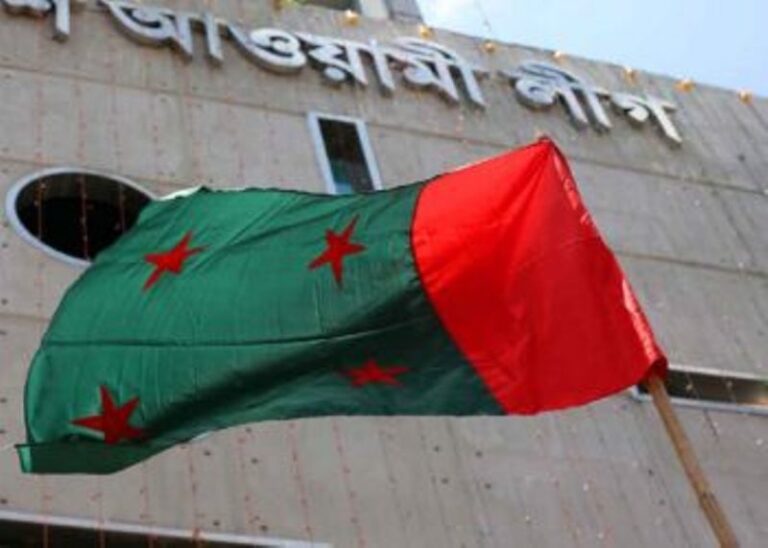
Supporters of the Awami League gather at the UN to call for lifting Bangladesh’s party prohibition.

Bangladeshi expatriates gathered outside the United Nations headquarters to protest the recent ban on the Awami League, urging international intervention to restore democratic governance in Bangladesh. Led by the USA chapter of the Awami League, the demonstration condemned the interim government of Nobel laureate Muhammad Yunus, alleging authoritarian rule and suppression of political opposition. Protesters argued that the ban was unjustified and called on the UN and U.S. government to pressure Bangladeshi authorities to reinstate the Awami League and allow free elections. The Bangladesh Election Commission’s suspension of the party’s registration has intensified concerns over political freedom in the country.

Above For three days, Bangladesh Army officers informed BNP leadership on the negative effects of the “humanitarian corridor.”

Bangladesh’s proposed “humanitarian corridor” for Myanmar’s Rakhine State has sparked political and military discussions. Secret meetings between Bangladesh Army officials and BNP leaders led to the party’s opposition, with senior BNP figures questioning the move. The Army leadership appears divided, as General Waker-uz-Zaman held high-level meetings today, signaling internal tensions over the corridor. Meanwhile, the military imposed restrictions on public gatherings in key Dhaka areas, escalating concerns over the unfolding situation.

The Awami League has consistently recovered in Bangladesh.

“The Awami League, the party instrumental in leading Bangladesh to freedom from Pakistani colonial rule, is once again prey to assaults by those who have historically been uncomfortable with its role in Bengali life. … Every time the Awami League has been under assault from martial law or unconstitutional regimes, it has bounced back through the dedication of its leaders, workers and nationwide supporters.”

Despite the restlessness of Army senior command, Bangladesh’s Foreign Secretary Jashim Uddin was dismissed for opposing the humanitarian corridor.

Bangladesh Army Chief Gen Waker-uz-Zaman attempted to dismiss Lt Gen Kamrul Hassan on May 11, but was stopped by interim authority head Mohammad Yunus, revealing deep divisions within the Army over the humanitarian corridor issue. National Security Adviser Khalilur Rahman strongly supports the corridor, a position that led to the removal of Foreign Secretary Jashim Uddin, who opposed it. The split has impacted international relations, with Gen Zaman’s visit to the U.S. being canceled. Meanwhile, U.S. Charge d’Affaires Tracey Ann Jacobson’s intervention reportedly prevented Hassan’s removal, highlighting geopolitical stakes.

In Turkey, Zelenskyy offers peace, but Putin is not present.

Ukrainian President Volodymyr Zelenskyy has arrived in Turkey for new peace talks, but Russian President Vladimir Putin’s absence has drawn criticism from Western officials. Zelenskyy, accompanied by top Ukrainian officials, will first meet Turkish President Recep Tayyip Erdoğan before potential discussions with Russia’s delegation, led by Putin aide Vladimir Medinsky.
Putin’s absence has fueled doubts about Moscow’s sincerity in negotiations, with European leaders warning of consequences if diplomacy fails. Ukraine is pushing for an immediate 30-day ceasefire, but Russia has declined to halt hostilities before talks.
The initiative has gained momentum amid growing international pressure, with U.S. presidential candidate Donald Trump advocating for direct negotiations between Zelenskyy and Putin. The situation remains uncertain, with global leaders closely watching developments in Turkey.

The only female university vice-chancellor in Bangladesh is the victim of staff-student intrigue.

Bangladesh’s Barisal University Vice-Chancellor Suchita Sharmin was abruptly removed from her position on May 13, sparking allegations of nepotism and political maneuvering. The Mohammad Yunus-led interim government replaced her with Professor Toufiq Alam, amid claims that university administrators sought to advance their own positions.
Sources suggest that Pro Vice-Chancellor Golam Rabbani, Treasurer Mamunur Rashid, and Professor Mohammad Mohsinuddin conspired against Sharmin, allegedly using student protests as leverage. Sharmin has now rejoined Dhaka University, while the controversy continues to unfold.

It is a grave error to ban the Awami League.

The banning of the Awami League in Bangladesh poses a severe threat to the country’s democratic framework and regional stability. As a party instrumental in the nation’s liberation and economic progress, its removal would dismantle multiparty democracy, trigger unrest, and disrupt Bangladesh’s crucial relationship with India. The move risks unsettling investor confidence, bolstering anti-India forces, and weakening regional cooperation. In a volatile geopolitical landscape, dialogue—not suppression—must guide Bangladesh’s political future.”