MHA Unveils a Six-Point Peace Framework for Manipur: Meitei Organizations.

In an effort to address the ethnic conflict in Manipur, a peace conference hosted by the Ministry of Home Affairs (MHA) on April 5 brought together representatives of the Meitei and Kuki-Zo communities. The MHA proposed a six-point resolution as a roadmap for peace, emphasizing appeals to civil society groups to discourage violence and promising future consultations on contentious issues. Both communities expressed their concerns, with Meitei leaders stressing the territorial integrity of Manipur, while Kuki representatives highlighted their community’s needs. This marks the first direct dialogue between the groups since violence erupted in May 2023, which has led to significant loss of life and displacement.

Amid intense debate and legal challenges, the Waqf (Amendment) Bill, 2025, becomes law.

The Waqf (Amendment) Bill, 2025 has been enacted into law with the assent of President Droupadi Murmu on Saturday. The Mussalman Wakf (Repeal) Bill, 2025, has also been approved by the president.

The legislative breakthrough was confirmed by way of an official government notification accessible for public record, reflecting the major progress being made in the central government’s reform agenda.

The passage of these bills in Parliament was characterized by intense debate and long hours. The Lok Sabha approved the Waqf (Amendment) Bill in the wee hours of Thursday, and then there was a 17-hour marathon session in the Rajya Sabha on Friday that ended with its approval. These prolonged deliberations reflect the importance and delicacy of the suggested amendments.

Prime Minister Narendra Modi called the passing of the bills a “watershed moment” for India. He underlined that these reforms are meant to promote more transparency, spur inclusive development, and empower communities that have long lingered on the periphery of economic and social advancement.

In a statement posted on the social media site X, Modi articulated that these changes in legislation signify a wider commitment to socio-economic justice and empowerment.

Union Minister Kiren Rijiju, who brought the bill in Parliament’s both houses, justified the stand of the government, stating the amendment honors the constitutional rights of citizens across all sectors.

He said the spirit behind the reforms was inclusive in the sense that there is no move to hit or target any religion or society-based group, but merely an effort towards building an inclusive system for societies as a whole.

However, the Waqf (Amendment) Bill’s passage has triggered a political row. A number of opposition leaders have questioned the purpose and meaning of the bill. Congress MP Mohammad Jawed and AIMIM chief Asaduddin Owaisi have filed a petition with the Supreme Court, contending that the bill is unconstitutional and discriminatory towards Muslims. The leaders have been afraid that the bill would undermine minority rights and undermine current legal safeguards for Waqf properties.

Reconciling with criticism, the government at the centre has reaffirmed its intentions with respect to justice and equality. It has stressed that the bill resulted from elaborate public debate and review in the Joint Parliamentary Committee, evidence of a democratic procedure.

The government continues to uphold that the changes were designed towards bringing about updates in Waqf management, ensuring governance becomes better and up to date, so as to govern the Waqf properties more transparently on behalf of the desired beneficiaries.

As the political and legal wars intensify, the Waqf (Amendment) Bill, 2025 and the Mussalman Wakf (Repeal) Bill, 2025 hold the power to influence the destiny of religious endowment rule in India, with profound ramifications for minority rights, property administration, and communal concord.

ISRO Plans to Set Up a Versatile Space Facility in Assam.

The Indian Space Research Organisation (ISRO) is establishing a multi-purpose facility in Assam to advance India’s space capabilities and promote education in the region. A state-of-the-art radar system, capable of monitoring objects as small as ten centimeters within a 2,000 km range, will be set up under the NETRA project. This facility will play a vital role in safeguarding space assets and enhancing weather advisory services. Additionally, ISRO is collaborating with the Assam government on the proposal to create a space museum, inspiring future generations.

Following a heated debate, the Lok Sabha passes the Waqf (Amendment) Bill.

The Waqf (Amendment) Bill 2025 has sparked intense debates in Parliament, passing with 288 votes in favor and 232 against. Union Home Minister Amit Shah criticized the 2013 amendments, citing them as politically driven and responsible for significant controversies, including the transfer of 123 VVIP properties in Delhi. Shah and Union Minister Kiren Rijiju defended the bill as necessary for accountability and transparency in managing Waqf properties. Rijiju emphasized that the reforms aim to unify Waqf boards and regulate land usage fairly.
Opposition leaders, including Asaduddin Owaisi and Congress MP Gaurav Gogoi, condemned the bill as discriminatory and targeting Muslims. Concerns were raised about its impact on minority rights, with some accusing the government of political motives ahead of the Bihar Assembly elections. Supporters of the bill, such as NCM Chairman Iqbal Singh Lalpura, argued it safeguards community interests by preventing misuse of Waqf properties.
This excerpt captures the core discussions and contrasting views surrounding the bill. Let me know if you’d like to delve deeper into any specific aspect!

Barakoutlet logo representing a reliable English news channel covering Barak Valley and beyond.

For the Northeast, positive ties with Bangladesh are essential: Central

The Government of India hopes that Bangladesh’s current hostility is temporary, emphasizing the importance of improving relations for regional stability. India’s External Affairs Ministry, through spokesman Randhir Jaiswal, stressed its desire for friendly ties with Bangladesh, noting that despite challenges, essential supplies and development collaborations continue. Concerns about atrocities on minorities in Bangladesh have been raised publicly and officially with Dhaka, highlighting India’s commitment to addressing humanitarian issues.

Telecom operators are required by TRAI to implement built-in caller ID without the need for Truecaller.

“TRAI has directed telecom operators—including Jio, Airtel, and Vi—to roll out Calling Name Presentation (CNAP), a feature that displays the caller’s registered name to combat spam and fraud. Collaborations with global tech giants like HP, Dell, Ericsson, and Nokia are underway, and trials in select areas have already begun, with a phased rollout planned once the technology stabilizes.”

New Delhi: To maintain national highways, the center has approved Rs 9,599 crore.

The government has approved significant investments in maintaining the National Highway (NH) network, including short-term maintenance contracts (STMC) for 17,884 km and performance-based maintenance contracts (PBMC) for 6,118 km, with a total cost of Rs 9,599 crore in the current fiscal year (FY25). The government is also focusing on road safety, with the rectification of over 5,000 black spots and the installation of an Advanced Traffic Management System (ATMS) on four-lane and above NHs to improve incident response and road safety. Additionally, 1,310 NH projects covering 31,187 km, costing Rs 8.11 lakh crore, are currently under construction across the country.

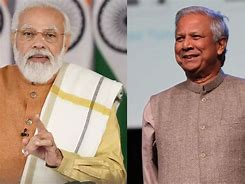
Mutual awareness of one another’s problems, interests, To Yunus, PM Modi writes.

Prime Minister Narendra Modi, in a letter to Muhammad Yunus, the chief advisor to Bangladesh’s interim government, highlighted the importance of mutual sensitivity when referencing the Bangladesh Liberation War, emphasizing it as a “shared history.” He congratulated Bangladesh on its National Day and reiterated India’s commitment to advancing bilateral relations, driven by common aspirations for peace, stability, and prosperity. President Droupadi Murmu also extended her warm greetings, reaffirming India’s support for a democratic and progressive Bangladesh. The relationship between the two countries has faced tensions, particularly following the political changes in Bangladesh, but both nations continue to engage diplomatically on issues of mutual concern.