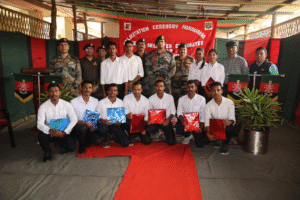
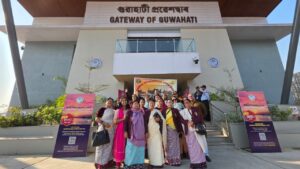
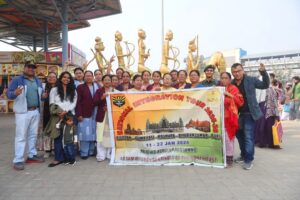
In Guwahati, the governor of Assam opens the BIMSTEC Youth Leaders Summit.

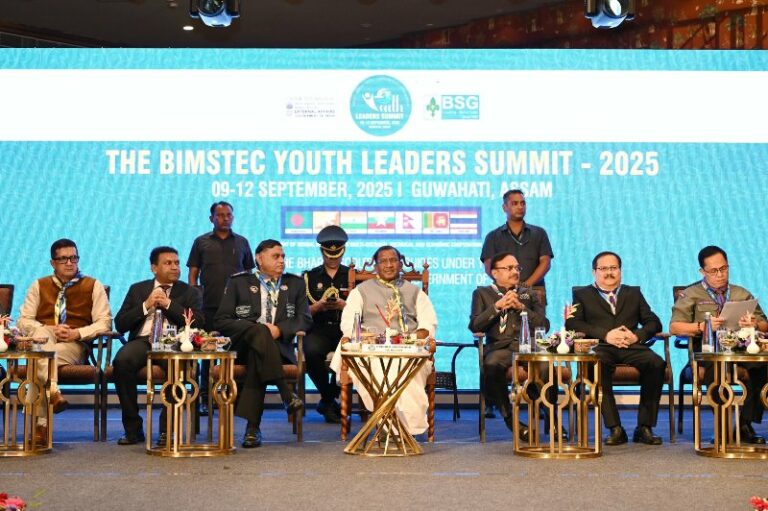
Assam Governor Lakshman Prasad Acharya inaugurated the BIMSTEC Youth Leaders Summit 2025 in Guwahati on September 9, terming it “a confluence of ideas, a celebration of cultures, and a foundation for future possibilities.” Hosted by the Bharat Scouts and Guides under the Ministry of External Affairs, the summit brings together youth leaders from BIMSTEC nations to drive innovation, development, and social change. The Governor praised the organisation’s values of service and harmony, urged youth to tackle global challenges like climate change, and stressed that leadership is a responsibility toward society, the nation, and humanity.
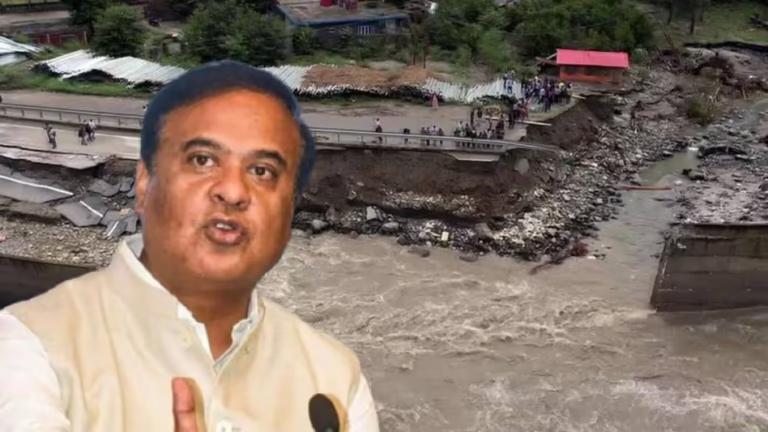
The Brahmaputra Board creates master plans for 15 Northeast river sub-basins.

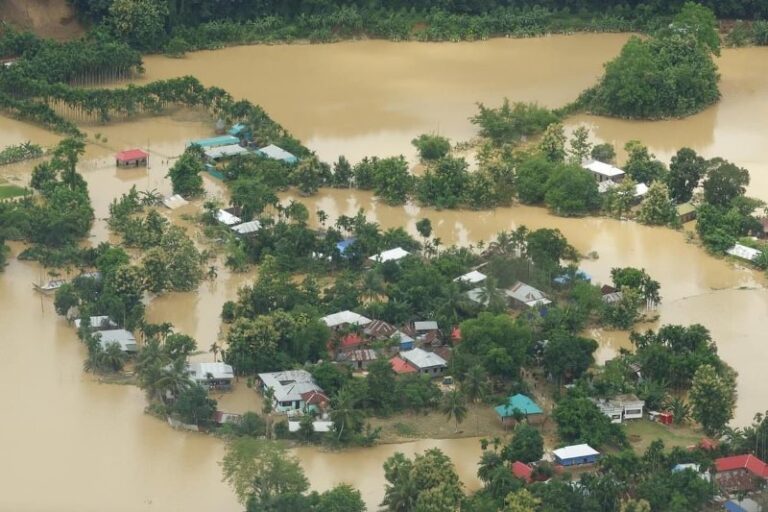
The Brahmaputra Board is preparing advanced master plans for 15 sub-basins across the Northeast to address recurring floods and erosion, following the severe June monsoon that caused massive floods and landslides in Assam, Mizoram, Meghalaya, Arunachal Pradesh, and other states. Current planning covers rivers such as Dikhow, Jhanji, and Dikrong, along with key rivers in Mizoram and Meghalaya, while future projects will extend to Teesta, Sankosh-Raidak, Kopili, Dhansiri (North), and several others. A committee of central agencies and academic institutions is overseeing these plans, with the High Powered Review Board urging faster DPR development, advanced monitoring, and pilot projects focusing on nature-based solutions and watershed management. The Board aims to evolve into a knowledge-based River Basin Organisation, providing integrated, long-term solutions while states continue implementing anti-erosion and flood protection measures under the Jal Shakti Ministry’s FMBAP scheme.

To increase apprenticeship in the Northeast, a special apprenticeship campaign was launched in Guwahati.

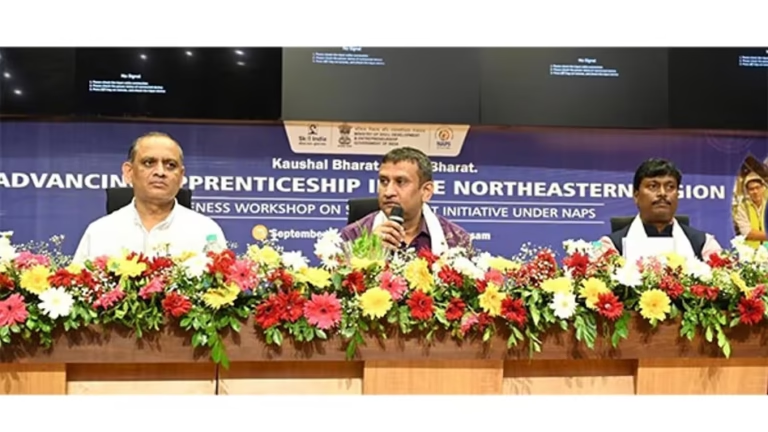
The Indian Institute of Entrepreneurship (IIE) under the Ministry of Skill Development and Entrepreneurship conducted a one-day campaign in Guwahati to boost apprenticeship opportunities for youth in the North East. This effort aligns with Prime Minister Narendra Modi’s vision of a developed North East and Viksit Bharat by providing structured, paid, hands-on training. The program includes an upgraded NAPS portal offering additional stipends for apprentices and involves collaboration among government bodies, industry partners, and training institutions to build a strong regional apprenticeship ecosystem.

Himanta talks about the modern museum for “Vrindavani Vastra” with the president of the JSW foundation.

Assam Chief Minister Himanta Biswa Sarma and JSW Foundation chairperson Sangita Jindal have discussed building a world-class museum in Guwahati to house the 16th-century silk textile, Vrindavani Vastra. Created under the guidance of Vaishnav saint Srimanta Sankardeva, the textile is currently held by the British Museum and will be loaned to Assam for public display in 2027. The museum, part of JSW’s CSR initiative, will meet global standards as specified by the British Museum. Additionally, a high-quality digital version of the textile will be developed and exhibited in early 2026 to allow wider access.

Another commando camp in a reserve forest is unlawfully sanctioned by the Assam Forest Department.

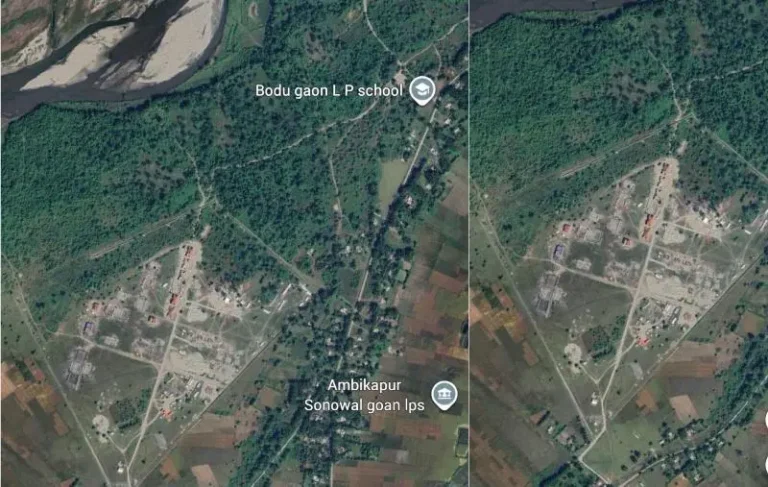
Assam’s Environment and Forest department has come under fire for illegally approving the construction of police commando battalion camps within several reserve forests, including the Kundil Kalia Reserve Forest, without the mandatory clearance from the Ministry of Environment, Forest and Climate Change (MoEF&CC). Special Chief Secretary (Forest) M.K. Yadava is accused of sanctioning these projects in violation of the Van (Sanrakshan Evam Samvardhan) Adhiniyam, threatening endangered species such as the Eastern Hoolock Gibbon and causing widespread legal and environmental concerns. The National Green Tribunal and MoEF&CC have initiated legal action against Yadava, as multiple camps across Assam’s protected forests continue to be scrutinized for systemic breaches of conservation laws.

Assam: Section 163 imposed in Sribhumi until further orders.

The district administration of Sribhumi has prohibited the assembly of five or more persons and all forms of public gathering under Section 163 of the Bharatiya Nagarik Suraksha Sanhita (BNSS), following recent unrest after the renaming of Karimganj as Sribhumi. The order, issued by the District Magistrate, restricts bandhs, rallies, dharnas, use of loudspeakers, carrying of weapons, and obstruction of vehicular movement, unless specifically approved by authorities. Essential services and emergency personnel are exempted, and violators will face strict legal action. The directive is effective immediately and aims to maintain peace and public order in the district.

AGP will petition the Supreme Court to overturn the Center’s foreigner directive and request an exemption for Assam.

The Assam Accord, signed in 1985, set a clear timeline for dealing with illegal immigrants in Assam. It declared that all persons who entered Assam before January 1, 1966, would be granted full Indian citizenship. Those who came between January 1, 1966, and March 24, 1971, were to be identified and deprived of voting rights for ten years but allowed to reside legally. Importantly, all foreigners who entered Assam on or after March 25, 1971, were to be detected, deleted from electoral rolls, and expelled according to the law. The Accord also committed to safeguarding the cultural, social, linguistic identity, and heritage of the Assamese people through constitutional, legislative, and administrative measures. Additionally, it aimed to prevent future illegal immigration by sealing the Indo-Bangladesh border and updating the National Register of Citizens (NRC) with 1971 as the cutoff year for citizenship verification. The Accord sought to restore peace and normalcy in the region while balancing humanitarian concerns with protecting indigenous rights.

Three touts are detained by the NFR, and more than Rs 1 lakh worth of train tickets are seized in Assam.

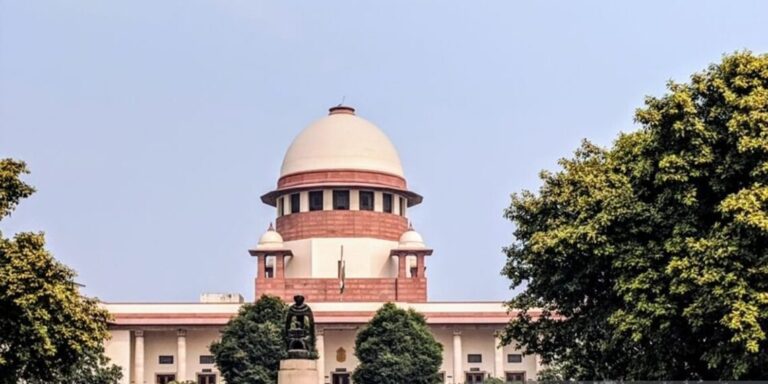
The Assam Accord, signed in 1985, set March 25, 1971, as the cutoff date for detecting and deporting illegal immigrants in the state. Persons who entered Assam before January 1, 1966, were granted full Indian citizenship, while those arriving between 1966 and 1971 were identified, denied voting rights for 10 years, but allowed to reside. All foreigners who entered Assam on or after March 25, 1971, are to be detected, deleted from electoral rolls, and expelled according to law. The Accord also includes safeguards to protect Assamese culture and identity. The Asom Gana Parishad (AGP) opposes the Centre’s recent directive allowing certain religious minority immigrants from neighboring countries to stay beyond this deadline, asserting it violates the Assam Accord’s provisions and seeking exemption for Assam through a Supreme Court petition.

Bangladeshi paranoia persists from the Assam NRC to the streets of Odisha.

A 36-year-old Bengali hawker from West Bengal was brutally assaulted in Odisha’s Jaleshwar after being branded a “Bangladeshi,” exposing how the migration-linked suspicion rooted in Assam is spilling beyond its borders. Despite showing Aadhaar and voter ID, Tarzan Sheikh was beaten, robbed, and dismissed as an outsider. Rights groups warn that while Assam’s agitation over demographic fears was centered on protecting “jati, mati, bheti” (community, land, hearth), the label “Bangladeshi” is now being weaponized elsewhere, targeting Bengali speakers regardless of legal status. The incident, coming amid heated national debates on infiltration, underscores a growing paradox: indigenous anxieties are genuine, but when suspicion overrides constitutional protections, language itself can trigger violence.