Assam’s chief minister declines to draw analogies to Nepal and promises to protect the state’s character.

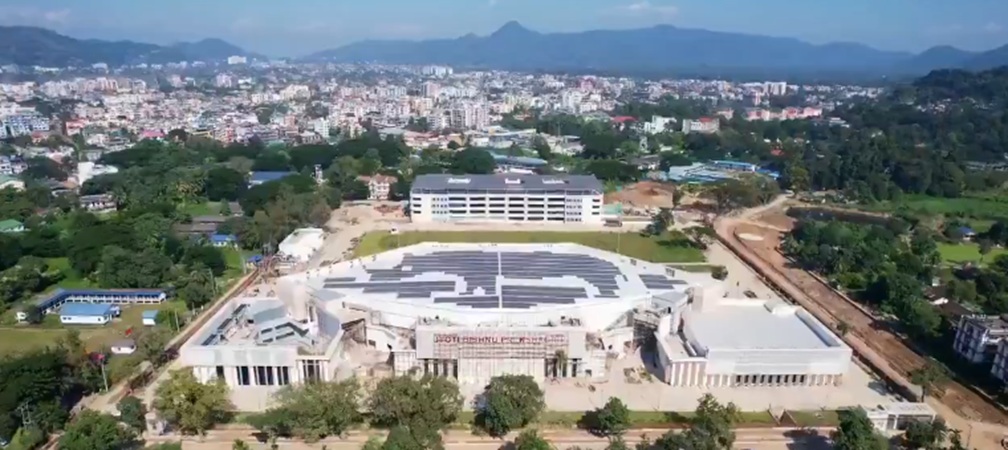
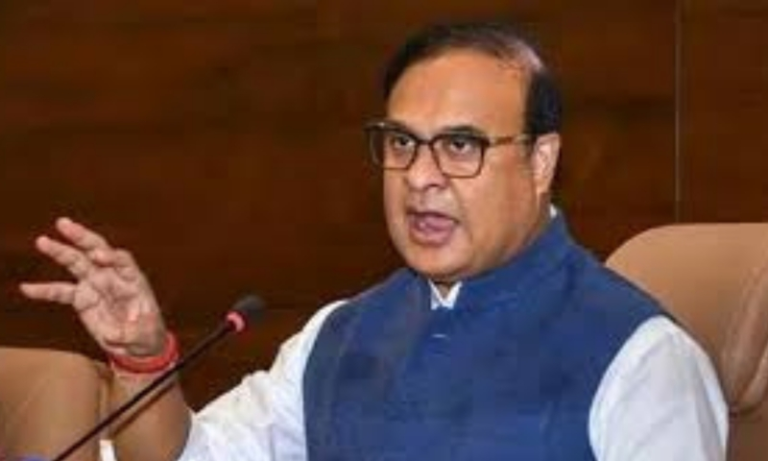
Reasserting Assam’s unique political and cultural identity, Chief Minister Himanta Biswa Sarma dismissed any comparison between Assam and Nepal, declaring that Assam’s progress is founded on stability, not upheaval. Speaking at a large appointment letter distribution ceremony on November 9, where 1.5 lakh youths secured government jobs, Sarma addressed critics drawing parallels between Assam’s political landscape and Nepal’s political instability.

“Assam is not Nepal; Assam will remain Assam,” he said, questioning if Nepal’s political revolutions resulted in job creation or infrastructure development. He emphasized Assam’s focus on governance that promotes employment, education, and development over protest-driven politics. Sarma credited state policies for enabling thousands of youths to fulfill their familial responsibilities, arguing such progress would have been impossible if Assam had taken a different political path four years ago.

He issued a firm warning: “As long as I live, I will never allow Assam to become another Nepal.” Sarma pledged to double the number of job appointments in the next phase, targeting 3 lakh opportunities. He concluded by invoking Assam’s cultural icons—Kamakhya, Srimanta Sankardeva, and Lachit Borphukan—highlighting Assam’s inspiration from its own heritage rather than foreign examples. This appointment drive is among the largest in Assam’s recent history, underlining the government’s commitment to youth empowerment and self-reliance.

As Delhi’s air quality becomes “severe,” the centre implements GRAP Stage 3 limitations.

The Centre enforced Stage III of the Graded Response Action Plan (GRAP) in Delhi-NCR as the region’s air quality worsened to the ‘severe’ category, with the Air Quality Index (AQI) rising sharply to 425. The Commission for Air Quality Management (CAQM) attributed the rise to calm winds, a stable atmosphere, and unfavorable weather conditions that trapped pollutants near the ground. As part of Stage III measures, non-essential construction work, demolition activities, stone crushers, and mining operations are banned. Schools are directed to shift classes up to grade 5 to hybrid or online modes. The use of BS-III petrol and BS-IV diesel four-wheelers is restricted in Delhi and surrounding NCR districts, with exemptions for persons with disabilities. Additional restrictions include a ban on inter-state diesel buses not meeting emission standards and suspension of industries using unapproved fuels. These measures aim to reduce pollution and protect public health during the winter season when air quality typically declines.

Four Lakhimpur residents are being held captive in Arunachal Pradesh for forced work in Assam.

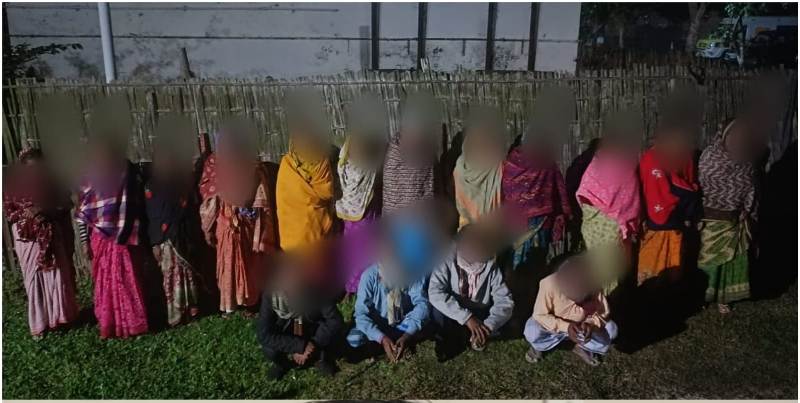
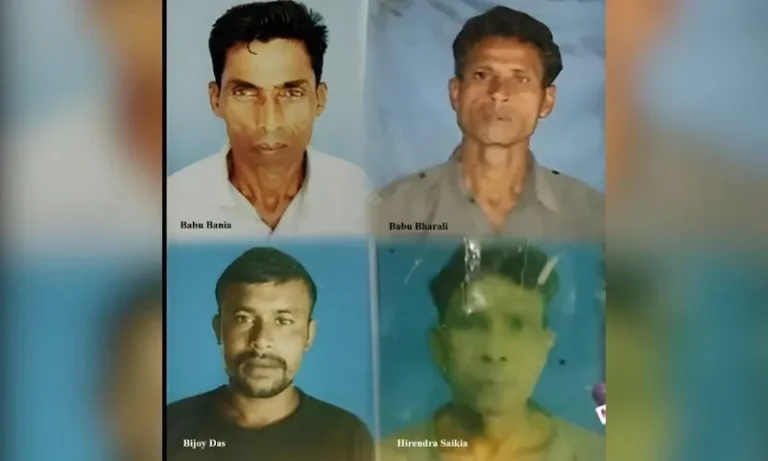
Four men from the riverine area of Lakhimpur district in Assam—Babu Bania, Babu Bharali, Hirendra Saikia, and Bijoy Das—were recruited by a contractor named Dhan Nath for masonry work in Arunachal Pradesh. Their families received an advance wage payment but lost contact with them for over a month, raising serious concerns. Allegedly, Dhan Nath sold the labourers to another contractor, Farijul Rahman, who is holding them captive in Hapoli, Lower Subansiri district of Arunachal Pradesh. One captive managed to secretly call his family, reporting that they were forced to live under a bridge and that an injured leg was left untreated. The employer has reportedly demanded Rs 25,000 ransom for their safe return. Families and local authorities are deeply anxious, with ongoing investigations and rescue efforts underway.

Om Birla calls on decision-makers in the Northeast to create programs that advance regional development in Nagaland.

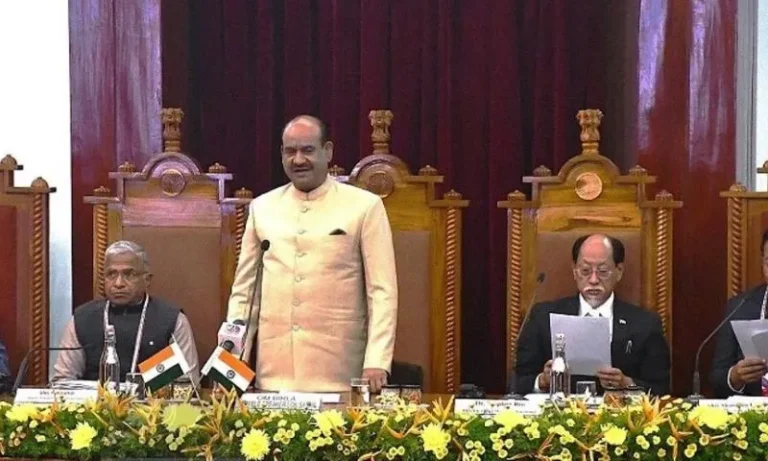
Lok Sabha Speaker Om Birla on Monday urged policymakers in the Northeast to frame initiatives that promote regional development and industrial growth while nurturing local art, culture, and traditional crafts to bring them national and global recognition.
“The people of the Northeast are vibrant, industrious, and full of potential,” Birla said in his address after inaugurating the 22nd annual Commonwealth Parliamentary Association (CPA) India Region Zone-III Conference at the Nagaland legislative Assembly in Kohima.
Emphasising that the people of the region deserve greater opportunities to realise their potential, he said that through collective dialogue and public participation, legislatures can frame policies that ensure inclusive and sustainable development.
Birla highlighted that the CPA conferences serve as platforms for deliberation on issues of development, public expectations, and aspirations, enabling participants to share best practices and strengthen democratic institutions.
He lauded Zone-III of the CPA as one of the most active zones, consistently organising conferences across different state legislative assemblies in the Northeast.
“Such interactions provide valuable opportunities for discussion within legislative institutions and contribute significantly to capacity building,” Birla remarked.
Touching upon the conference theme, ‘‘Policy, Progress & People: Legislatures as Catalysts of Change’’, he said it reflects the core philosophy and values of democracy.
He noted that the legislative assemblies of the northeastern states have always worked in a spirit of unity, framing region-specific policies that promote prosperity and progress.
Birla also stated that most legislative assemblies in the region have now transitioned to paperless operations, adopting new technologies and artificial intelligence to enhance accountability and transparency in governance.
He expressed satisfaction that disruptions in assembly proceedings have remained minimal due to the strong democratic culture and good practices shared among the states.
The Speaker commended the northeastern region for its rapid progress in connectivity and infrastructure, observing that each new project brings fresh opportunities for growth and development.
In his address, Nagaland Chief Minister Neiphiu Rio called for greater cooperation among the northeastern states to strengthen democratic institutions, foster regional growth, and promote inclusive development.
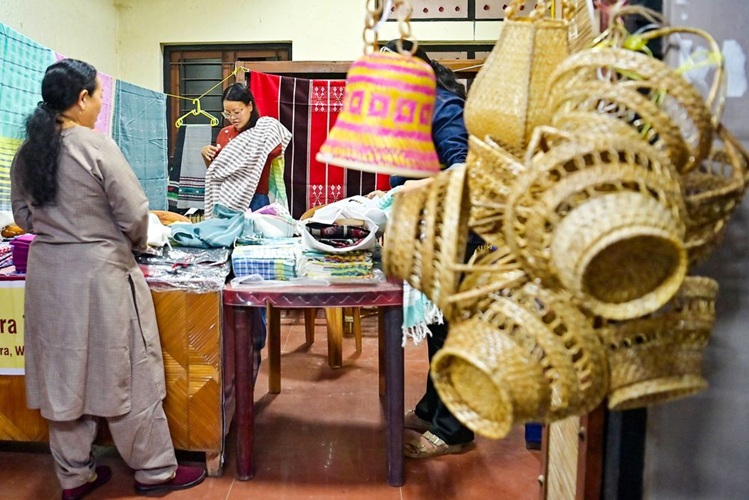
Various departments of the Nagaland government also set up exhibition stalls at the Nagaland Legislative Assembly complex as part of the conference, showcasing the initiatives, achievements, and ongoing projects of different departments, offering delegates and visitors insights into the state’s development efforts and governance innovations.

An increase in crimes against women is highlighted by the Titabor murder of a college girl in Assam.

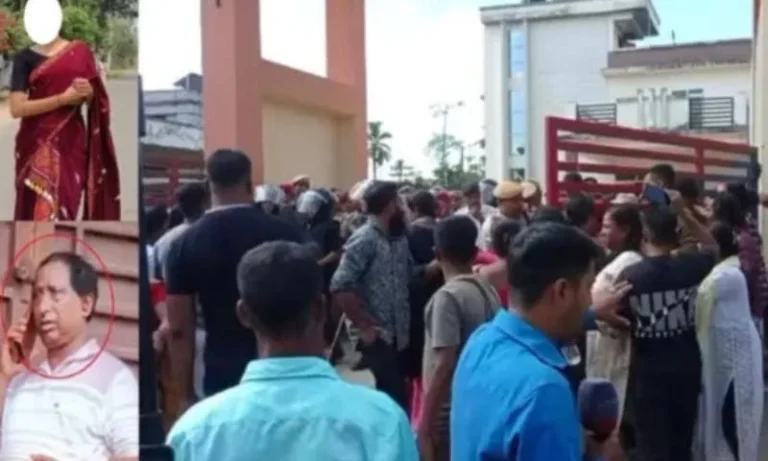
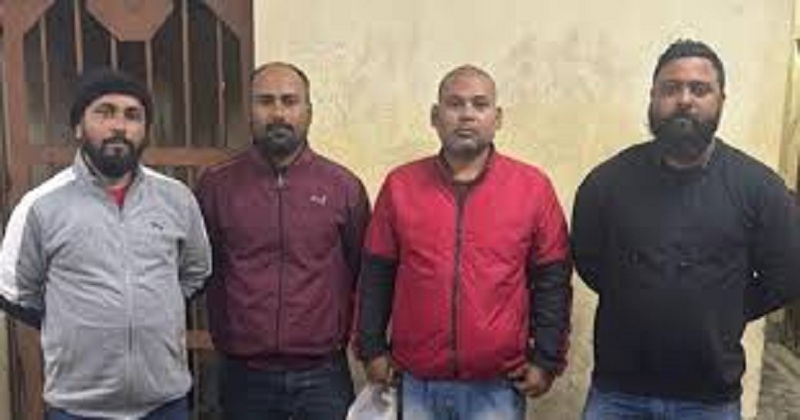
In a horrifying crime that has shaken Titabor in Assam’s Jorhat district, Jagat Singh, a 63-year-old man, has been arrested for allegedly raping, impregnating, and murdering 19-year-old college student Biplabi Das. The student, who was seven months pregnant, had gone missing on November 7, 2025, and her decomposed body was found in a septic tank behind the accused’s shop after a three-day search. Singh initially attempted self-harm in custody but later confessed to killing her to conceal the pregnancy.

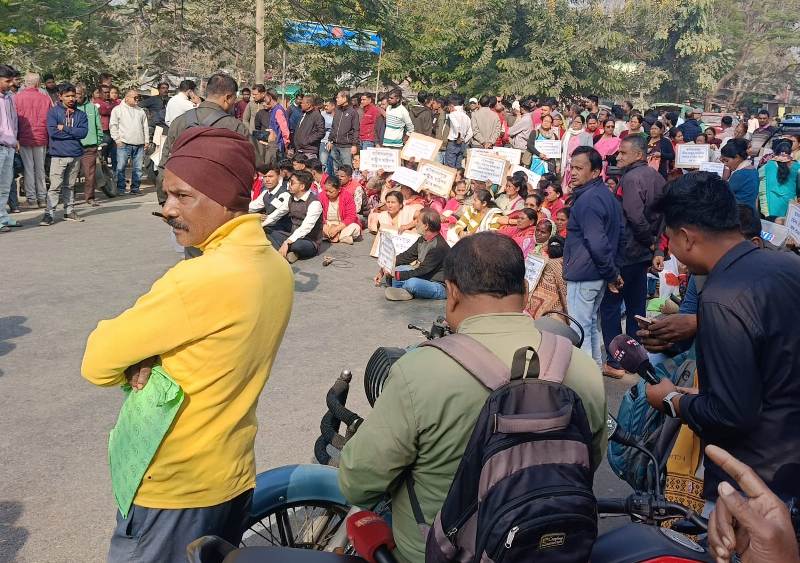
The incident has sparked massive protests locally, with residents vandalizing Singh’s shop and demanding harsh punishment. Police are investigating other accused, including Singh’s sons and a pharmacist who allegedly helped him seek an abortion for the victim. The Officer-in-Charge of Titabor Police Station has been placed under departmental inquiry due to alleged negligence.

This brutal case highlights the persistent and growing threat of crimes against women in Assam, exposing failures in police response and stirring community outrage that justice must go beyond punishment to ensure women’s safety and respect in society.

A strong explosion at Red Fort killed ten people and injured numerous more; NIA joins the investigation.

“A powerful explosion near the Red Fort metro station on Monday evening killed at least 10 people and left 24 others injured, sending shockwaves through one of Delhi’s busiest areas. The blast occurred around 6:45 pm from a car parked near Gate No. 1 of the Red Fort metro station, igniting flames that gutted six cars, two e-rickshaws, and an autorickshaw. The impact shattered nearby windows and was loud enough to be heard several kilometers away, including at ITO. Delhi Fire Services brought the fire under control by 7:29 pm with ten fire tenders at the scene.

Eyewitnesses described chaos and panic as people fled. Officials said the National Investigation Agency (NIA), local police, and forensic teams are investigating. Samples from the site have been collected for chemical analysis to determine the nature of the explosives.

The explosion came hours after a major anti-terror operation in Faridabad, where police seized about 360 kg of suspected ammonium nitrate along with weapons and detonators from the rented home of a Kashmiri doctor linked to terror modules. Authorities are probing any possible link between the Faridabad seizure and Monday’s explosion near the Red Fort, a heavily guarded area given its proximity to key national monuments and government offices.”​

Tripura LoP claims that people’s dissatisfaction has left them “panicked” and refers to the BJP and its alliance partner as “directionless.”

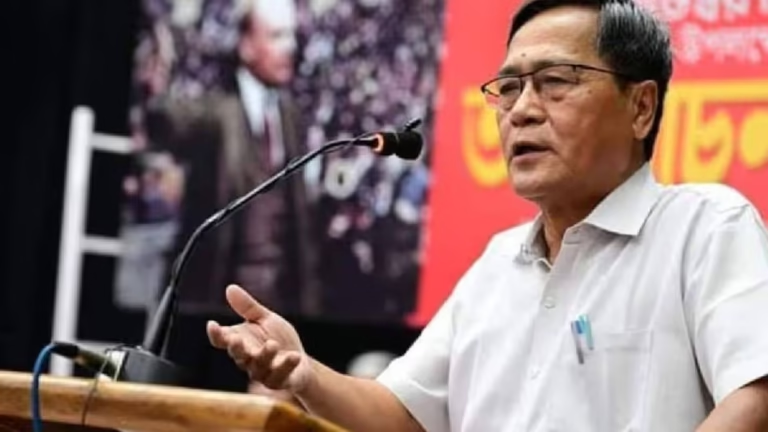
“Tripura Leader of Opposition and CPI(M) State Secretary Jitendra Chaudhury launched a sharp attack on the ruling BJP-led state government and its alliance partner, accusing it of running the administration on false promises, black money, and widespread corruption both in the state government and the Tripura Tribal Areas Autonomous District Council (TTAADC).

Addressing a massive rally organized by the Centre of Indian Trade Unions (CITU) in Agartala, Chaudhury said the large turnout of workers, youth, and marginalized communities symbolized an unprecedented wave of resistance against the current regime. ‘Working people cannot be defeated — and today, you have proved it,’ he declared.

Chaudhury alleged the administration deliberately created obstacles for holding political meetings at the historic Astabal Maidan by scheduling religious programs and commercial fairs to block democratic activities. He described the BJP–IPFT–Tipra Motha alliance as ‘directionless and panicked’ due to growing public discontent and accused the government of misusing public funds, with infrastructure facilities being used for commercial fairs rather than democratic events.

Emphasizing that the CITU rally was a genuine movement demanding fair recognition of labor, skill, and talent, Chaudhury accused the ruling coalition of surviving on false promises and black money, and warned of increasing corruption, fear-based governance, and suppression of democratic voices in Tripura.

He also drew parallels with national politics, suggesting that a BJP defeat in the upcoming Bihar assembly elections could signal the beginning of the party’s downfall at the national level. Urging people to strengthen the fight to protect democratic rights, Chaudhury pointed out rising crime, drug abuse, and moral degradation as evidence of administrative failure, and pledged to continue the statewide movement advocating for farmers and working people.”​