Truth-Keepers in a Digital Democracy.

“In the age of digital revolution, India faces a complex transformation in information dissemination, with social media and digital platforms overtaking traditional newspapers amid high production costs and declining readership. Anchored in the constitutional right to information under Article 19, the government has introduced landmark policies like the 2023 Digital Advertisement Policy and the IT Rules 2021 to integrate digital media while ensuring accountability and transparency. However, the rise of AI-generated misinformation and fake news presents a grave challenge to democratic trust and information integrity. Global frameworks from Germany, the EU, and Singapore offer varied models of regulation, highlighting the need for India to carefully balance freedom of expression with curbing falsehoods. States such as Karnataka and Kerala have pioneered digital advertising guidelines and self-regulatory grievance mechanisms as valuable models. The path forward requires establishing an independent Digital Media Regulatory Authority, tiered platform responsibilities, expanded fact-checking in regional languages, enhanced digital literacy, AI-supported content moderation, and robust financial support for credible digital outlets. Crucially, these mechanisms must embed due process and safeguards against political misuse to preserve democratic freedoms while combating misinformation effectively. India’s proactive response will be vital to safeguard the right to accurate information and uphold democracy in the digital era.”

As India’s fifteenth vice president, CP Radhakrishnan takes the oath of office.

Chandrapuram Ponnusamy Radhakrishnan took oath as the 15th Vice President of India on Friday at a ceremony at Rashtrapati Bhavan, administered by President Droupadi Murmu. The event was attended by Prime Minister Narendra Modi, senior leaders including Amit Shah, Rajnath Singh, and former vice presidents Jagdeep Dhankhar, Venkaiah Naidu, and Hamid Ansari. Radhakrishnan, the NDA nominee, was elected on September 9 with 452 votes against opposition candidate B. Sudershan Reddy’s 300 votes, amid a 98.2% voter turnout in the electoral college. Previously, Radhakrishnan served as Governor of Maharashtra, Jharkhand, Telangana, and Lieutenant Governor of Puducherry. After the ceremony, he paid tribute to Mahatma Gandhi at Rajghat. His predecessor, Jagdeep Dhankhar, had resigned in July citing medical reasons, ending his tenure prematurely. Prime Minister Modi congratulated Radhakrishnan, expressing confidence in his commitment to constitutional values and parliamentary discourse.

Due to landslides, NH-29 and NH-2 are temporarily closed in Nagaland; alternate routes have been offered.

The Deputy Commissioner of Kohima, B. Henok Buchem, has ordered the immediate and temporary closure of a stretch of National Highway 29 at Chainage KM 175.350 near the Old KMC dumping site, following landslide damage that rendered the road unsafe for vehicular traffic. This closure will remain in effect until further notice. Light motor vehicles are being diverted via the Jotsoma Bypass Road, while heavy vehicles, military and paramilitary convoys, mid-size pickups, and commercial passenger vehicles are rerouted through the Peducha Bridge–Tsiesema (10 Mile Road). Any violation of these orders may invite prosecution.

Additionally, a landslide on National Highway 2 at Chainage KM 12.900 near Tsiesema Basa has completely blocked the highway. Light motor vehicles are advised to use an alternative route via High Court Junction, Meriema, Nagaland University Campus, and Tsiesema Basa. Given the narrowness of this alternate road, traffic for heavy vehicles, including those bound for Manipur and Dimapur, will be regulated by traffic police based on road conditions. Motorists are urged to follow the diversions and exercise caution while traveling in affected areas.

Bills to remove PMs, CMs, and ministers arrested on criminal charges are introduced by Home Minister Amit Shah in LS.

Union Home Minister Amit Shah on Wednesday introduced three landmark bills in the Lok Sabha aimed at creating a legal framework for the removal of the Prime Minister, Union Ministers, Chief Ministers and State Ministers if they are arrested and detained on serious criminal charges.

The proposed legislations include the Constitution (130th Amendment) Bill, 2025, the Government of Union Territories (Amendment) Bill, 2025, and amendments to the Jammu and Kashmir Reorganisation Act, 2019. The Bills were referred to a Joint Committee of Parliament after approval by the House.

The move triggered sharp protests from opposition MPs, with leaders like Asaduddin Owaisi, K.C. Venugopal, and Manish Tewari calling the bills unconstitutional and an assault on federalism. Owaisi termed the move “the final nail in the coffin of elected governments,” warning against a “police state.”

Defending the proposal, Shah rejected claims of haste, stressing that all parties would get a chance to contribute during the committee’s scrutiny. He added, “We cannot be so shameless that we continue to occupy constitutional positions while facing serious charges.”

Under the Bills, if a minister, chief minister, or even the Prime Minister is arrested and detained for 30 days or more in a criminal case carrying at least five years’ imprisonment, they would cease to hold office—unless valid reasons are tendered before the 31st day.

RBI Governor: The US tariff hike does not pose a significant threat to the Indian economy.

RBI Governor Sanjay Malhotra, addressing concerns about rising US tariffs, stated that their impact on India’s economy would be limited, provided no retaliatory measures are introduced, which the central bank does not foresee. The RBI has already lowered its GDP growth forecast for the current fiscal year from 6.7% to 6.5% due to global uncertainties, including possible trade disruptions. Malhotra assured that India’s foreign exchange reserves are robust—sufficient to cover 11 months of imports—and expressed confidence in external sector stability. Regarding inflation, he downplayed risks from reduced Russian oil imports, highlighting India’s diversified crude sources and the government’s ability to manage shocks through fiscal measures such as excise duties. Deputy Governor Poonam Gupta added that about half of India’s inflation basket consists of food items, not directly affected by global developments, suggesting inflation risks remain minimal. The RBI maintains that unless a trade war escalates, US tariffs are unlikely to cause major disruptions to India’s growth, currency stability, or inflation.

Three people are being held for attacking Northeast students in Delhi with knives.

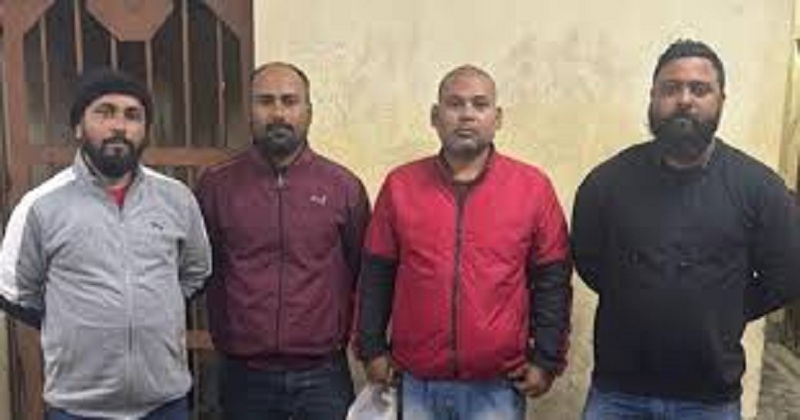
Two men have been arrested and a juvenile apprehended for attacking two students from Manipur with a knife in Delhi’s Vijay Nagar area in the early hours of July 31. The victims, Zerry and Shepherd, sustained serious injuries after being stabbed during an altercation while purchasing water. They were admitted to Bara Hindu Rao Hospital. According to Deputy Commissioner of Police (Northwest) Bhisham Singh, the accused—identified as Krishna and Krishna Kashyap, along with a juvenile—confessed to their involvement during interrogation. The fourth accused is yet to be identified, and police efforts are ongoing to apprehend him. The incident is being closely investigated, with no previous criminal history found for the arrested adults.

Arunachal Pradesh: The newly built Gauwahati HC Itanagar Bench building will be inaugurated by the CJI.

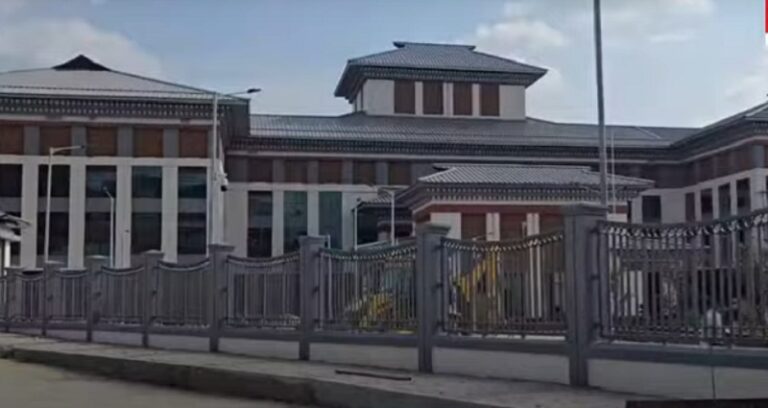
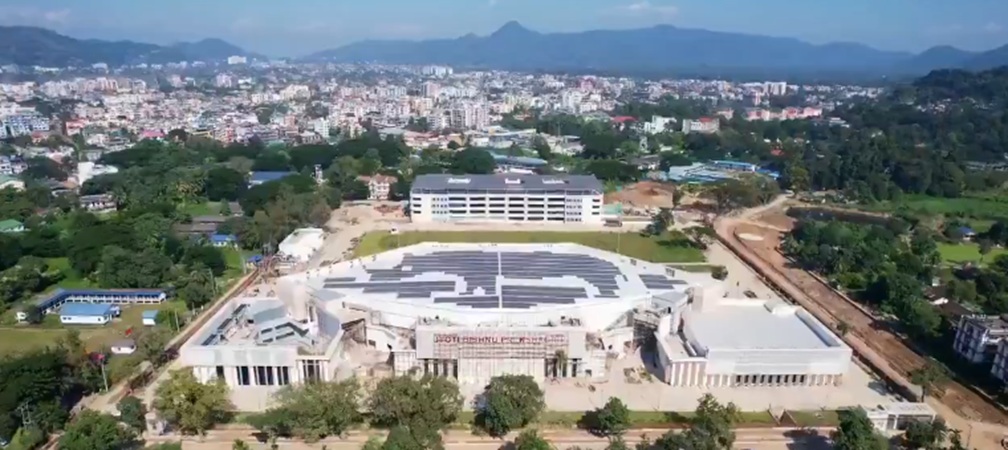
Chief Justice of India B.R. Gavai will inaugurate the new building of the Gauhati High Court’s Itanagar Permanent Bench in Naharlagun, Arunachal Pradesh, on August 10, 2025. The modern facility, constructed at a cost of Rs 135.35 crore and featuring five courtrooms, marks a significant milestone in the state’s judicial infrastructure. The first proceedings will begin in the new building on August 11, while the last sitting at the current temporary location in Yupia will take place on August 8.

Though Arunachal Pradesh does not have its own high court and remains under the jurisdiction of the Gauhati High Court, the event is being hailed as a historic moment. The inauguration coincides with the 25th anniversary of the Itanagar Bench, raising hopes among legal professionals and residents for the eventual creation of a separate high court for the state.

The Election Commission decides on the electoral college and prepares for the vice presidential election.

The Election Commission of India (ECI) has officially finalised the Electoral College list for the forthcoming Vice Presidential election, taking an important procedural step to fill the country’s second-highest constitutional office. In a statement released on Thursday, the Commission confirmed that the updated list comprises all elected and nominated members of the Rajya Sabha as well as elected members of the Lok Sabha, in line with Article 66(1) of the Constitution and Rule 40 of the Presidential and Vice Presidential Elections Rules, 1974.

Arranged in continuous serial order and alphabetically by State or Union Territory, the finalised list ensures transparency and procedural thoroughness for the election. This move marks the formal commencement of the Vice Presidential poll process and follows the recent resignation of Jagdeep Dhankhar, which has heightened political anticipation in New Delhi. The ECI is expected to announce the election schedule soon. The election holds particular importance as the Vice President also functions as the ex officio Chairperson of the Rajya Sabha, playing a critical role in parliamentary proceedings.

New curriculum modules featuring Shubhanshu Shukla and Operation Sindoor will be introduced by NCERT.

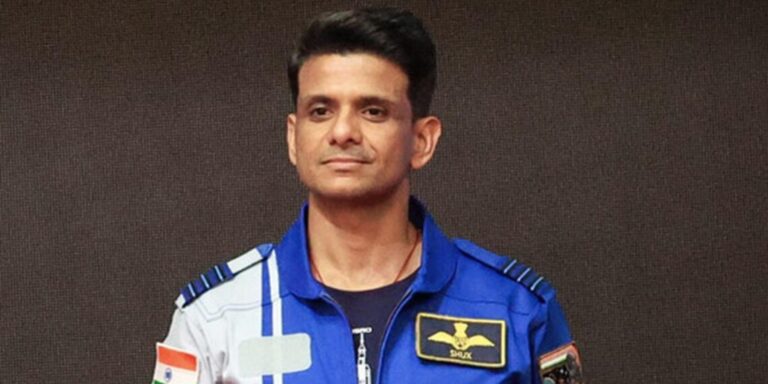
A senior official revealed that India’s curriculum revamp will include real-world case studies, such as the sensitive Operation Sindoor, to help students understand the importance of strategic decision-making and coordinated government action during national crises. The new modules will also spotlight Group Captain Shubhanshu Shukla’s historic journey as the first Indian astronaut to the International Space Station, alongside lessons on environmental stewardship through Mission LiFE and a historical perspective on the Partition of India. The move, pending final approval, aims to make education more relevant and rooted in India’s national identity.