Meghalaya: Due to the certificate vending delay, hawkers demonstrate at the Shillong Municipal Board

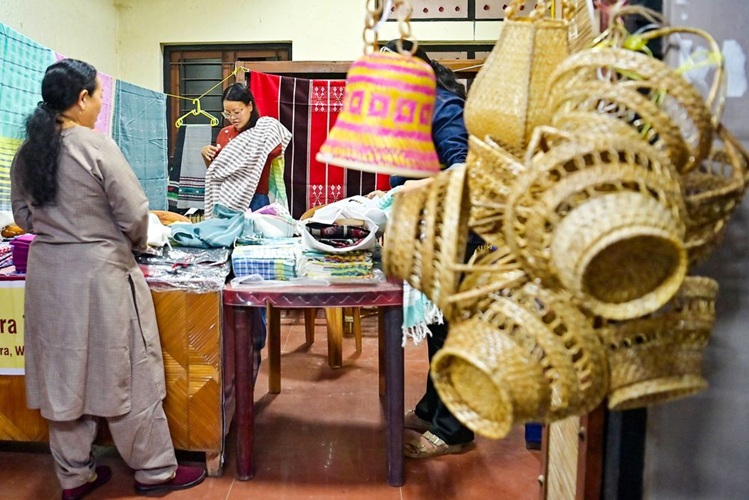
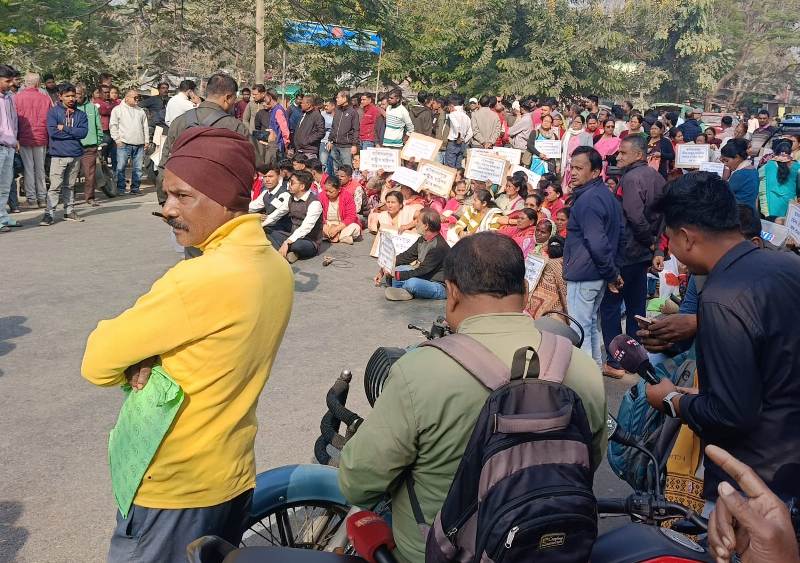
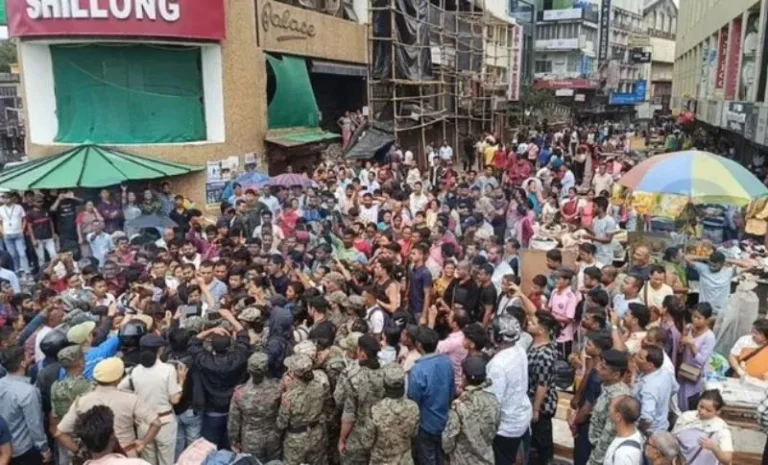
Street vendors under the Meghalaya Greater Shillong Progressive Hawkers Association (MGSPHA) staged a sit-in at the Shillong Municipal Board office, demanding the immediate issuance of Certificates of Vending (CoVs) and transparency in the allocation of vending spaces. The protesters condemned delays in granting CoVs and denounced the relocation of vendors to allegedly cramped and unsuitable vending zones, particularly at the MUDA Parking Lot and opposite the SBI Main Branch.

Democratic rights activist Angela Rangad emphasized the urgent need to convene the Provisional Town Vending Committee (PTVC), the only legal authority empowered to review vending applications and address grievances. Rangad criticized the Shillong Municipal Board for unilaterally handling the process and warned that bypassing the PTVC could lead to favoritism or corruption.

Vendors asserted that many eligible hawkers have been left without livelihoods for weeks, and they threatened to escalate protests unless the PTVC is urgently called into session and transparent procedures are followed. The sit-in will continue until the authorities respond to their demands and initiate due process as outlined by law.
USTM, which was constructed on forest property, might disappear in two years: Biswa Sharma Himanta.

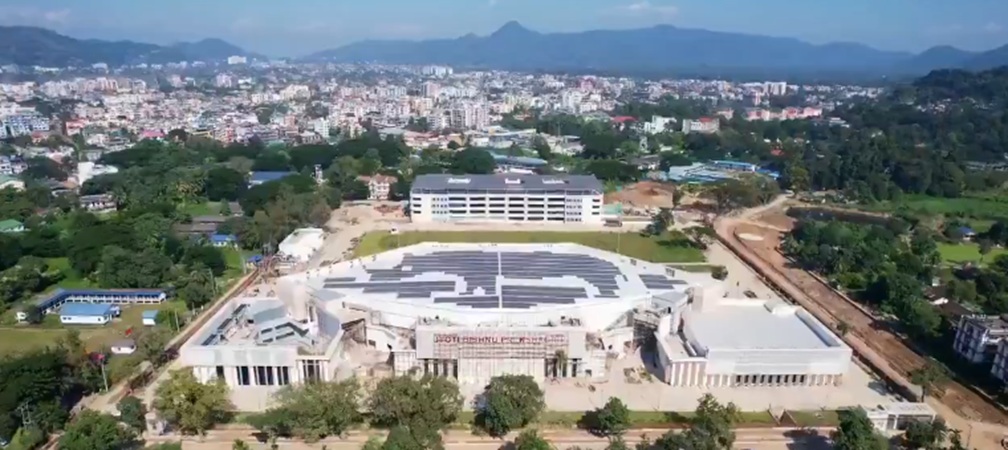
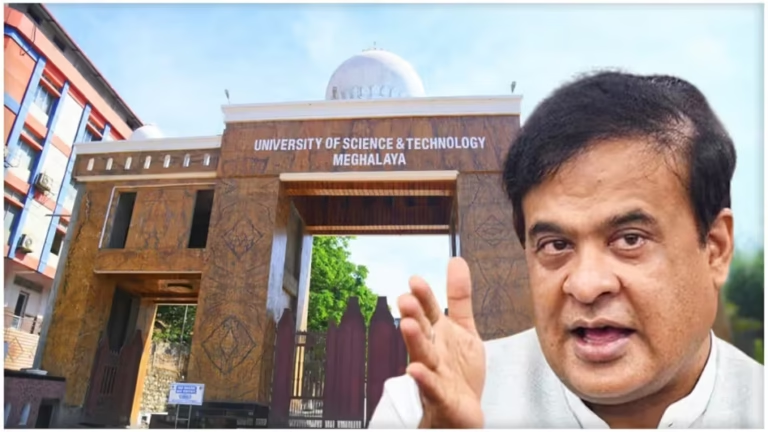
Assam Chief Minister Himanta Biswa Sarma, in a press conference on Friday, levelled severe allegations against the University of Science and Technology, Meghalaya (USTM), and its chancellor, Mahbubul Hoque. Sarma claimed, “The university is on forest land, and whether USTM will be there after two years, no one can guarantee.” He further stated, “I keep praying to God that it be demolished as early as possible. It is not an educational institution but an institution that has commercialised education.” Sarma criticized the Meghalaya government for inaction, adding, “If it had been in Assam, I would have sorted this out a long time ago.” He also took aim at Hoque’s activities, saying, “He tries to poke his nose into everything.”

The Chief Minister’s comments come amid ongoing controversies involving Mahbubul Hoque’s arrests and the legitimacy of USTM. The Meghalaya government, however, has refuted these claims, maintaining that USTM is a legally recognized state university operating within government guidelines, and opposition leaders have characterized Sarma’s attacks as politically driven.

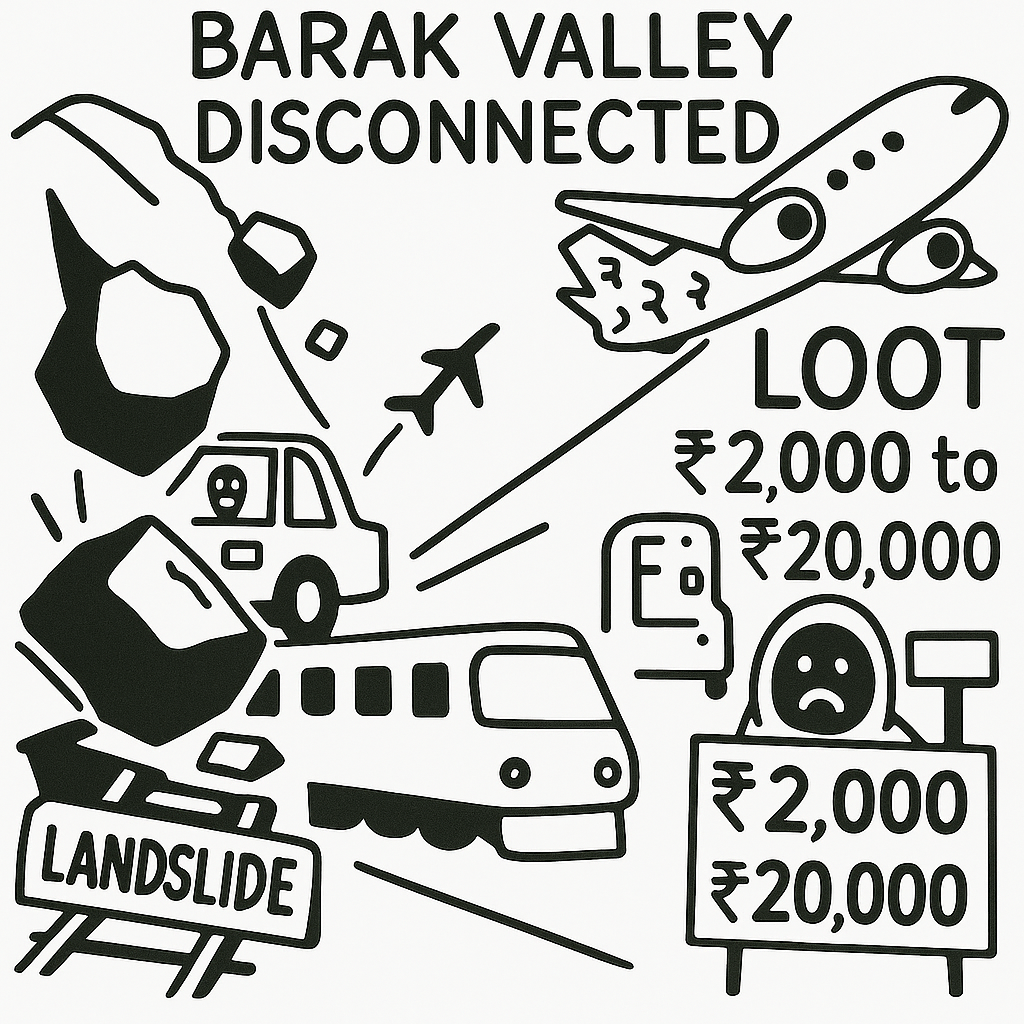
Commercial vehicles in Mizoram will not operate for a week in order to assist with NH-306 repairs.

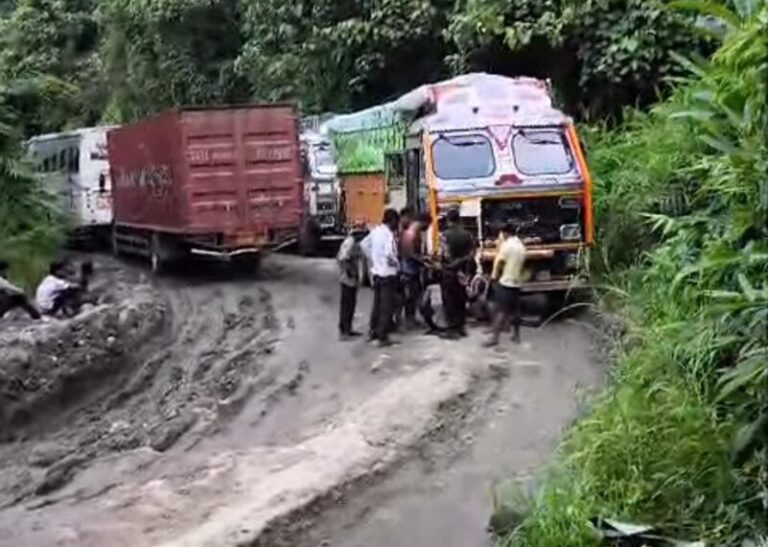
In a significant development for Mizoram’s connectivity, commercial vehicles will be off the Vairengte–Aizawl stretch of National Highway 306 (NH-6) from August 4 to 9, 2025, to facilitate urgent repairs after extensive monsoon damage. This initiative, announced by operators of commercial transport services, is a voluntary measure—intended not as a protest but as a goodwill gesture to allow uninterrupted restoration of the state’s lifeline road, especially in the severely affected Sairang-Kawnpui sector.

Transporters have clarified their cooperation but cautioned that agitation could follow if repairs are not completed on schedule by the Public Works Department (PWD) and National Highways and Infrastructure Development Corporation Limited (NHIDCL). Despite the traffic suspension, supply lines to Aizawl continue, with over 100 trucks, including essential commodities and fuel carriers, being released from holding points each day, though more than 380 goods-laden trucks remain stranded at Kawnpui.

Meanwhile, a separate threat to fuel supply has eased, with the Northeast Petroleum Mazdoor Union in Guwahati withdrawing its proposed strike in response to an appeal from the Mizoram government. This collaborative action underscores both the region’s vulnerability during monsoons and the crucial importance of coordinated efforts to maintain essential logistics on NH-6, Mizoram’s primary route to the rest of the country.

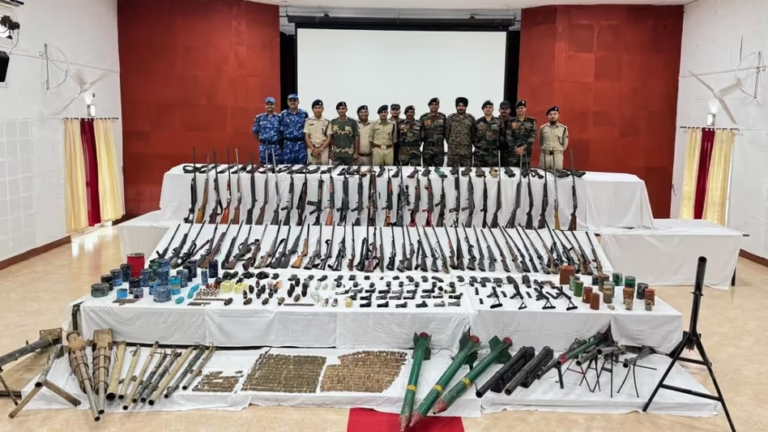
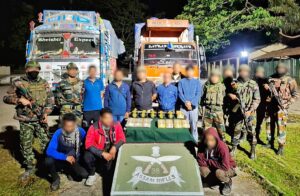
In a significant Manipur hills operation, 155 guns and 1652 ammunition were found.

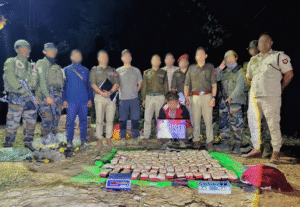
Security forces in Manipur, including the Manipur Police, Assam Rifles, Army, and Central Armed Police Forces, have conducted coordinated, intelligence-led operations across multiple hill districts such as Churachandpur, Pherzawl, Kangpokpi, Chandel, and Tengnoupal. These operations resulted in the recovery of 155 weapons, including AK-series rifles, M4 rifles, SLRs, INSAS rifles, sniper rifles, pistols, and various locally made firearms. In addition, 1,652 rounds of ammunition were seized, comprising 1,600 assorted bullets, 39 improvised explosive devices (IEDs), and 13 hand grenades.

The operations are part of sustained efforts to restore peace and stability amid ongoing unrest in the region, with senior police officials coordinating closely with all security stakeholders to maintain focus. The Manipur Police have urged the public to report any suspicious activity or illegal arms to help safeguard civilian lives and property and to support ongoing operations in the hill districts.

These recent recoveries represent a significant success in the state’s ongoing mission to neutralize armed threats and rebuild normalcy.

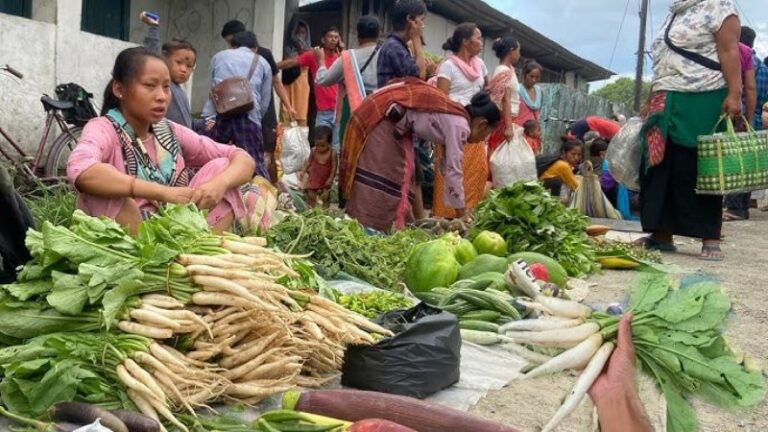
The government of Arunachal Pradesh authorizes the return of weekly markets with new rules.

The Arunachal Pradesh government has approved the resumption of weekly markets with a comprehensive Standard Operating Procedure (SOP) in place, valid for one year and subject to review. The move follows a prior suspension aimed at enforcing the Inner Line Permit (ILP) system and curbing illegal immigration. The Arunachal ST Bachao Andolan (ASTBA) had supported the suspension, citing concerns over unauthorized non-local sellers affecting the state’s demographics. Deputy commissioners are tasked with strictly enforcing the SOP to ensure smooth functioning while balancing local economic activity and security.

Meghalaya has more than 93,000 migrant workers registered under the labor safety law.

As of 2024, over 93,000 migrant labourers have been registered in Meghalaya under the Meghalaya Identification, Registration (Safety and Security) of Migrant Workers Act, 2020. The Act mandates documentation and periodic renewal of labour cards to safeguard workers’ rights and welfare. East Khasi Hills and East Jaintia Hills lead in registrations. Recent legal amendments have significantly increased penalties for non-compliance—from Rs. 5,000 to Rs. 1 lakh—and introduced mandatory criminal background checks using CCTNS to enhance security. This initiative is central to managing labour migration while ensuring worker protection in the state.

In response to Assam’s rejection of suspected Bangladeshis, the Meghalaya government requests that DCs increase border vigilance.

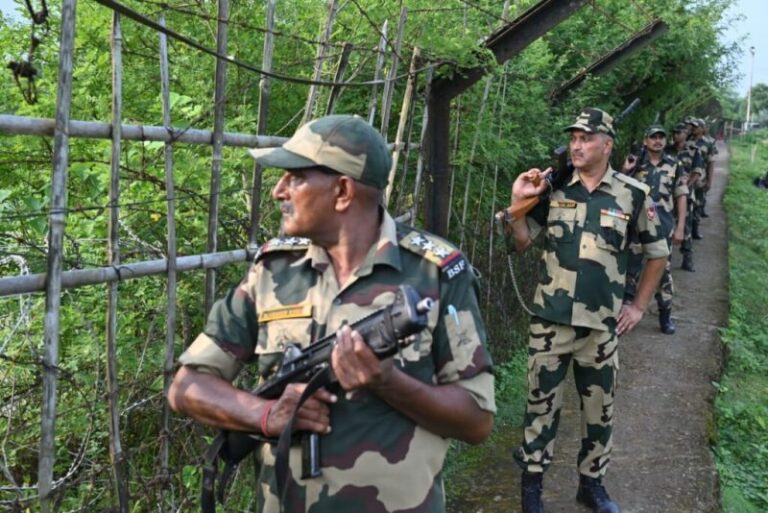
The Meghalaya government has directed all deputy commissioners to maintain strict vigilance along the 884.9 km border shared with Assam to prevent suspected illegal immigrants—particularly those being pushed back by Assam—from entering the state. This follows Assam’s intensified eviction drive against alleged Bangladeshi nationals in districts such as Barpeta, Lakhimpur, Hojai, and Nagaon. Meghalaya’s authorities are coordinating with police and the Border Security Force (BSF), which has increased surveillance and apprehended undocumented entrants. The directive emphasizes maintaining law and order, preventing unauthorized entry, and managing potential administrative strain. Civil society groups have raised concerns about displaced persons and called for stronger enforcement of local security laws.

Police in Meghalaya step up their anti-smoking campaign and collect Rs 1 lakh in fines.

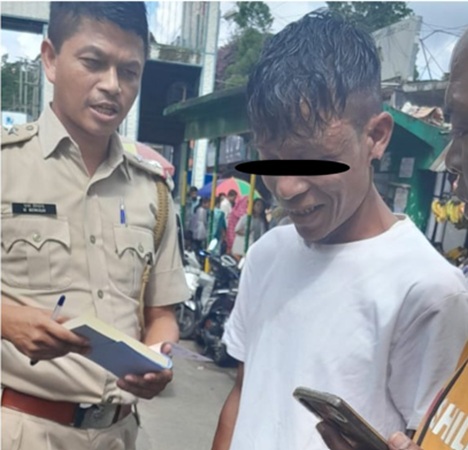
Meghalaya Police have fined over 1,100 individuals for smoking in public places across East Khasi Hills during a three-month campaign under the National Tobacco Control Programme. The drive, coordinated with the state Health Department and National Health Mission, issued 1,178 challans and collected Rs. 99,280 in fines for violations of the Cigarettes and Other Tobacco Products Act, which prohibits smoking in public and tobacco sales near schools. Officials emphasized the health risks of tobacco, particularly its link to cancers and harm from secondhand smoke, and highlighted the campaign’s focus on both enforcement and awareness. The initiative has received positive public response and is expected to continue across more districts.

Relics from World War II discovWWII artefacts discovered while building in Imphal West, Manipur.

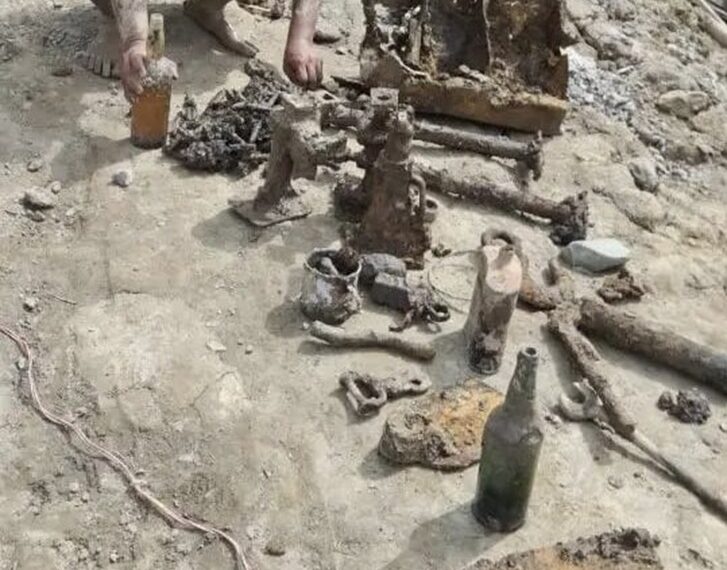
Construction workers in Manipur’s Imphal West district unearthed a cache of relics believed to date back to World War II during excavation in Langthabal on Tuesday morning. Discovered about four feet underground, the items include rusted shell cases, water bottles, a hand grenade, spades, tin cans, and other military remnants thought to have belonged to Allied forces during the 1944 Battle of Imphal. The site is near Canchipur hills, historically an Allied military camp, and played a key role in resisting the Japanese campaign in the region. The Battle of Imphal, alongside the Battle of Kohima, marked a decisive turning point in the Burma Campaign, resulting in over 54,000 Japanese and 12,000 Allied casualties. Authorities plan to involve historical experts to authenticate and preserve these wartime artefacts, which shed fresh light on one of Southeast Asia’s most significant World War II confrontations.

A ceasefire in Chin state has allowed over 3,000 Myanmar refugees to return home.

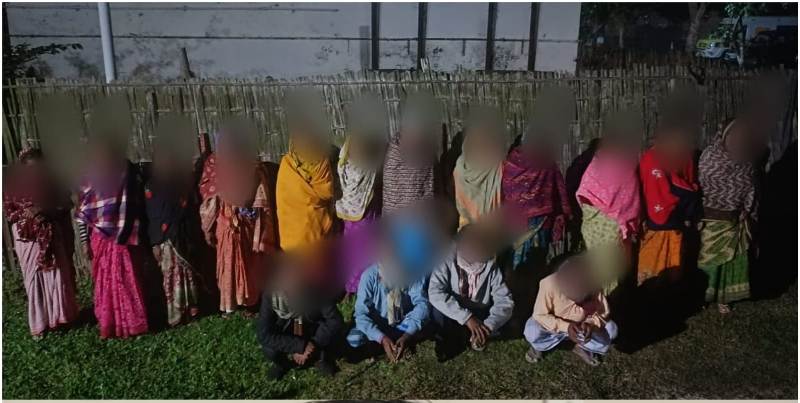
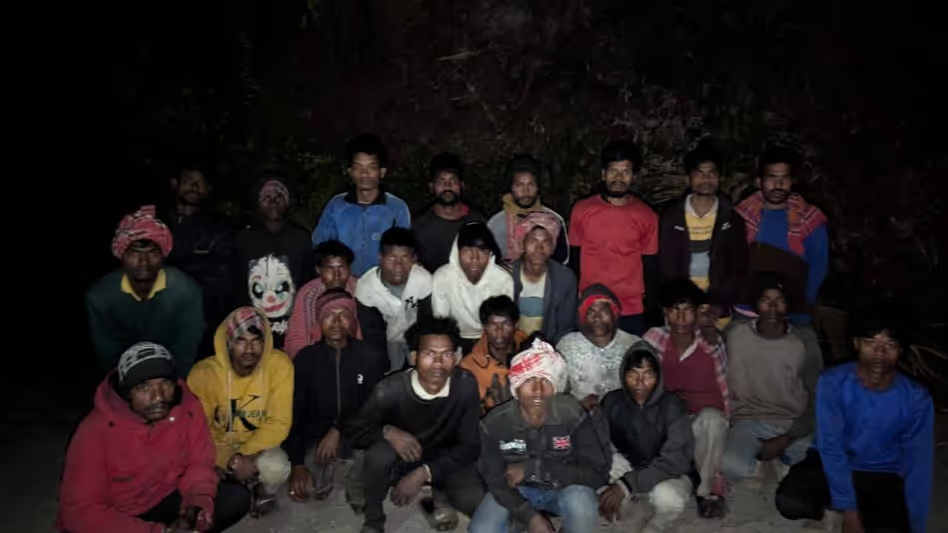
Nearly 3,000 refugees from Myanmar who recently took shelter in Mizoram have returned to their villages following a temporary ceasefire between rival Chin rebel groups. The exodus began after armed clashes in early July forced over 4,500 civilians from Myanmar’s Chin state to cross into Mizoram’s Champhai district. Most refugees stayed in border villages such as Zokhawthar and Vaiphai; officials say the return movement accelerated after the ceasefire took effect on July 12. Mizoram, which shares a 510-km border with Myanmar, has provided shelter to over 32,000 refugees since the 2021 military coup. Authorities plan to initiate biometric and demographic data collection of remaining refugees by the end of July to aid in identification and monitoring.