[…]


A six-member Inter-Ministerial Central Team (IMCT) led by Gaya Prasad, Joint Secretary of the Ministry of Home Affairs, is visiting Nagaland for three days to assess the damage caused by floods and landslides during the 2025 monsoon season.
The team’s purpose is to carry out an on-the-spot assessment of the destruction across districts and compile a final report for the central government. This report will include recommendations for relief, rehabilitation, and long-term solutions.
On Thursday, the team inspected affected areas in Peren district, accompanied by Johny Ruangmei, Joint CEO of the Nagaland State Disaster Management Authority (NSDMA). In a meeting at the Peren Deputy Commissioner’s office, officials discussed the extent of landslide damage, particularly to residential colonies, crops, irrigation systems, dams, channels, and embankments.
Earlier on Wednesday, the IMCT, along with district officials and NSDMA representatives, conducted site inspections in Dimapur and Chumoukedima districts to evaluate flood impacts.
The visit’s broader objective is to understand the ground situation, assess infrastructure losses, and determine eligibility for additional central assistance to aid recovery efforts across the state.
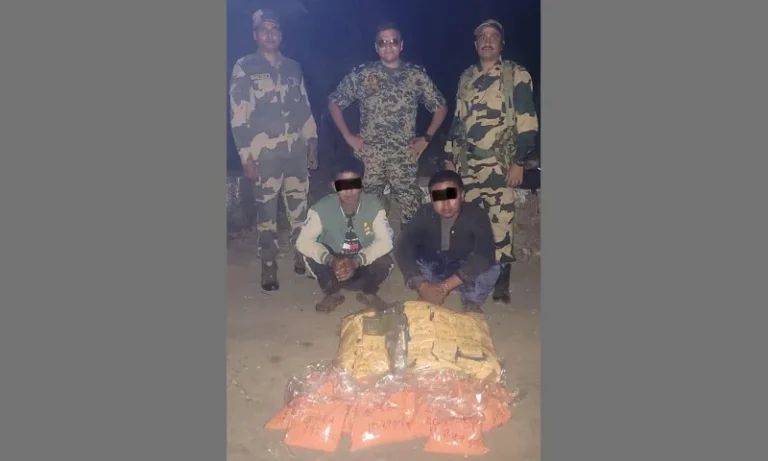
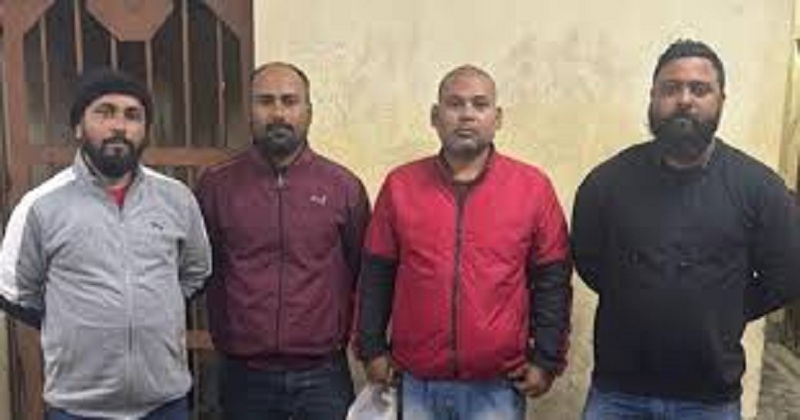
The Border Security Force (BSF), in coordination with the Mizoram Excise and Narcotics Department, carried out a major drug bust near Aizawl, seizing methamphetamine tablets and heroin worth over Rs. 26 crore. Two Myanmar nationals were arrested during the operation, which was based on specific intelligence inputs. The suspects were intercepted on National Highway-6 between Seling and Tuirial, and during questioning, admitted to hiding the drugs in nearby roadside bushes. A search in the presence of independent witnesses recovered 15 packages of methamphetamine weighing 14.905 kg and 49 soap cases of heroin weighing 707 grams. The seized narcotics, branded as Dragon Brand methamphetamine, are believed to have been smuggled from Myanmar.

Sikkim’s Science and Technology Department has completed a comprehensive inspection of 67 automatic weather stations (AWS) across the state, focusing on their operational status, data accuracy, infrastructure condition, and connectivity. This review covered stations in remote and high-altitude regions, aiming to upgrade the state’s hydrometeorological observation network. Officials highlighted that this large-scale assessment is vital for enhancing Sikkim’s weather monitoring capabilities, improving climate resilience, and supporting disaster risk reduction. The upgraded network is expected to strengthen early warning systems, support scientific research, and aid policy planning in environmental management, agriculture, and disaster preparedness for a mountainous state vulnerable to extreme weather events like landslides and flash floods.

Mizoram has completed 58.15 per cent biometric enrolment of more than 31,000 Myanmar refugees currently sheltered across all 11 districts of the state, according to a senior Home Department official. The state has also collected biometric and biographic data of 10.84 per cent of asylum seekers from Bangladesh’s Chittagong Hill Tracts (CHT). The enrolment exercise, which began in July following a directive from the Ministry of Home Affairs, is conducted through the Foreigners Identification Portal and Biometric Enrolment system.
Most of the Myanmar refugees—31,214 individuals, mainly from Chin State—are residing in Mizoram, with the border district Champhai hosting the highest number. Additionally, 2,354 refugees from Bangladesh’s CHT take refuge primarily in Lawngtlai district, followed by Lunglei district and Thenzawl town in Serchhip district. Mizoram also shelters 6,953 internally displaced people from Manipur.
The biometric registration process has faced challenges including technical glitches, poor or no internet connectivity in remote areas, and difficulty identifying refugees living outside organized camps, such as those residing with relatives or in rented accommodations. The Myanmar nationals fled to Mizoram following the February 2021 military coup, while members of the Bawm tribe from Bangladesh arrived after a military operation targeting an ethnic insurgent group in 2022. Both communities share close ethnic ties with the Mizos, which has influenced Mizoram’s humanitarian response.
Related
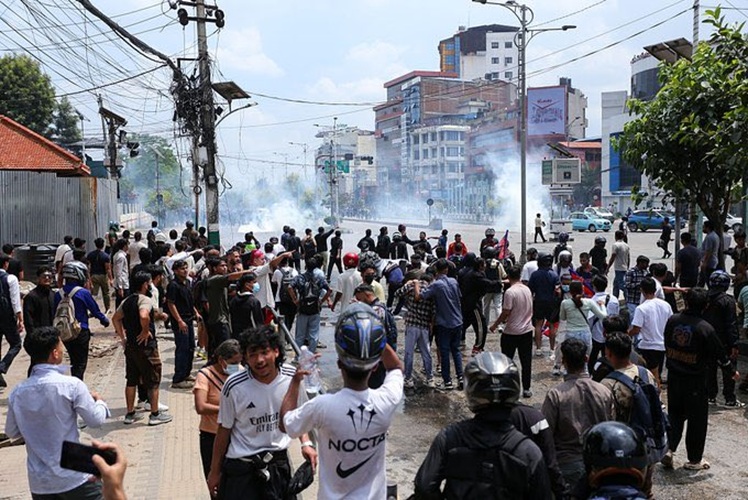
Fresh unrest erupted in Nepal’s Bara district as Gen Z demonstrators clashed again with supporters of the Communist Party of Nepal (Unified Marxist–Leninist), led by former prime minister K.P. Sharma Oli. Authorities reimposed a daytime curfew from 1 pm to 8 pm after the clashes, but protesters continued to defy restrictions, leading to violent confrontations with police who used tear gas and warning shots. At least 10 people, including six police personnel and four protesters, were injured. Protesters also set fire to a local police post and vandalized the CPN-UML office in Simara Bazaar, accusing authorities of shielding party cadres involved in earlier violence. The tensions reignited after news that CPN-UML leaders planned to address a rally in Simara, sparking protests and clashes that have persisted since a larger movement in September toppled the Oli-led government. The ongoing protests demand accountability for the September 9 killings during demonstrations and oppose political corruption and injustices linked to the dissolved House of Representatives. The fragile political transition in Nepal continues as youth activists push for fresh elections and reform amid heightened unrest.

Authorities have arrested one person following the theft of high-grade steel plates and iron rods valued at approximately Rs 1 crore, meant for the 1200 MW Teesta-III Hydel Project in Chungthang, North Sikkim. The stolen materials, including 25 IS 2002 Grade-2 steel plates, were part of a consignment transported by Shree Balaji Logistics under a contract with Larsen & Toubro. The theft was discovered during a routine stock audit by the logistics firm, triggering an internal investigation that pointed to deliberate diversion and illicit sale by transport operator Binod Kumar Bansal and associates. The case involves investigations of accomplices and interstate movements of stolen materials, with police examining documents, GPS logs, and staff statements to identify additional suspects. The stolen steel is critical for dam, tunnels, and powerhouse construction at the project site, and recovery efforts are underway.
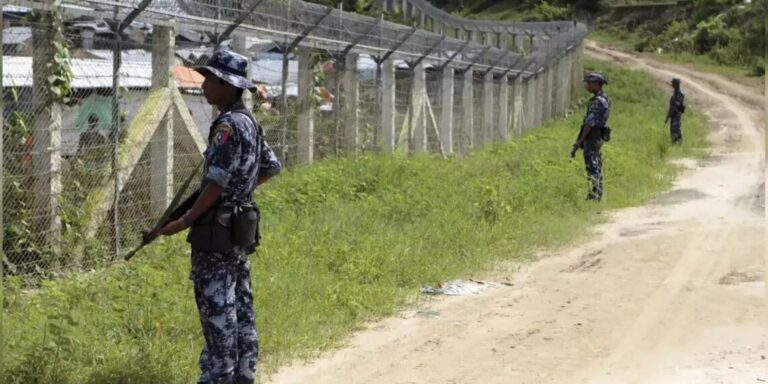
“Smuggling of drugs and Burmese areca nuts across the India–Myanmar border has seen a marked decline following strengthened security deployment along the frontier, Chief Minister Lalduhoma was informed during a review meeting. Currently, 12 police stations and 10 Assam Rifles duty posts operate along the 510-km Mizoram-Myanmar border, contributing to tighter surveillance. Drug trafficking and illegal areca nut smuggling have decreased in recent months due to enhanced security and coordinated enforcement efforts. Preparations are underway for construction of border haats, beginning with a facility at Zote in Champhai district as directed by the Ministry of Home Affairs. Since October, over 21,000 people have received border passes under the Free Movement Regime for regulated cross-border travel. Officials also mentioned that the next round of talks between Mizoram and Assam to resolve the interstate border dispute is being scheduled.”
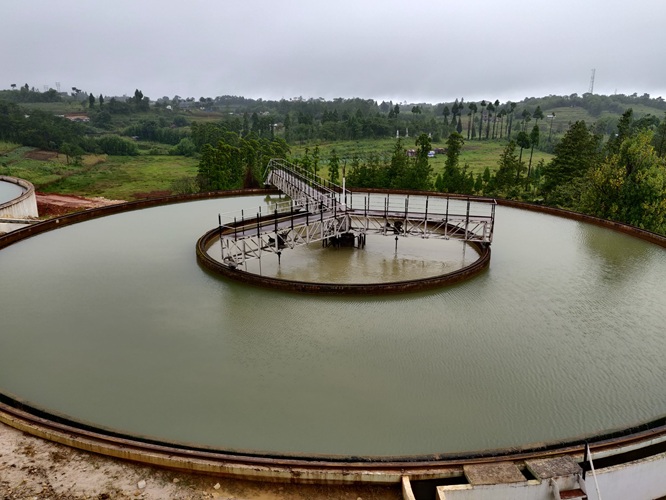
Public Health Engineering Minister Marcuise Marak inspected the testing of pumping systems at the Mawphlang dam, marking a major step towards commissioning the long-delayed Greater Shillong Water Supply Scheme Phase-III (GSWSS-III), a project pending for nearly 17 years since its sanctioning in 2008. With the Mawphlang pumps now operational on trial, the state expects to release an additional 8 million litres per day to Shillong once full commissioning begins. The scheme, originally sanctioned at Rs. 193 crore and revised multiple times, faced setbacks due to land acquisition, forest clearances, COVID-19 disruptions, and rising costs. GSWSS-III aims to partially bridge Shillong’s water supply shortfall of about 14 million litres per day. The government is committed to ensuring that “the long-pending promise of improved water supply for Shillong becomes a reality at the earliest.” मावफलांग डैम में पंपिंग सिस्टम का परीक्षण

“The Tripura Electricity Regulatory Commission (TERC) has released the power tariff for the financial year 2025–26, effective from November 1, with no significant increase in electricity bills for consumers. The average cost of supply is set at Rs. 7.61 per kW, marginally higher than the previous year’s Rs. 7.56. Fixed charges for domestic single-phase consumers have been standardized to Rs. 16 per kW per month, replacing the earlier range of Rs. 25 to Rs. 75, while commercial users will pay Rs. 18 per kW per month. To encourage industrial and social sectors, a 10% rebate on energy charges is available for IT units, women’s Self Help Groups, hospitals, homestays, and mobile towers in remote areas. The Kutir Jyoti scheme parameters have been revised, increasing the maximum connected load to 0.5 kW and monthly consumption limit to 30 units, providing better support for low-income households. Additionally, the commission has directed the rollout of smart meters to improve billing accuracy and expects a green (solar) tariff proposal in the next filing.”
Barak Bolchhe!