Assam: Section 163 imposed in Sribhumi until further orders.

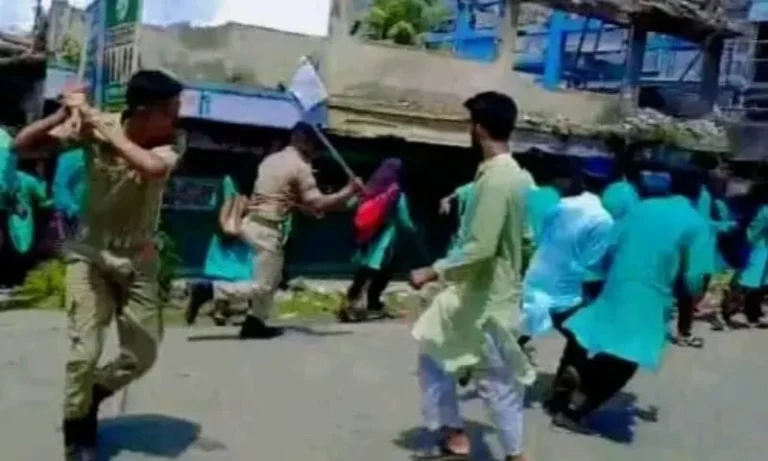
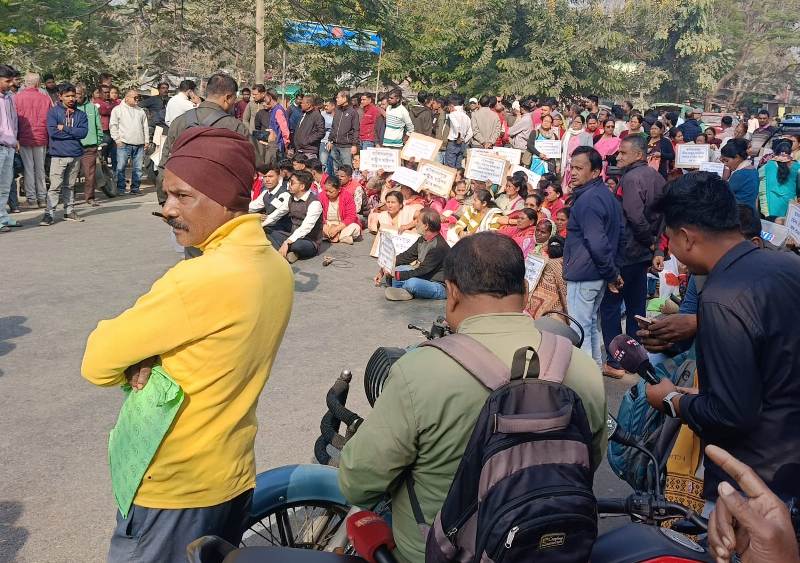
The district administration of Sribhumi has prohibited the assembly of five or more persons and all forms of public gathering under Section 163 of the Bharatiya Nagarik Suraksha Sanhita (BNSS), following recent unrest after the renaming of Karimganj as Sribhumi. The order, issued by the District Magistrate, restricts bandhs, rallies, dharnas, use of loudspeakers, carrying of weapons, and obstruction of vehicular movement, unless specifically approved by authorities. Essential services and emergency personnel are exempted, and violators will face strict legal action. The directive is effective immediately and aims to maintain peace and public order in the district.

AGP will petition the Supreme Court to overturn the Center’s foreigner directive and request an exemption for Assam.

The Assam Accord, signed in 1985, set a clear timeline for dealing with illegal immigrants in Assam. It declared that all persons who entered Assam before January 1, 1966, would be granted full Indian citizenship. Those who came between January 1, 1966, and March 24, 1971, were to be identified and deprived of voting rights for ten years but allowed to reside legally. Importantly, all foreigners who entered Assam on or after March 25, 1971, were to be detected, deleted from electoral rolls, and expelled according to the law. The Accord also committed to safeguarding the cultural, social, linguistic identity, and heritage of the Assamese people through constitutional, legislative, and administrative measures. Additionally, it aimed to prevent future illegal immigration by sealing the Indo-Bangladesh border and updating the National Register of Citizens (NRC) with 1971 as the cutoff year for citizenship verification. The Accord sought to restore peace and normalcy in the region while balancing humanitarian concerns with protecting indigenous rights.

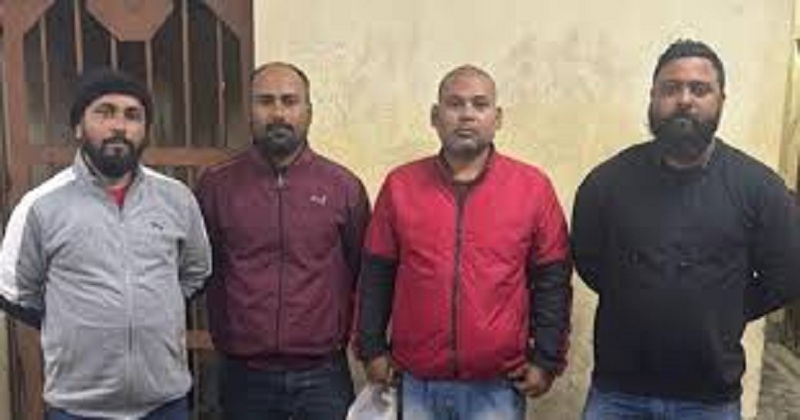
Three touts are detained by the NFR, and more than Rs 1 lakh worth of train tickets are seized in Assam.

The Assam Accord, signed in 1985, set March 25, 1971, as the cutoff date for detecting and deporting illegal immigrants in the state. Persons who entered Assam before January 1, 1966, were granted full Indian citizenship, while those arriving between 1966 and 1971 were identified, denied voting rights for 10 years, but allowed to reside. All foreigners who entered Assam on or after March 25, 1971, are to be detected, deleted from electoral rolls, and expelled according to law. The Accord also includes safeguards to protect Assamese culture and identity. The Asom Gana Parishad (AGP) opposes the Centre’s recent directive allowing certain religious minority immigrants from neighboring countries to stay beyond this deadline, asserting it violates the Assam Accord’s provisions and seeking exemption for Assam through a Supreme Court petition.

Maintaining culture can be achieved by dressing traditionally once a week: CM Prem Singh Tamang of Sikkim.

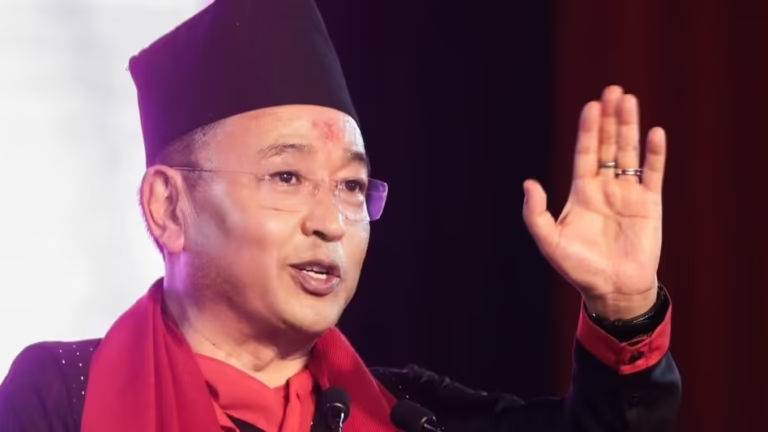
At the state-level Indra Jatra celebrations in Kabrey, Namthang, Sikkim Chief Minister Prem Singh Tamang stressed the need to protect cultural identity while uniting the state’s diverse communities. Urging citizens to embrace traditional attire at least once a week, he emphasized that the initiative was about honoring heritage, not narrow-mindedness. Tamang noted that Indra Jatra, once a Newar festival, has become a celebration for all of Sikkim and announced plans to mark it at an international level from 2026. Acknowledging the Newar community’s historic role as traders and Taksaris, he assured government support for safeguarding cultural legacies. Linking cultural pride with governance, the Chief Minister outlined welfare initiatives including housing schemes and extended support for drivers lacking certificates. He concluded by calling Indra Jatra a symbol of unity, cultural diversity, and communal harmony, urging all communities to share responsibility in preserving Sikkim’s traditions.

Although buffer zones are off-limits, NH-2 has reopened: Kuki-Zo organisations seek explanation on.

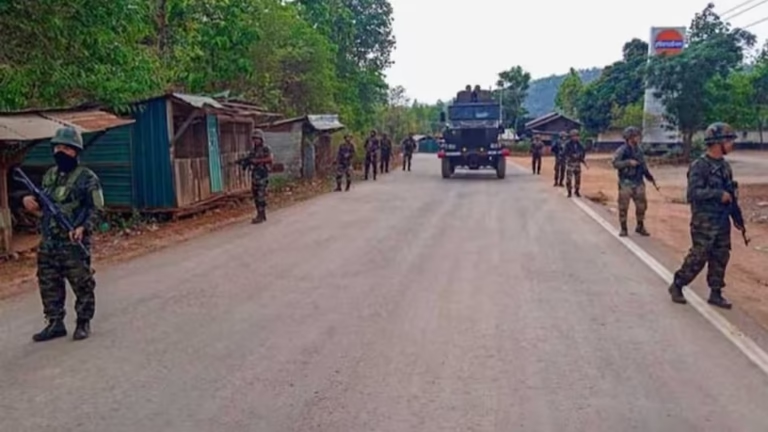
After extending the Suspension of Operations pact with the Centre, the Kuki National Organisation (KNO) and United People’s Front (UPF) clarified that the reopening of National Highway-2 should not be read as support for unrestricted movement between Meitei and Kuki-Zo areas. The two groups, which signed a fresh agreement on September 4, reaffirmed commitment to tripartite dialogue with the Centre and Manipur government, agreeing to relocate designated camps and uphold Manipur’s territorial integrity. Stressing that the Kuki-Zo community never blocked NH-2, they maintained that securing the highway is the Union government’s responsibility. Both groups also reiterated aspirations for a Union Territory with legislature for Kuki-Zo people under the Indian Constitution, while urging the media and public to avoid misinformation.

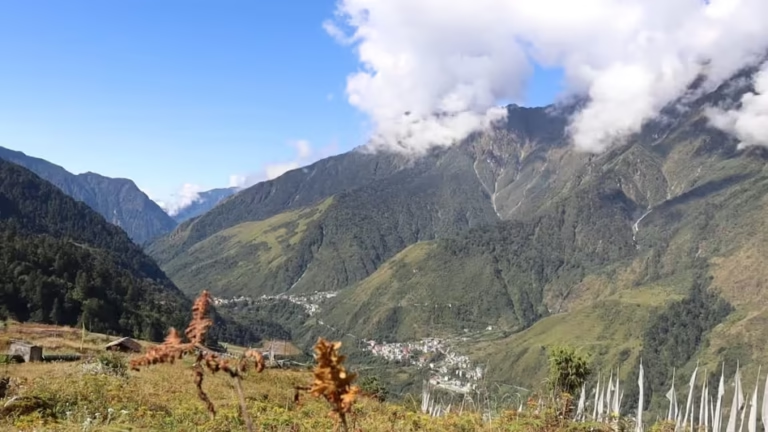
Tour companies are advised to adhere to route timings as travel permits to Lachung, Sikkim, will resume on September 8.

Travel permits for Lachung in North Sikkim will be issued from Monday, September 8, reopening access to high-altitude tourist hotspots including Yumthang Valley and Zero Point. The Mangan SP confirmed that valid ID and photographs are mandatory for Indian travelers, while foreign tourists must secure a Protected Area Permit (PAP). Authorities have urged strict adherence to route timings and safety guidelines on the narrow mountain roads. Tourists visiting the 8,600-ft Lachung region are also advised to carry warm clothing and sufficient cash, as ATMs are not available in the area.

Bangladeshi paranoia persists from the Assam NRC to the streets of Odisha.

A 36-year-old Bengali hawker from West Bengal was brutally assaulted in Odisha’s Jaleshwar after being branded a “Bangladeshi,” exposing how the migration-linked suspicion rooted in Assam is spilling beyond its borders. Despite showing Aadhaar and voter ID, Tarzan Sheikh was beaten, robbed, and dismissed as an outsider. Rights groups warn that while Assam’s agitation over demographic fears was centered on protecting “jati, mati, bheti” (community, land, hearth), the label “Bangladeshi” is now being weaponized elsewhere, targeting Bengali speakers regardless of legal status. The incident, coming amid heated national debates on infiltration, underscores a growing paradox: indigenous anxieties are genuine, but when suspicion overrides constitutional protections, language itself can trigger violence.

The potential involvement of local Jamaat and BNP leaders in the severe devastation and body burning case in Bangladesh.

Less than two weeks before Sufi pir Nurul Huque’s grave was desecrated and his body burnt in Goalanda, Bangladesh, local Jamaat-e-Islami and BNP leaders secretly convened to incite the act. The outrage stemmed from Huque’s elevated grave, painted to resemble the Ka’aba, which some locals considered un-Islamic. Despite Huque’s family lowering the grave, a mob of ‘tawhidi janata’ stormed the site on September 5, exhumed the body, and set it ablaze with kerosene and petrol before hundreds of onlookers. Investigations reveal Maulana Jalal, the local JeI leader, along with BNP figures Abul Qashem and Ayub Ali Khan, played key roles in orchestrating the violence, though none have been arrested. The episode, condemned as both barbaric and un-Islamic, underscores rising tensions between Bangladesh’s Sufi heritage and Islamist hardliners.

Former Gauwahati High Court Chief Justice: The office of the vice president, not a political organisation.

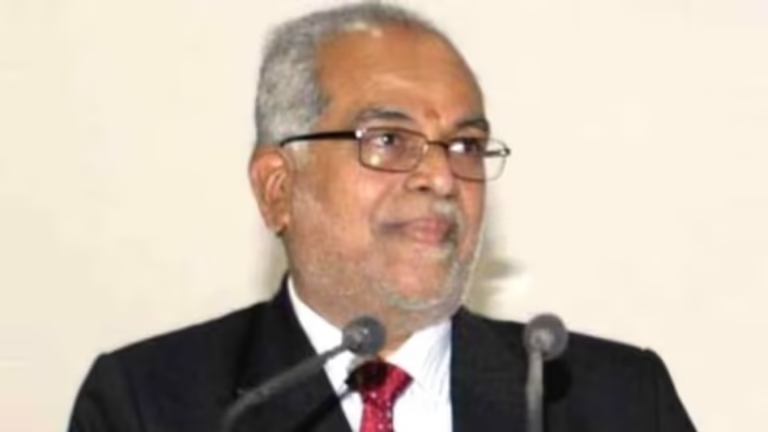
INDIA bloc’s Vice Presidential candidate and former Chief Justice of the Gauhati High Court, B. Sudershan Reddy, on Friday asserted that the Vice President’s office is a “high constitutional authority” and not a political institution. Speaking to reporters in Guwahati, he said the post demands qualities akin to those of a judge — impartiality, reasonableness, and fairness. Reddy stressed that the role of the Election Commission as an autonomous constitutional body is vital to uphold free and fair elections and recalled how the idea of universal adult franchise was embedded into India’s democratic framework even before the Constitution was enacted. “There can be no predesigned map to exclude any individual or group of individuals in the name of caste, community, religion, creed or gender from participating in an election,” he said. Confident about his prospects, he added that no party can issue a whip in the Vice Presidential election and highlighted the wide support he has received from MPs, civil society, and other groups.

A Sikkim child rights organisation encourages ethical reporting and cautions against social media trials.

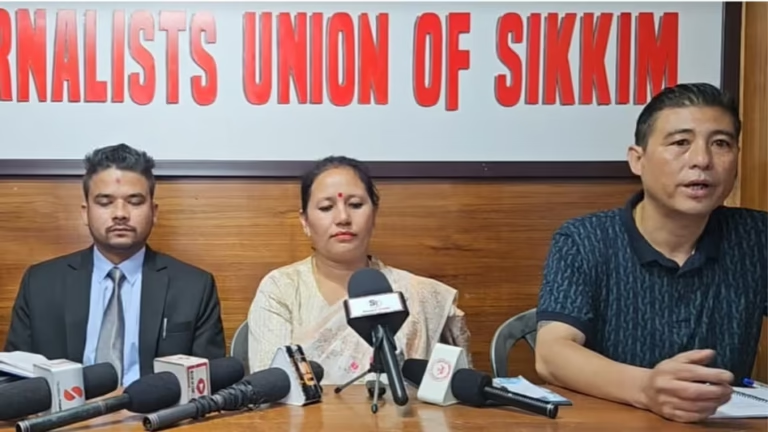
“The Sikkim State Commission for Protection of Child Rights (SCPCR) has issued a strong appeal urging citizens, digital creators, and civil society groups to exercise responsibility in dealing with child-related issues. Chairperson Deepa Khatri and Member Anish Sharma highlighted the rising concerns over ‘social media trials’ which often spread half-truths and rumours, causing harm to children and interfering with official investigations.

The Commission emphasized the need to prioritize the safety, dignity, and privacy of children, strongly advising against sharing a child’s identity in any form on social media. They reminded the public that the law imposes penalties for violating a child’s right to privacy and spreading misinformation.

SCPCR works closely with various government agencies including the police, Child Welfare Committees, and Anti-Human Trafficking Units to ensure streamlined handling of complaints through proper channels. The Commission plans to conduct training for digital creators and child protection bodies to foster ethical reporting and safe complaint processes.

Khatri’s advice was succinct: ‘Verify first. Protect the child. Use the proper forums.’ Sharma added that cooperation from society, government agencies, and digital platforms is essential to protect children and prevent panic created by rumours. The rising number of reported child-related cases partly reflects genuine challenges and partly increased awareness, necessitating coordinated efforts rather than parallel social media judgments.”