Adivasi council in Assam cautions government over 42 communities’ omission from the SC list.

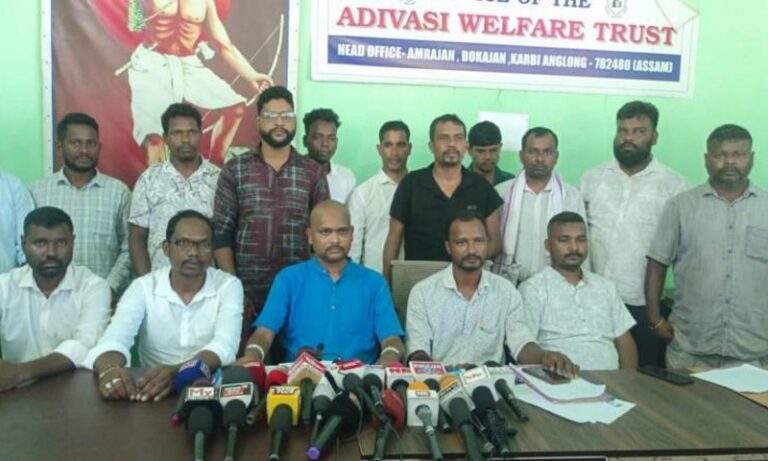
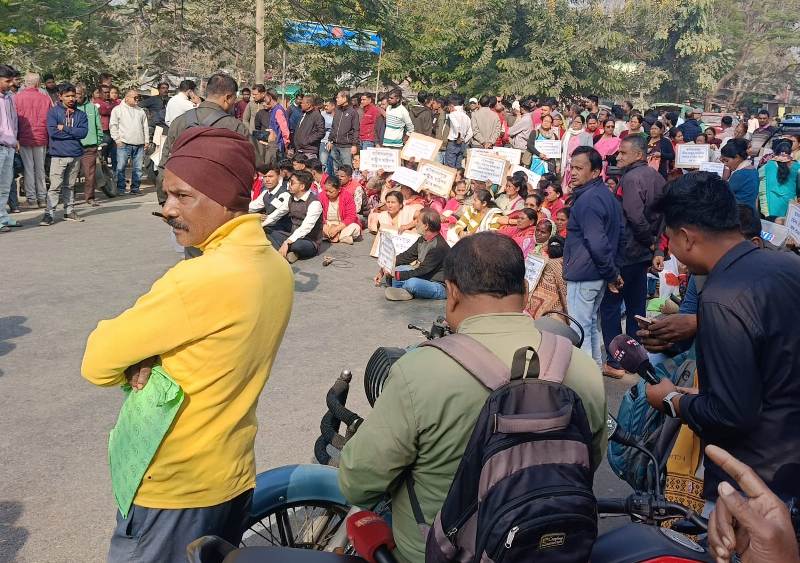
The Adivasi Tea Tribe Scheduled Caste Demand Council has cautioned the Assam government that excluding 42 Adivasi communities from the Scheduled Caste list could trigger major unrest across the state. Speaking at the Dhekiajuli Press Club, Council President Dipen Nayak, Chief Advisor Sanjay Kumar Tanti, and General Secretary Daulat Rajowar urged the inclusion of all 78 Adivasi communities—36 from the first expert committee report and 42 from the second—in line with the 2022 Adivasi Peace Accord. The Council accused some groups of attempting to divide Adivasi unity and pledged to continue its constitutional movement until full recognition is granted.

Operation Praghat earns the Assam Police STF a national prize.

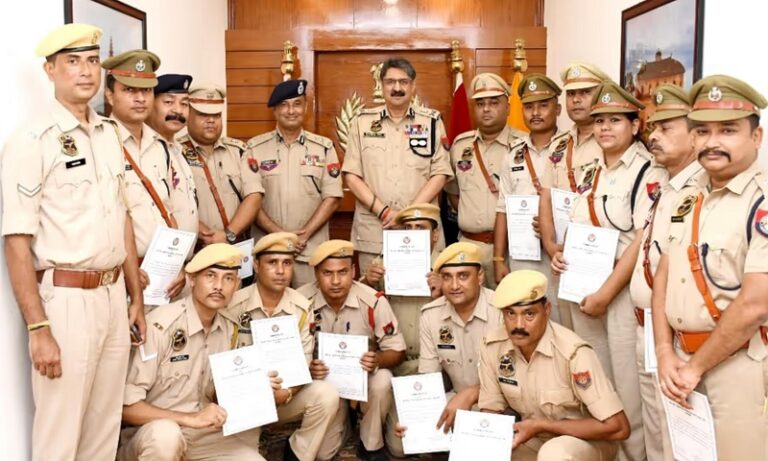
The Special Task Force (STF) of Assam Police has been honoured with the Kendriya Grihmantri Dakshata Padak (KGDP) 2025 in the Special Operations category for its success in Operation Praghat, a multi-state counter-terrorism mission that dismantled a jihadi network operating across Assam, West Bengal, and Kerala. Led by Inspector General Partha Sarathi Mahanta, the STF arrested eight suspects, including a Bangladeshi national linked to the banned Ansarullah Bangla Team. The operation prevented attempts to radicalise youth and incite communal unrest. Instituted in 2024 by the Ministry of Home Affairs, the KGDP recognises exceptional police work across India, with 1,466 personnel honoured this year.

Assam Downtown University hosted a two-day program for education officers on innovation, design, and entrepreneurship in Guwahati.

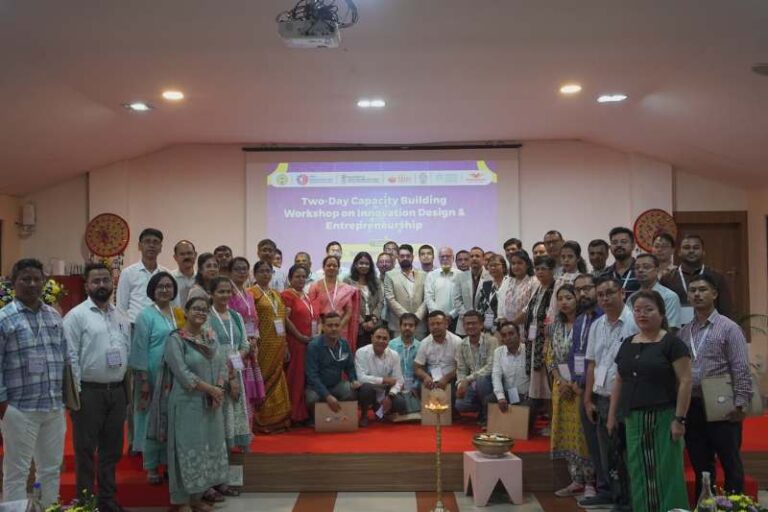
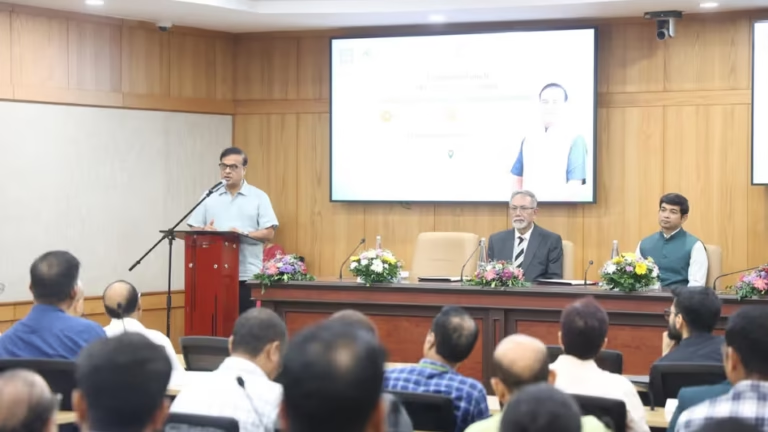
A two-day “Capacity Building Workshop on Innovation, Design and Entrepreneurship (IDE)” was jointly organized by the Department of School Education and Literacy, AICTE, and the Ministry of Education’s Innovation Cell at Assam down town University, Guwahati, from October 30–31, 2025. Conducted in collaboration with the Wadhwani Foundation, the program aimed to strengthen district-level officials’ understanding of innovation, design thinking, and entrepreneurship in line with NEP 2020. Senior officials from AICTE and the Ministry inaugurated the event, which saw participation from over 60 District Education Officers and DIET members. Sessions included design thinking exercises, collaborative problem-solving activities, and discussions on integrating entrepreneurship into education.

Tremors in the political landscape of Bangladesh

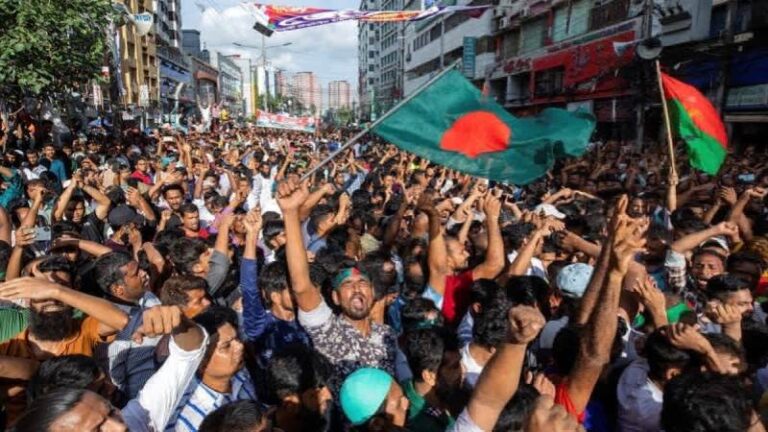
Bangladesh is witnessing deepening chaos under the Yunus regime, marked by public frustration, institutional decay, and political repression. Increasing reports of violence against imprisoned Awami League members have heightened tension. As the judiciary considers reversing the 2011 abolition of the caretaker government system, a shift in power appears possible. Restoration of that system could end Yunus’s authority and pave the way for a neutral interim government to restore rule of law and hold credible elections. Meanwhile, economic distress, job losses, and crude governance rhetoric have compounded the crisis, drawing parallels with the country’s turbulent political scenario of 2007.

In the face of increased surveillance, D-Syndicate extends its drug network to Southern and Northeastern India.

Intelligence agencies have reported that the Dawood Ibrahim-led D-Syndicate is shifting its drug trafficking operations toward India’s southern and northeastern regions. The move follows recent crackdowns by the Narcotics Control Bureau (NCB) in Maharashtra and Gujarat, which dismantled parts of the syndicate’s western network. Haji Salim, a key aide linked to Pakistan’s ISI, is now believed to be directing the group’s domestic expansion, especially through Kerala, Tamil Nadu, and the northeastern corridor near Myanmar and Bangladesh. Security officials warn that these new routes, though less monitored, could become major conduits for narcotics into India if not addressed promptly.

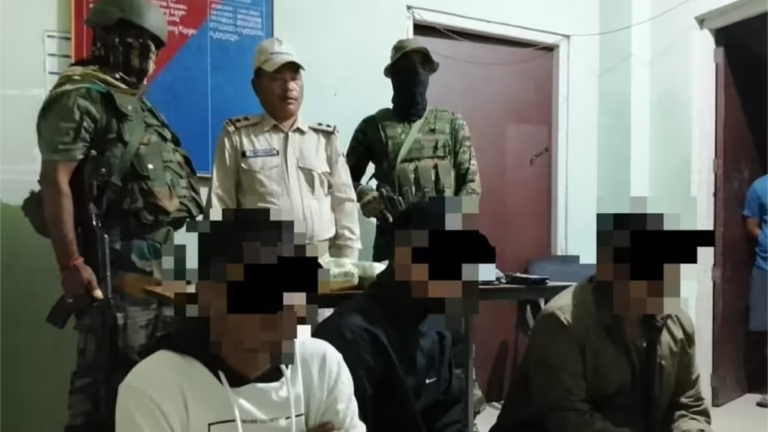
Three people are detained after more than 10 kg of raw opium was found in Churachandpur, Manipur.

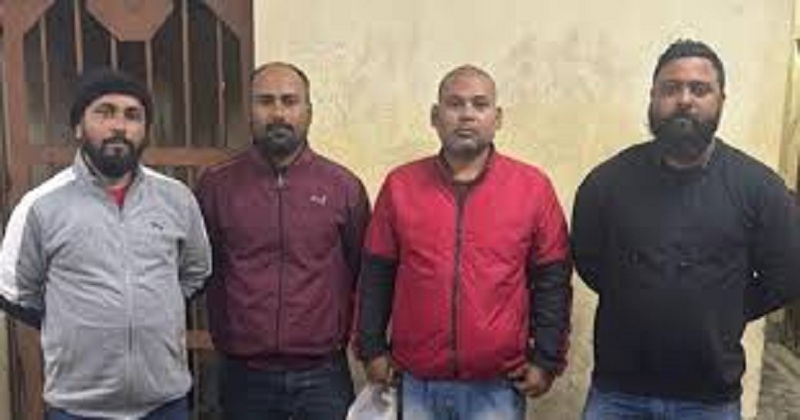
Security forces seized nearly 11 kilograms of raw opium and arrested three alleged traffickers near the India-Myanmar border in Manipur’s Churachandpur district. The operation by Assam Rifles took place on October 28 at the Behiang check post under Behiang Police Station. The contraband, concealed in two two-wheelers, was recovered along with two mobile phones. The arrested individuals are Thangkhanthawng (33) of Kannan Veng, Limminthang alias L. Khongsai (34) of Moreh Ward No. 9, presently residing at Tuibong, and Thangjalet alias Letneu (31) of K. Nivangphai, all from Churachandpur district. The accused and the seized items have been handed over to Behiang Police Station for further legal action under the Narcotic Drugs and Psychotropic Substances (Amendment) Act, 2023. This operation highlights ongoing efforts to curb drug trafficking in the sensitive border region.​

Sikkim mandates gas stations to guarantee sanitary restrooms and essential public amenities.

The Government of Sikkim has issued a strict order mandating all petroleum retail outlets across the state to immediately improve essential customer facilities. This includes maintaining clean, well-lit, and functional toilets with running water, flush systems, and secure door latches to ensure safety and privacy for men and women. The directives, issued by the Food and Civil Supplies Department’s Legal Metrology Unit and Consumer Protection Cell, require petrol pumps—both public and private—to comply with Marketing Discipline Guidelines. Clear signage and accessibility for persons with disabilities and senior citizens must be ensured. A mandatory “Darpan” QR code will allow customers to provide real-time feedback on the facilities. Additionally, outlets must provide working air pressure machines, a telephone for customer use, and a stocked first-aid box. Non-compliance will result in withholding of calibration and verification certificates, demonstrating strict enforcement aimed at enhancing hygiene, safety, and customer comfort at fuel retail points in Sikkim.​

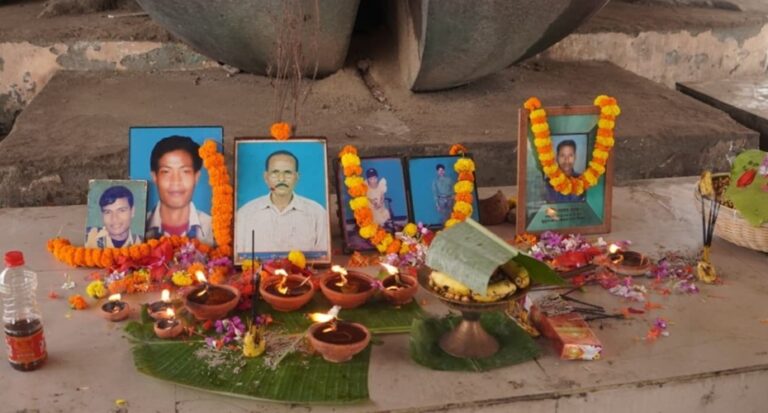
Assam CM promises to maintain peace while remembering the victims of the 2008 serial blasts.

On October 30, 2008, Assam suffered one of India’s deadliest terror attacks when serial blasts ripped through four districts, claiming 88 lives and injuring over 500. The bombings were carried out by militants associated with the National Democratic Front of Bodoland (NDFB). The attack is considered the third-largest bomb incident in India, after the 1993 Mumbai blasts and the 2006 train bombings in Mumbai. Investigations revealed that the blasts involved around 25-30 kilograms of RDX per vehicle and were meticulously planned, with involvement possibly linked to Pakistan’s intelligence agency, ISI, and cross-border militant cooperation. Ranjan Daimary, then leader of NDFB, was later sentenced to life imprisonment for his role, and several other accomplices were also convicted. The attack marked a pivotal moment in Assam’s ongoing struggle against insurgent violence, and its memory continues to evoke somber reflection and calls for peace in the region.​

Assam introduces cashless healthcare for pensioners and workers.

Assam Launches Cashless Medical Treatment under AA-MMLSAY
The Assam government has introduced a cashless medical treatment facility for state employees, pensioners, and their dependents under the Ayushman Asom Mukhya Mantri Lok Sevak Arogya Yojana (AA-MMLSAY). Chief Minister Himanta Biswa Sarma launched the facility on October 29, allowing beneficiaries to access cashless treatment at empanelled hospitals across Assam and leading corporate hospitals nationwide.

Previously operating on reimbursement only since its 2023 inception, the scheme has already registered over 2.2 lakh employees and 6,172 pensioners, with Rs 65 crore reimbursed—significantly higher than the earlier annual expenditure of around Rs 17–18 crore.

Unlike the Centre-funded Ayushman Bharat scheme, MMLSAY is self-sustaining, supported by employee contributions, aiming to cover 7–8 lakh beneficiaries in the near future. The government also announced plans to establish its own Pay Commission to align state employee benefits with central government standards.

Black-clad march reveals “hidden corruption” and campus misrule at Tezpur University protest.

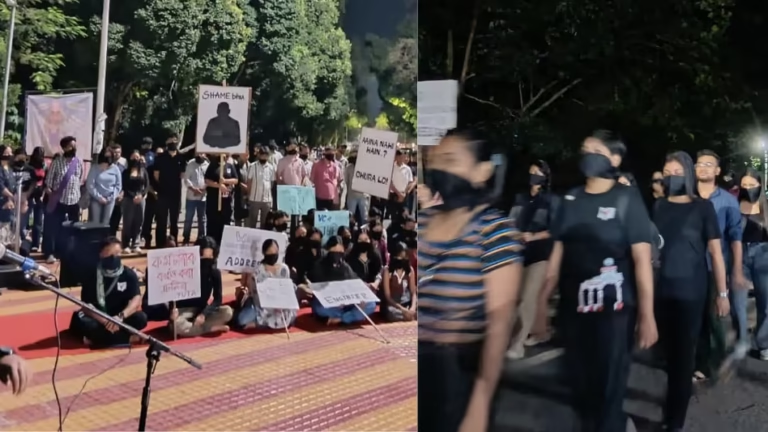
The civil rights movement at Tezpur University marked its 38th day with a powerful black-clad rally symbolizing unity and defiance. Hundreds of students, teachers from the Tezpur University Teachers’ Association (TUTA), and non-teaching staff from the Tezpur University Non-Teaching Employees’ Association (TUNTEA) participated, wearing black clothes and masks to represent institutional mourning and protest the “masked corruption” linked to the absconding Vice Chancellor, Prof. Shambhu Nath Singh.

The protest is rooted in over a month of demands for transparency, ethical leadership, and accountability. Allegations included corrupt administrative practices that compromised academic standards and institutional reputation. Environmental harm was also a concern, with claims of unconsulted destruction of trees and green areas under a misguided “beautification” effort.

Protesters maintained disciplined silence, carried placards, and observed reflective moments to symbolize suppressed voices. The black masks served as metaphors for hidden truths that will eventually emerge.

In a joint statement, TUTA, TUNTEA, and the student body emphasized the movement’s goal to restore integrity and responsible governance at Tezpur University. As the 38th day ended, the campus community remained resolute in continuing peaceful protests until justice prevails and institutional dignity is restored.