Two are detained by Assam police in Sribhumi, and they confiscate a pistol and counterfeit money.

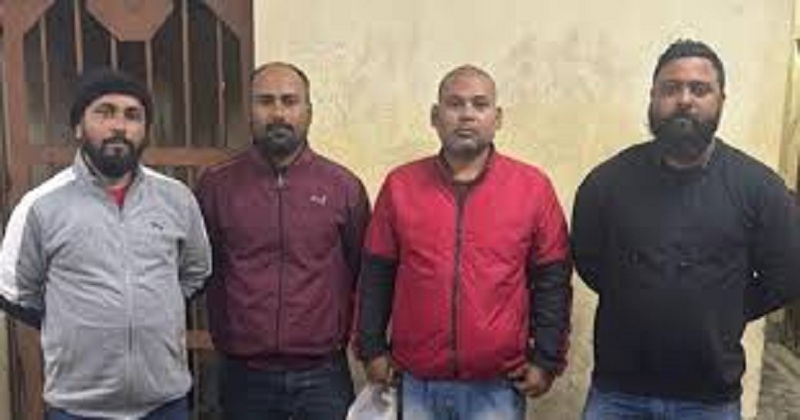
Assam Police arrested two men, Abidur Rahman (28) and Anowar Hussain (29), from Ratabari in Sribhumi district on Saturday after a raid in the Jalalabad market area. Authorities recovered a country-made 9mm pistol, one live round of ammunition, and counterfeit currency worth Rs 48,000 concealed under the suspects’ motorcycle seat. Preliminary investigations indicate these individuals may be part of a network dealing in fake currency and illegal arms across border regions. Police are interrogating the suspects to trace the larger racket and identify other involved persons.

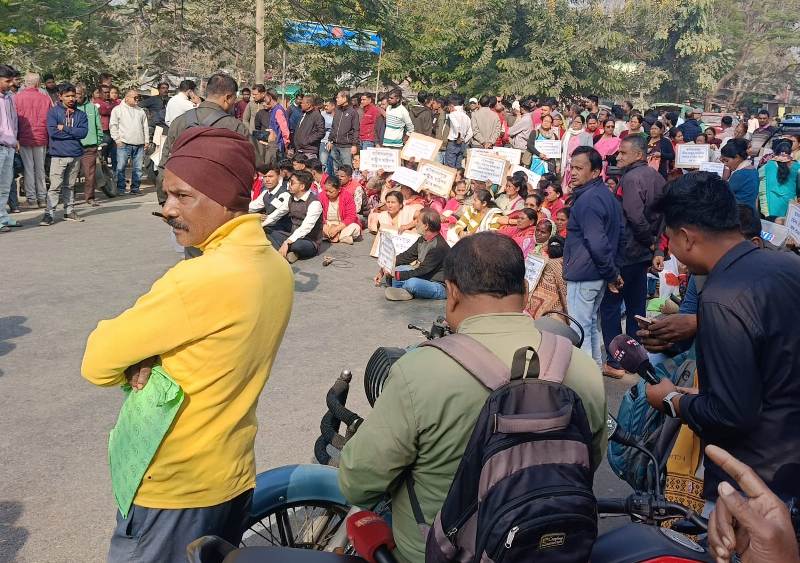
Blood-stained history obliterated by politics: The conflict over Bhasha Shahid Station.

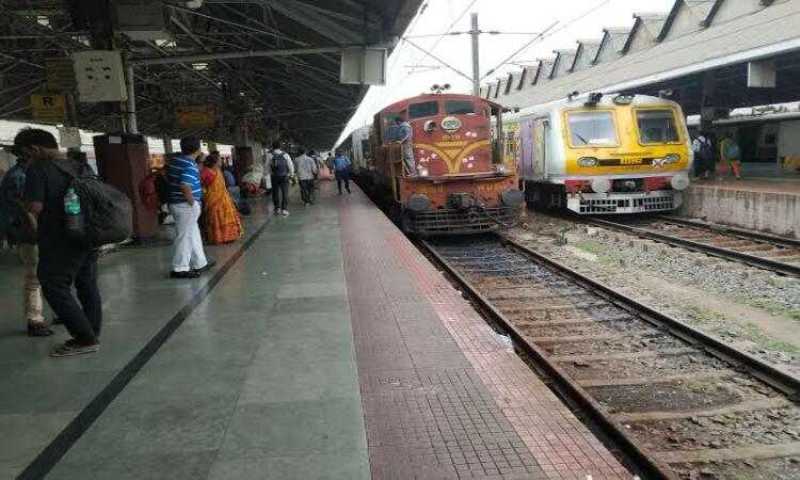
The demand to rename Silchar Railway Station as “Bhasha Shahid Station” (Language Martyrs’ Station) to honor the eleven martyrs of the 1961 Bengali language movement in Barak Valley has long been stalled due to reluctance by the Assam state government. Despite approvals from the Union Home Ministry and Railway Ministry and public support—including from the Asam Sahitya Sabha— the renaming process remains blocked at the state level.

The state government’s refusal to issue a formal no-objection certificate (NOC) and failure to respond to a 2015 central letter confirming spelling have drawn criticism and suspicion about political motives. The movement to rename symbolizes justice and linguistic rights, commemorating unarmed civilians who died defending linguistic identity under Article 29 of the Constitution.

Controversy intensified with some remarks by “Dimasa Writers’ Forum” leadership seeming to downplay the 1961 activists as “Bangladeshis,” which the Dimasa Sahitya Parishad disavowed, emphasizing the diverse participation in the movement—including Bengalis, Manipuris, Dimasas, and tea garden communities. Activists assert renaming is not about linguistic dominance but recognizing sacrifice for democratic and cultural rights.

Calls from cultural bodies and public organizations for official recognition and timely renaming have been mounting, but the state government continues to delay, a stance criticized for ignoring Barak Valley’s emotional and historical sentiments. The neglect includes disparaging comments by government ministers labeling martyrs as “miscreants,” further alienating local communities.

The renaming is seen not only as a tribute but a crucial step to uphold the democratic spirit of India’s linguistic diversity and honor a peaceful, inclusive movement that transcends political and communal divides.

This summary reflects widespread public sentiment, administrative hurdles, and cultural-political dynamics surrounding the longstanding call to rename Silchar Railway Station after the language martyrs of 1961.​

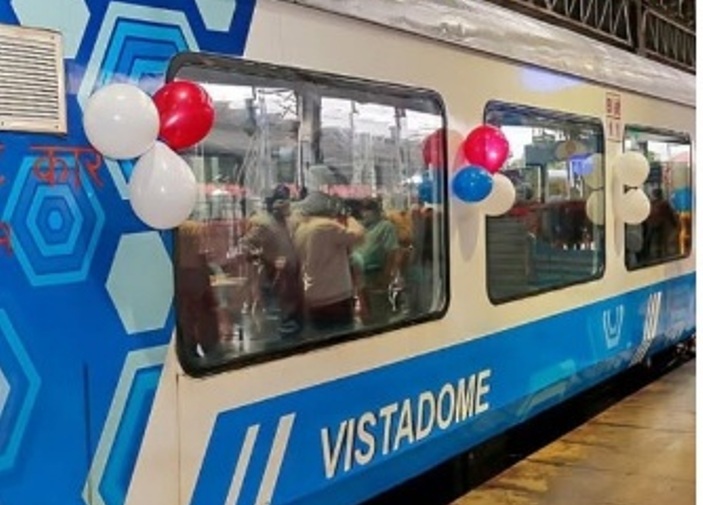
To improve regional connectivity, Assam CM wants to add new trains and expand the rail network.

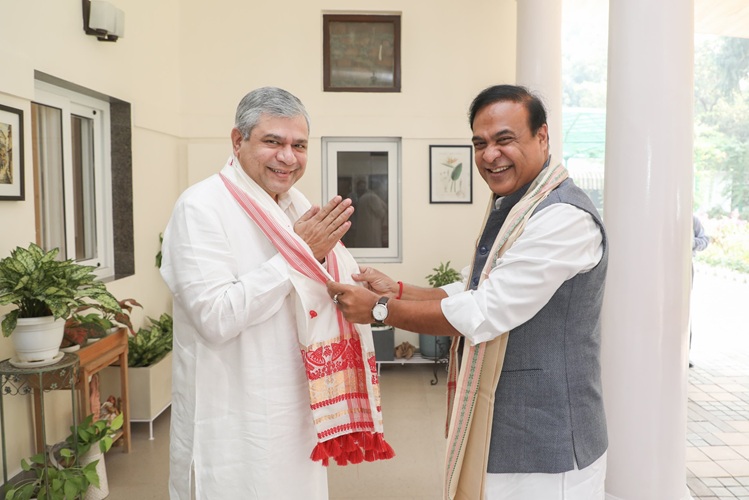
Assam Chief Minister Himanta Biswa Sarma met Union Railway Minister Ashwini Vaishnaw in New Delhi to discuss the expansion of Assam’s railway network and strengthen regional as well as cross-border connectivity. During the meeting, Sarma proposed three new Amrit Bharat trains for the state, a new rail corridor linking Umrangso in Dima Hasao with Lanka in Hojai, and faster execution of the Kokrajhar–Gelephu Mindfulness City railway project connecting Assam to Bhutan. He also sought more train stoppages across smaller towns to enhance accessibility. The Railway Minister assured positive and time-bound action on all proposals.

Assam: Robots are used in construction at a Tata Semiconductor factory.

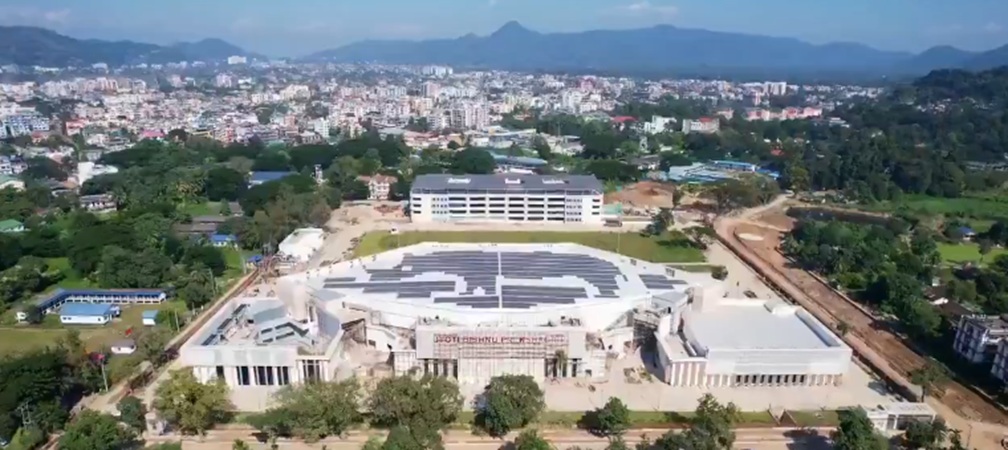
The Tata Semiconductor Assembly and Test Facility in Assam is deploying advanced robotics technology for construction, marking a first of its kind in India’s semiconductor industry. This state-of-the-art robotic automation not only speeds up construction timelines but sets new standards for precision and efficiency in large-scale infrastructure projects. The greenfield facility, with an investment of ₹27,000 crore, will produce 48 million semiconductor chips per day by the end of the 2025-26 financial year, catering to global demand across automotive, mobile, AI, and other key sectors. The project is a major step in India’s strategy for domestic chip manufacturing and positions Assam as a growing hub for high-tech manufacturing and innovation. It is supported by the state and central governments, with additional measures such as building an elephant-proof barrier to mitigate environmental risks near the site.

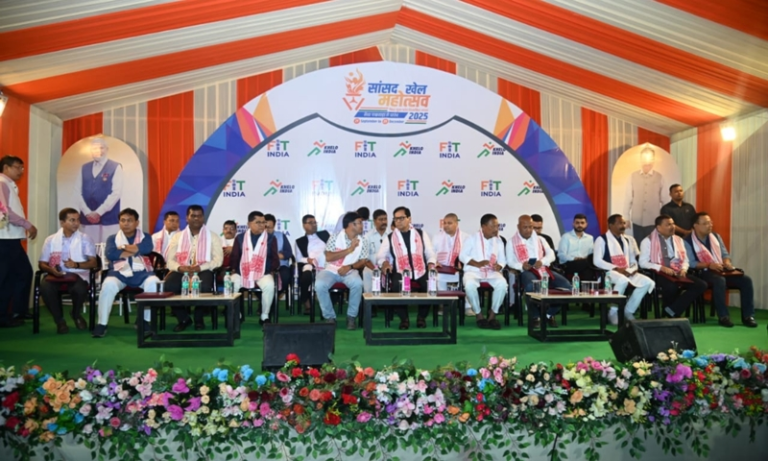
Sansad Khel Mahotsav is inaugurated in Dibrugarh by Union Minister Sarbananda Sonowal in Assam.

“Union minister Sarbananda Sonowal inaugurated the Sansad Khel Mahotsav at the historic Chowkidingee playground in Dibrugarh, with enthusiastic participation from hundreds of young athletes and sports enthusiasts. The event, organized under the patronage of MP Sarbananda Sonowal and in collaboration with the Dibrugarh District Sports Association, aims to promote sports culture and provide a platform for Under-19 athletes to showcase their talent. The Mahotsav involves a three-level competition—Village, Block/Ward, and parliamentary constituency—and includes sports such as Football, Cricket, Volleyball, Athletics, and indigenous games like Khoko, Kabaddi, Pithu, and Tug of War. This initiative is a celebration of talent and teamwork intended to identify young sporting talents who can represent India at national and international platforms, including the Commonwealth Games and the Olympics. It aligns with Prime Minister Narendra Modi’s call for ‘Khelo India, Fit India,’ promoting youth empowerment, unity, and healthy living.”​

Adivasi council in Assam cautions government over 42 communities’ omission from the SC list.

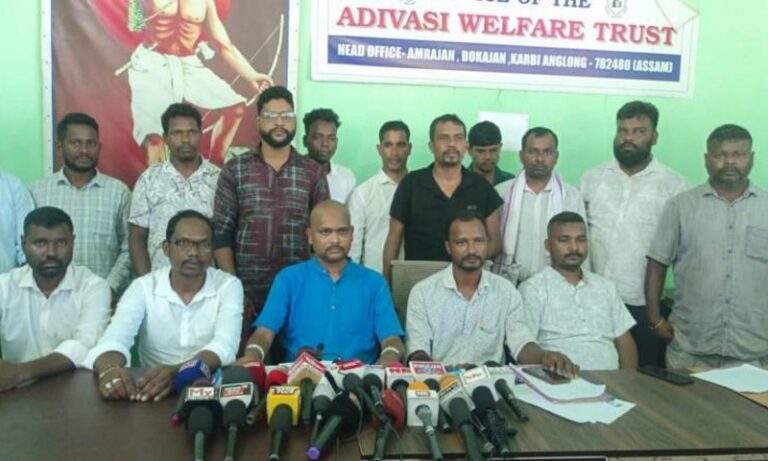
The Adivasi Tea Tribe Scheduled Caste Demand Council has cautioned the Assam government that excluding 42 Adivasi communities from the Scheduled Caste list could trigger major unrest across the state. Speaking at the Dhekiajuli Press Club, Council President Dipen Nayak, Chief Advisor Sanjay Kumar Tanti, and General Secretary Daulat Rajowar urged the inclusion of all 78 Adivasi communities—36 from the first expert committee report and 42 from the second—in line with the 2022 Adivasi Peace Accord. The Council accused some groups of attempting to divide Adivasi unity and pledged to continue its constitutional movement until full recognition is granted.

Operation Praghat earns the Assam Police STF a national prize.

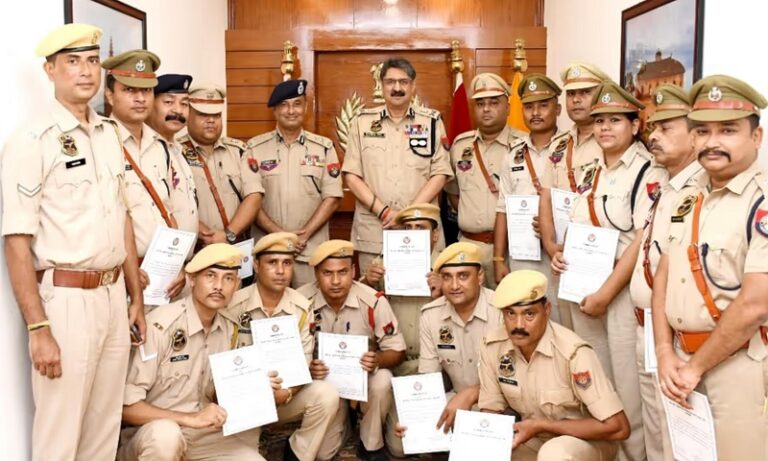
The Special Task Force (STF) of Assam Police has been honoured with the Kendriya Grihmantri Dakshata Padak (KGDP) 2025 in the Special Operations category for its success in Operation Praghat, a multi-state counter-terrorism mission that dismantled a jihadi network operating across Assam, West Bengal, and Kerala. Led by Inspector General Partha Sarathi Mahanta, the STF arrested eight suspects, including a Bangladeshi national linked to the banned Ansarullah Bangla Team. The operation prevented attempts to radicalise youth and incite communal unrest. Instituted in 2024 by the Ministry of Home Affairs, the KGDP recognises exceptional police work across India, with 1,466 personnel honoured this year.

Assam Downtown University hosted a two-day program for education officers on innovation, design, and entrepreneurship in Guwahati.

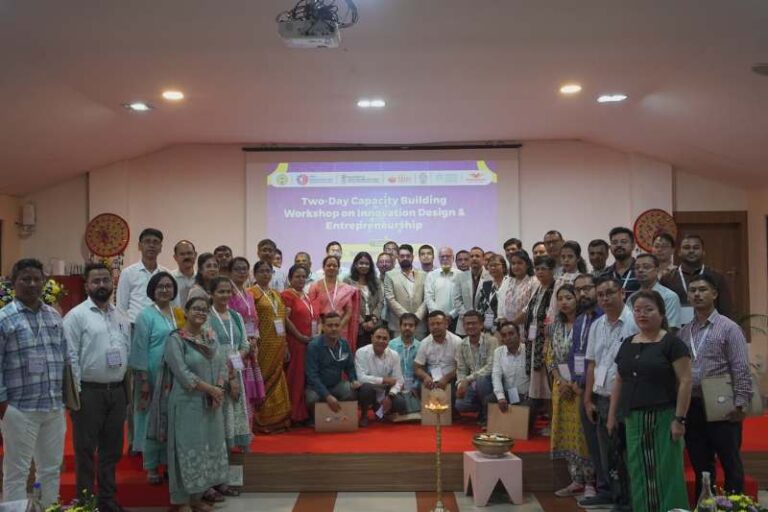
A two-day “Capacity Building Workshop on Innovation, Design and Entrepreneurship (IDE)” was jointly organized by the Department of School Education and Literacy, AICTE, and the Ministry of Education’s Innovation Cell at Assam down town University, Guwahati, from October 30–31, 2025. Conducted in collaboration with the Wadhwani Foundation, the program aimed to strengthen district-level officials’ understanding of innovation, design thinking, and entrepreneurship in line with NEP 2020. Senior officials from AICTE and the Ministry inaugurated the event, which saw participation from over 60 District Education Officers and DIET members. Sessions included design thinking exercises, collaborative problem-solving activities, and discussions on integrating entrepreneurship into education.

Assam CM promises to maintain peace while remembering the victims of the 2008 serial blasts.

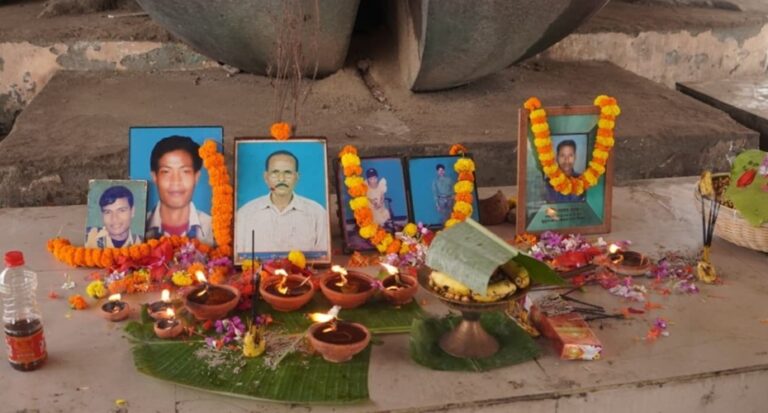
On October 30, 2008, Assam suffered one of India’s deadliest terror attacks when serial blasts ripped through four districts, claiming 88 lives and injuring over 500. The bombings were carried out by militants associated with the National Democratic Front of Bodoland (NDFB). The attack is considered the third-largest bomb incident in India, after the 1993 Mumbai blasts and the 2006 train bombings in Mumbai. Investigations revealed that the blasts involved around 25-30 kilograms of RDX per vehicle and were meticulously planned, with involvement possibly linked to Pakistan’s intelligence agency, ISI, and cross-border militant cooperation. Ranjan Daimary, then leader of NDFB, was later sentenced to life imprisonment for his role, and several other accomplices were also convicted. The attack marked a pivotal moment in Assam’s ongoing struggle against insurgent violence, and its memory continues to evoke somber reflection and calls for peace in the region.​

Assam introduces cashless healthcare for pensioners and workers.

Assam Launches Cashless Medical Treatment under AA-MMLSAY
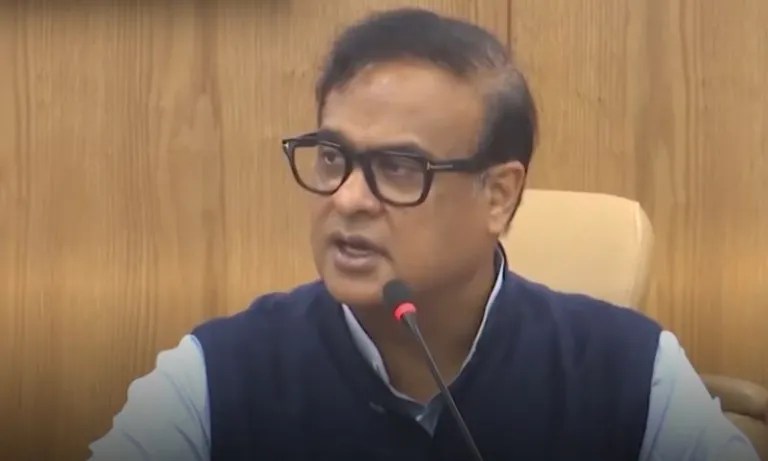
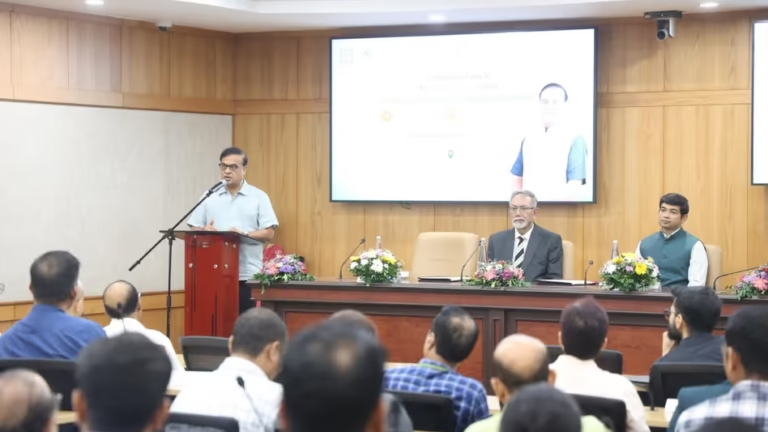
The Assam government has introduced a cashless medical treatment facility for state employees, pensioners, and their dependents under the Ayushman Asom Mukhya Mantri Lok Sevak Arogya Yojana (AA-MMLSAY). Chief Minister Himanta Biswa Sarma launched the facility on October 29, allowing beneficiaries to access cashless treatment at empanelled hospitals across Assam and leading corporate hospitals nationwide.

Previously operating on reimbursement only since its 2023 inception, the scheme has already registered over 2.2 lakh employees and 6,172 pensioners, with Rs 65 crore reimbursed—significantly higher than the earlier annual expenditure of around Rs 17–18 crore.

Unlike the Centre-funded Ayushman Bharat scheme, MMLSAY is self-sustaining, supported by employee contributions, aiming to cover 7–8 lakh beneficiaries in the near future. The government also announced plans to establish its own Pay Commission to align state employee benefits with central government standards.