Tejas Crash: Defense Expert Says G-Force May Cause a Blackout.

On November 21, 2025, during the Dubai Airshow held at Al Maktoum International Airport, a HAL Tejas Light Combat Aircraft of the Indian Air Force crashed and was destroyed after losing control while performing a complex aerobatic maneuver in front of international delegates and spectators. The aircraft was executing a negative G-force turn or roll at an extremely low altitude and failed to maintain its angle of attack, resulting in a steep vertical nose-dive. The Tejas slammed into an open area near the runway and erupted into a massive fireball, killing the pilot, Wing Commander Namansh Syal. Emergency teams responded quickly, and all flight operations were temporarily suspended. A court of inquiry has been ordered to investigate the cause of the accident. No immediate technical or mechanical reasons have been publicly disclosed, and the investigation is ongoing. This incident marks the second accident and first fatality in the 23-year history of the Tejas program.​

At the India International Trade Fair, 300 Lakhpati Didis stole the stage.

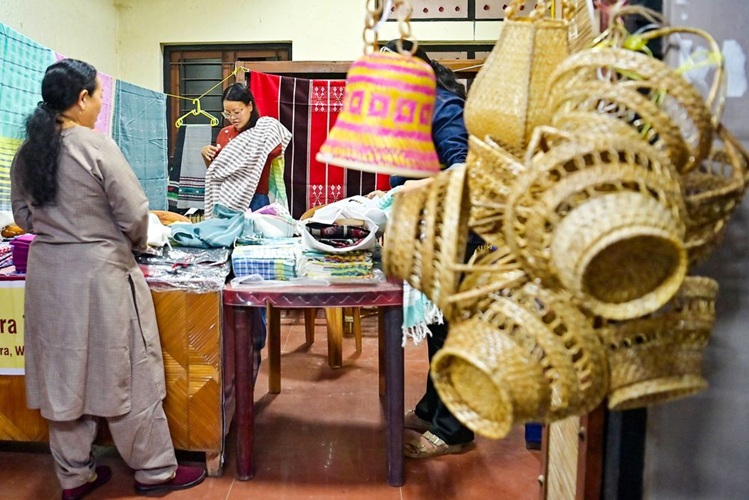
The Saras Pavilion, located in Halls 8, 9, and 10 of Bharat Mandapam, has become a major crowd-puller at the IITF 2025, featuring nearly 300 Lakhpati Didis from across India showcasing their work at around 150 stalls. The pavilion offers an impressive display of handlooms, handicrafts, traditional artworks, and locally made products representing 31 states and Union Territories, creating a vibrant “miniature India.” The participating women credit government schemes for helping them achieve financial independence and market access.

Visitors are drawn not only to the diverse products but also to the inspiring stories of these women entrepreneurs. For example, Alisha from Meghalaya expressed how the initiative opened new opportunities for her, while Nirmala Ben from Gujarat shared her ambition to become a “Crorepati Didi.” Participants like Mispi Salha from Nagaland and Monila from Assam highlighted how the platform has helped them understand market demand and gain national-level recognition. Babita Bhandari emphasized the boost in confidence and dignity this platform provides to women sellers.​

Explosives from a terror module in Faridabad detonate near the Nowgam Police Station in Srinagar, leaving nine people dead and dozens injured.

A massive explosion tore through the Nowgam Police Station in Srinagar late on November 14, 2025, killing at least nine people and injuring over 25. The blast occurred during the extraction of samples from a large cache of ammonium nitrate-based explosives seized from a terror module linked to the Faridabad case. Eyewitnesses and CCTV footage showed the explosion ripping through the building, with flames and thick smoke engulfing the area. Officials warned that casualties may rise as some injured are in critical condition and others remain missing.

Investigators are exploring two possible triggers: accidental ignition of explosives during sealing in the presence of a magistrate, or a terror attack triggered by a seized car inside the compound that may have been rigged with an IED. The PAFF, a shadow group linked to Jaish-e-Mohammed, claimed responsibility, but authorities are verifying this. Rescue operations are ongoing, with security forces sealing off and sweeping the area. The explosives cache was originally recovered from the rented home of Dr. Muzzamil Shakeel Ganaie, one of eight arrested in connection with the terror module. Following the blast, security agencies heightened security and initiated a detailed investigation.

The incident underscores the dangers faced by personnel handling volatile explosives amid heightened counter-terrorism efforts after the recent Red Fort car blast in Delhi.​

As Delhi’s air quality becomes “severe,” the centre implements GRAP Stage 3 limitations.

The Centre enforced Stage III of the Graded Response Action Plan (GRAP) in Delhi-NCR as the region’s air quality worsened to the ‘severe’ category, with the Air Quality Index (AQI) rising sharply to 425. The Commission for Air Quality Management (CAQM) attributed the rise to calm winds, a stable atmosphere, and unfavorable weather conditions that trapped pollutants near the ground. As part of Stage III measures, non-essential construction work, demolition activities, stone crushers, and mining operations are banned. Schools are directed to shift classes up to grade 5 to hybrid or online modes. The use of BS-III petrol and BS-IV diesel four-wheelers is restricted in Delhi and surrounding NCR districts, with exemptions for persons with disabilities. Additional restrictions include a ban on inter-state diesel buses not meeting emission standards and suspension of industries using unapproved fuels. These measures aim to reduce pollution and protect public health during the winter season when air quality typically declines.

A strong explosion at Red Fort killed ten people and injured numerous more; NIA joins the investigation.

“A powerful explosion near the Red Fort metro station on Monday evening killed at least 10 people and left 24 others injured, sending shockwaves through one of Delhi’s busiest areas. The blast occurred around 6:45 pm from a car parked near Gate No. 1 of the Red Fort metro station, igniting flames that gutted six cars, two e-rickshaws, and an autorickshaw. The impact shattered nearby windows and was loud enough to be heard several kilometers away, including at ITO. Delhi Fire Services brought the fire under control by 7:29 pm with ten fire tenders at the scene.

Eyewitnesses described chaos and panic as people fled. Officials said the National Investigation Agency (NIA), local police, and forensic teams are investigating. Samples from the site have been collected for chemical analysis to determine the nature of the explosives.

The explosion came hours after a major anti-terror operation in Faridabad, where police seized about 360 kg of suspected ammonium nitrate along with weapons and detonators from the rented home of a Kashmiri doctor linked to terror modules. Authorities are probing any possible link between the Faridabad seizure and Monday’s explosion near the Red Fort, a heavily guarded area given its proximity to key national monuments and government offices.”​

According to the PM, the northeast is becoming India’s new growth frontier.

Prime Minister Narendra Modi said the Northeast region has evolved from India’s distant frontier to the nation’s “forward face,” symbolizing connectivity, culture, and commerce. He quoted Union Minister Jyotiraditya M. Scindia’s reflections on the Northeast, highlighting its beauty, spirit, and emergence as India’s natural gateway to Southeast Asia. Modi emphasized the region’s transformation under his leadership from landlocked to land-linked, fostering inclusive development and dignified livelihoods. Scindia’s visit to initiatives like the Mushroom Development Centre in Upper Shillong showcased the region’s economic progress and green entrepreneurship. The Northeast’s resurgence represents not only economic growth but also India’s growing confidence and outreach to Southeast Asia.​

“Sweet Revolution”: India rises to become the second-largest honey exporter in the world.

India has risen to become the world’s second-largest exporter of natural honey, with shipments reaching 1.07 lakh metric tonnes valued at $177.55 million in 2023–24, a leap from ninth place in 2020. This success stems from the National Beekeeping and Honey Mission (NBHM) under the Atmanirbhar Bharat initiative, which promotes scientific beekeeping and quality honey production while generating rural livelihoods. The NBHM, implemented via the National Bee Board, started with a Rs. 500 crore budget for three years and extended to 2025–26 with Rs. 370 crore remaining. The Madhukranti portal facilitates online registration and traceability of bee products, boosting transparency and export quality standards. India’s varied agro-climatic regions provide ideal conditions for honey production, which supports agricultural sustainability through pollination and provides additional products like beeswax, royal jelly, and bee venom. The NBHM emphasizes improving crop productivity, post-harvest management, and technology research tailored to different regions, propelling India’s emergence as a major global honey market player and symbolizing rural economic empowerment and growing self-reliance.

The United States is the largest market for Indian honey, accounting for about 78% of exports, followed by the UAE, Saudi Arabia, and other nations. Recent changes in US tariffs pose challenges, but new markets like Thailand and South Korea show promise for future growth.

FIT INDIA FREEDOM RUN 6.0 – A GRAND CELEBRATION OF FITNESS AND UNITY AT BORO BEKERA

The Assam Rifles organized the Fit India Freedom Run 6.0 at Boro Bekera, Jiribam District, showcasing a grand celebration of fitness, unity, and national spirit. With over 450 participants, including school children, CSO members, CRPF, and Manipur Police personnel, the event featured energetic runs, Zumba sessions, a dog show, and vibrant community participation. The initiative truly reflected the spirit of Fit India, promoting togetherness, discipline, and a healthy lifestyle under the inspiring leadership of Col Prashant Singh Chundawat, SC.

In the face of increased surveillance, D-Syndicate extends its drug network to Southern and Northeastern India.

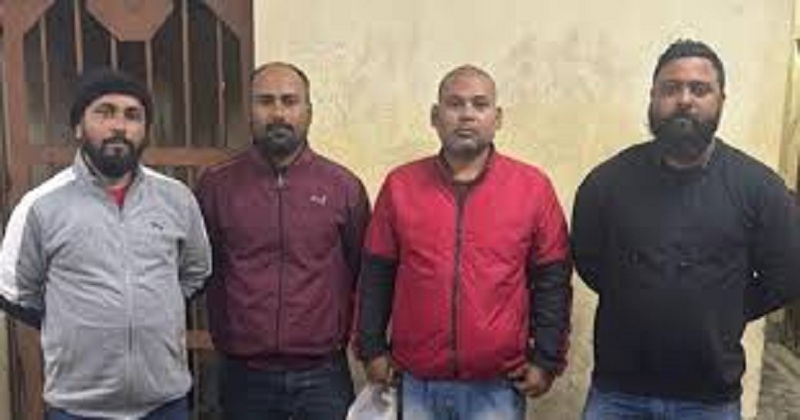
Intelligence agencies have reported that the Dawood Ibrahim-led D-Syndicate is shifting its drug trafficking operations toward India’s southern and northeastern regions. The move follows recent crackdowns by the Narcotics Control Bureau (NCB) in Maharashtra and Gujarat, which dismantled parts of the syndicate’s western network. Haji Salim, a key aide linked to Pakistan’s ISI, is now believed to be directing the group’s domestic expansion, especially through Kerala, Tamil Nadu, and the northeastern corridor near Myanmar and Bangladesh. Security officials warn that these new routes, though less monitored, could become major conduits for narcotics into India if not addressed promptly.

6.5 lakh professionals and 400+ startups are driving India’s cybersecurity transformation.

India’s cybersecurity ecosystem has rapidly grown into a 20-billion-dollar sector, supported by over 400 startups and more than 6.5 lakh professionals. Dr. Sanjay Bahl, Director General of CERT-In and Controller of Certifying Authorities under MeitY, emphasized during an interaction with European Union journalists that Indian startups are driving innovation in areas like cyber forensics, threat detection, and AI-based security.

He described artificial intelligence as a double-edged sword that benefits both defenders and attackers. CERT-In uses AI analytics and automation to detect, monitor, and respond to threats in real time while also designing shields against AI-enabled attacks.

The agency’s key roles include crisis management, vulnerability analysis, incident response, and issuing timely advisories. These alerts help organizations and citizens respond early to potential threats without spreading panic.

India reported 147 ransomware incidents in 2024, and CERT-In’s intelligence sharing and forensic actions mitigated their effects. Dr. Bahl also highlighted India’s international collaborations, such as with France’s ANSSI, and its focus on capacity building, auditor empanelment, and startup support.

Through research partnerships and global engagement, CERT-In aims to enhance cyber resilience and strengthen India’s position as a trusted global leader in cybersecurity aligned with the Digital India vision.